The beach of Northern Catalonia preserved thanks to dynamite
The old Nobel Matches factory avoided the urbanization of the bay and today is a protected natural space that hosts the first public workshop for the restoration of the Catalan lugger in France

-
CAT -
CAST
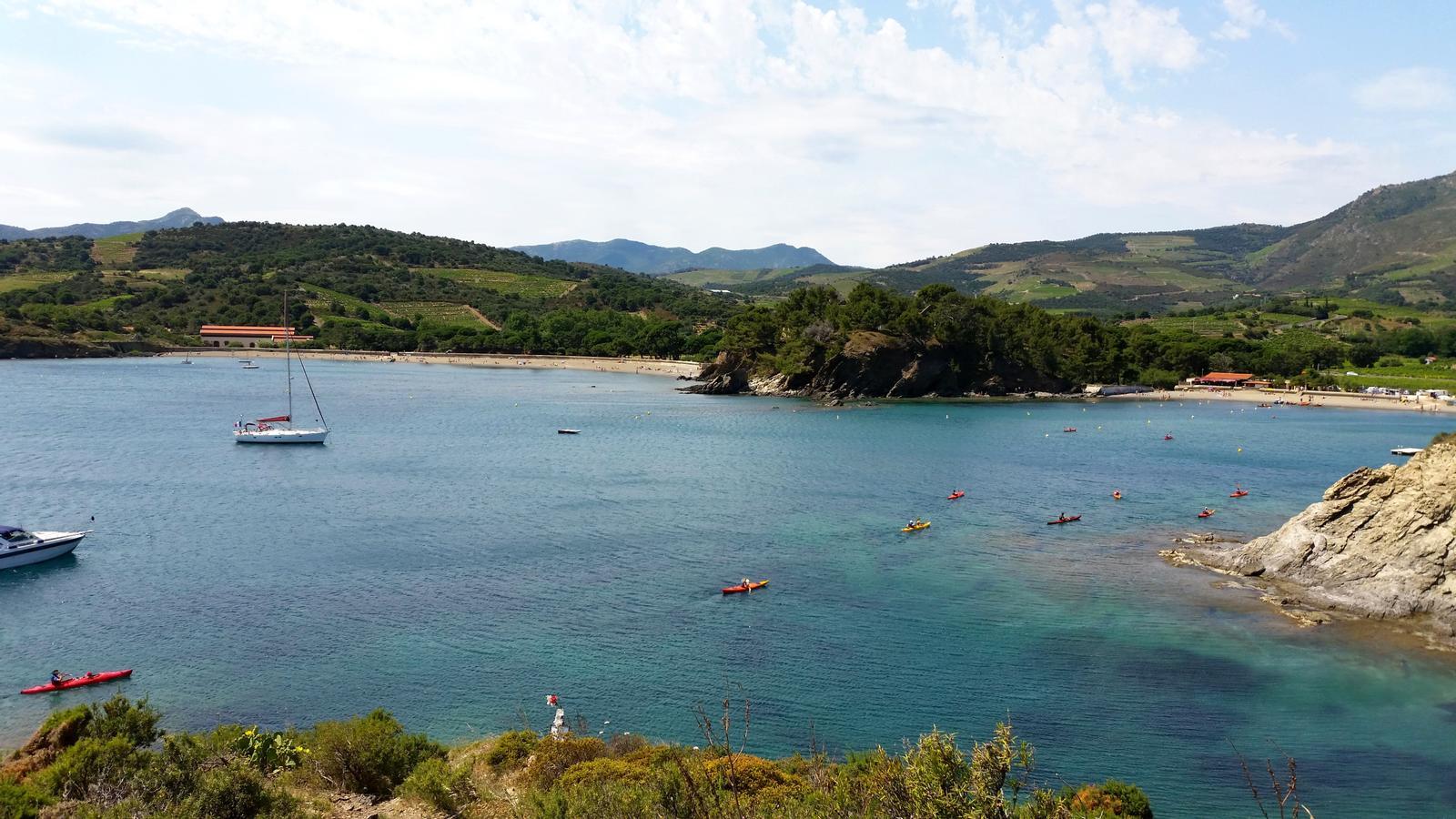
Portvendres (Roussillon)Between Banyuls and Portvendres, in the Roussillon, there is a coast that has lived for more than a century with its back to tourism. The Costa Vermella, the continuation of the Costa Brava towards Northern Catalonia, displays one of its most well-preserved landscapes. There are no second homes, nor sports ports. But rather a protected area on the seafront and vineyards that merge with the water. It is the bay of Paulilles, a collection of beaches saved from the tourist massification of the 60s and 70s thanks to dynamite.
At the end of 1870, by Alfred Nobel, the second dynamite factory in France was created there, with the aim of making transport to the colonies of Africa and America as short as possible. “It is here that the dynamite to build the Panama Canal was also manufactured,” explains Samuel Villevielle from the old warehouse where the ingredients for manufacturing TNT were solidified and stabilized. The old warehouse where explosives were prepared is today the first and only public workshop for the restoration of Catalan luggers in France. A transformation that summarizes the spirit of Paulilles: turning a space dedicated for a century to manufacturing dynamite into a center for the preservation of natural and maritime heritage.
Villavielle is the head of the Taller de les Barques, inaugurated in 2010, which, in addition to restoring, has the mission of preserving a collection of about forty historical boats – which participate in the maritime procession of Cotlliure every August 16 to transport the relics of Saint Vincent – and training new generations so that the legacy of this maritime heritage is not lost. The workshop, which can be visited free of charge, opened its doors two years after the Paulilles complex was inaugurated: a large space with gardens, green areas, and exhibitions, with a bar serving local products to refresh oneself.
Demolition and regeneration of the space
In 1984, the Nobel factory closed, and the families who had lived there for decades also left. Their houses were located where the free car park is now to enter the site on foot, the only form of access. The closure also opened the door to speculators: there were real estate projects on the table to develop the area and open it up to tourism.
But finally, in 1998, the French Coastal Conservatory bought the 32 hectares of the old factory to carry out an ambitious regeneration and protection project. Numerous industrial constructions of no heritage interest were demolished, land was decontaminated, several historic buildings were preserved and rehabilitated, and the original Mediterranean vegetation was restored. You enter through a green path that leads to different routes and interpretation areas, including the director's old botanical garden.
But beyond the site, it opened up a set of exceptional beaches and continued the beautiful coastal path that leads from Banyuls to Portvendres via Cap d'Ullastrell and Cap de Biarra, with its characteristic lighthouse. In the bay alone, there are five beaches. The most accessible are Forat, Polilles, and Bernardí. They share the curious characteristic of being protected by an anti-tank wall built by the Germans in 1943 to hinder an eventual Allied landing.
At Bernardí beach, you can also rent kayaks with an instructor to discover the coves of Cap de Biarra. Just past it, the view opens up towards the Roussillon plain, with the extensive beaches of Argelès and Canet. On the way back, we come across the vineyards of Clos de Paulilles, which has a seaside restaurant next to the vines laden with grapes.
Forty years after Nobel's closure, the paradox remains intact: a factory that produced dynamite ended up protecting one of the few bays on the Côte Vermeille that escaped the Mediterranean's urban development fever.
- Old dynamite factory by the sea converted into a protected natural space
