Freedom or control: how are teenagers' first nights out managed?
The Girona Fairs put to the test the trust between parents and children, with adolescents who demand autonomy and families who worry about the risks of going out at night and the consumption of alcohol

-
CAT -
CAST
GironaWhen they make the transition from school to high school, most teenagers start wanting to go out to party. A desire to discover new things, to grow up, to meet people, and to have a good time in a space far from the family's supervision. Many fathers and mothers, however, experience these first festive nights with worry and suffering. They worry that something might happen to their children late at night, they get anxious when they do not answer messages, and they are not calm until they return home safe and sound. Now then, is it possible to find a balance between the young people's eagerness for fun and the adults' anxiety? Between controlling and forbidding? Between giving freedom and crossing the line?
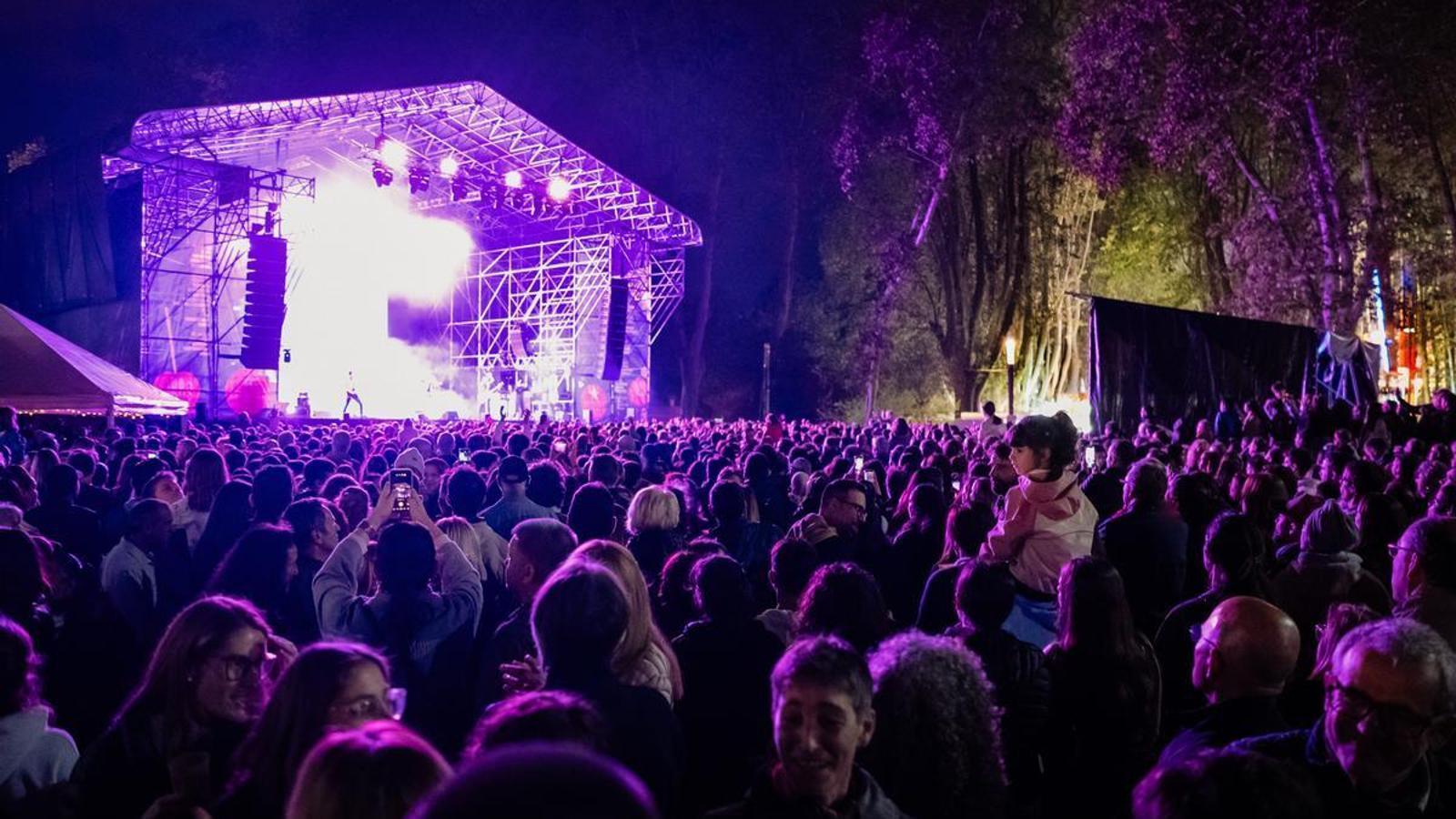
Adolescents and families face all these dilemmas the first few times they want to go out partying. In Girona, one of the common moments when they are brought to the table is duringFires, at the end of October. Adolescents aged 12, 13, 14, or 15 no longer want to just ride the attractions with their parents like when they were little, but wish to go to the booths and the concerts at La Copa with their friends. On Friday the 23rd, the first day of the festival, there were many. Miki Núñez was playing on stage around midnight and among the audience there were even whole families with school-age children.
Outside the more festive atmosphere of the concert, the young people mostly gather on an esplanade between the stage, the plane trees, and the attractions. "The square," they call it. There, they chat, laugh, and do their own thing, and people in their 20s or 30s do not frequent it. Mind you, the later the night gets, the fewer under-16s remain, and the atmosphere degrades. "Last year we went out for the first time until 1 am, this year until 2 am, but we would like to stay longer, because there is no problem and the booths are only once a year," says Àlex, 14, with his group of friends from school. They all know someone or other, they walk back and forth, and they have a good time.
The majority, even though they are not of legal age to do so, have drunk or drink alcohol. You also see a cigarette and scented vapes. At the booth bars, logically, alcohol cannot be sold to minors, but it is easy for them to find an older acquaintance to buy it for them. However, they mainly do 'botellot' (street drinking), which is much cheaper and more accessible. They explain that they prepare their homemade mixture of alcohol and soft drink in a plastic bottle, go to some more secluded garden in the Old Town, drink and listen to music, and before midnight they arrive at the Devesa, with the rest of the drink in a backpack, and keep refilling their glass from time to time.
"The festivities are not designed for adolescents"
Meanwhile, parents wait for them at home or drive around to check on them, keeping their distance until the agreed time to pick them up. The post office roundabout, from 2 a.m. onwards, is a constant coming and going of cars picking up boys and girls, either alone or in small groups. A moment to meet up and assess if there is any kind of excessive harm.
One of the patient mothers is Anna Mancebo, who has a 15-year-old daughter and two older children who have already gone through the same process. "I don't force anything; instead, I've tried to have them be responsible for their own actions. We negotiate to see how it can be done so that she has a good time and we are at ease. At first, our proposals and hers don't match at all, but we reach agreements. That said, there are times when the 'Mom, please let me stay a little longer' is impossible," she explains. And she adds: "The problem is that the parties are not designed for teenagers; the concerts they like are scheduled late at night, and there is no good reception in the Devesa. We should fix that, because we can't contact them well, and if you arrive at the pickup point, there is no one there and they don't answer, you go through incredible anxiety."

Feeling of insecurity and added concern with the girls
Beyond their children drinking more than they should or taking some drug, parents' great concern is that someone might hurt their children. The climate of insecurity installed in the citizenry, with pseudo-media that broadcast catastrophic news and messages circulating on social media, fuels this fear. And the fact that the 'barraques' are an open-air party, where everyone can enter, next to trees and hidden corners, does not help either. The fear is especially accentuated with daughters: "It shouldn't be like that, but with a girl you suffer much more than with a boy. It's really brutal. At the 'barraques' there are very dark areas and some adult men interact with younger girls with a lack of respect", concludes Mancebo.
Police sources, however, say that the 'barraques' area is safe, with a large special police force, plainclothes officers, and private security. Certainly, there are no worrying rates of serious crimes, but mobile phone thefts in crowded areas, sometimes with people being distracted, do increase exponentially these days.
Creating a climate of trust from childhood
Aside from parents, educators also play an important role in understanding the dynamics of these first nights out. Girona has the municipal Youth Health Center service, which accompanies and advises young people aged 12 to 26 in areas such as affective health, substance use, and emotional well-being. During the local festivals, they also have an information and assistance point at the fairgrounds and promote an alcohol-free cocktail.
Carme Fornells, head of affective health at the service, says that families must find a balance between giving adolescents autonomy and setting limits. "Even if they are 15, you cannot let them fly on their own; they still lack maturity," she warns. For this reason, she considers it important to regulate schedules and know who they go out with, but also to build, from a young age, "a climate of trust and communication" that allows for discussing all topics without prejudice. Fornells insists that family support must be based on dialogue and not fear, and that these first experiences should be approached naturally. "It is important to talk about all topics, not to judge, and to be a role model. The family, instead of creating fear, should provide support naturally. Today's parents were also adolescents," she recalls.
Regarding the consumption of alcohol or other substances, Sergi Garcia, a psychologist at the Youth Health Center, alerts to the ease with which adolescents can obtain alcohol, and reiterates that families must avoid both overprotection and permissiveness. "Neither absolute control nor total freedom," he summarizes. Garcia considers the key is to find an intermediate point between adult supervision and the ability of young people to make decisions for themselves. "You have to trust the tools that young people have been acquiring, without losing sight of prevention and dialogue," he points out. In this sense, he considers that prohibiting or adopting an excessively rigid attitude does not necessarily eliminate consumption, but can hinder communication and cause adolescents to stop telling adults what is happening to them.
Finally, professionals also point out that, despite the collective imagination and parental anxieties, adolescent risk behaviors do not necessarily occur in party environments. According to Fornells, many first experiences related to substance use or sexual relations take place in everyday situations, outside of nightlife. "Often they happen at home on an afternoon when parents are not there, coming out of class," she notes. Regarding abuse, Fornells warns that it does not always occur in party contexts, but often takes place in familiar and trusted environments, with known people.

