The US military deployment near Iran: deterrence or imminent attack?
Washington's military buildup increases the risk of an unpredictable reaction from Iran


-
CAT -
CAST
BeirutTensions between the United States and Iran have reached very high levels in the Persian Gulf and beyond. The arrival of US aircraft carriers, battle groups, and missile systems does not necessarily mean an immediate attack, but it shows that Washington has decided to build up its strength. as a form of pressure on TehranIsrael, for its part, is pursuing a more ambitious goal: weakening the Iranian regime. Europe and several countries in the region are seeking to contain the crisis and prevent it from escalating.
The US message is deliberately ambiguous. On the one hand, the White House claims it seeks to prevent escalation and protect its forces and allies in the region. On the other hand, the buildup of military assets is visible enough to show that The United States is ready to strike. if it believes Iran is crossing certain lines.
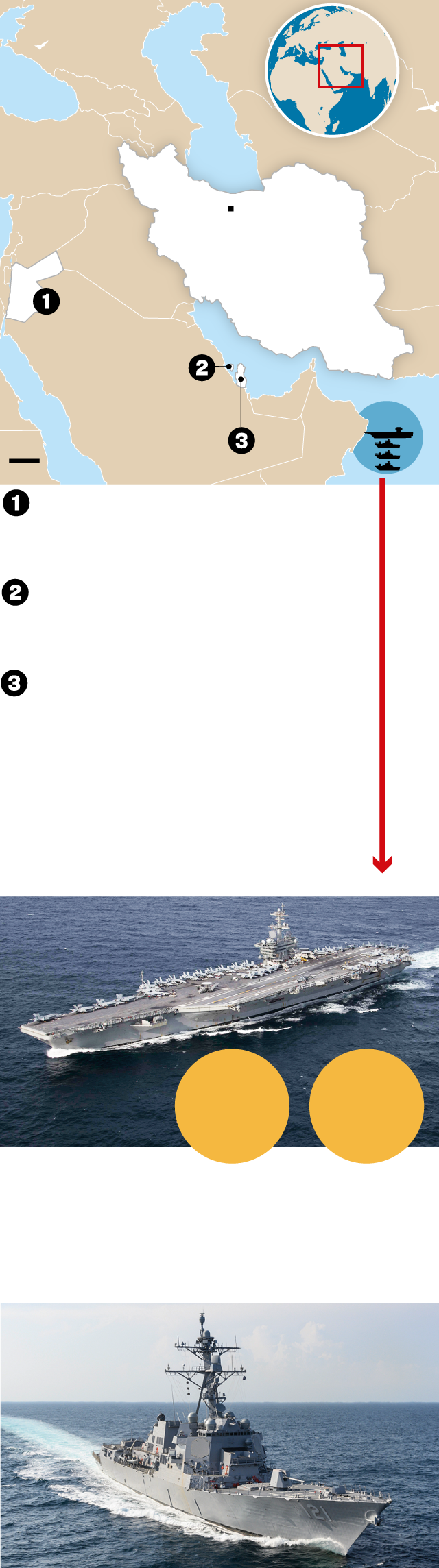
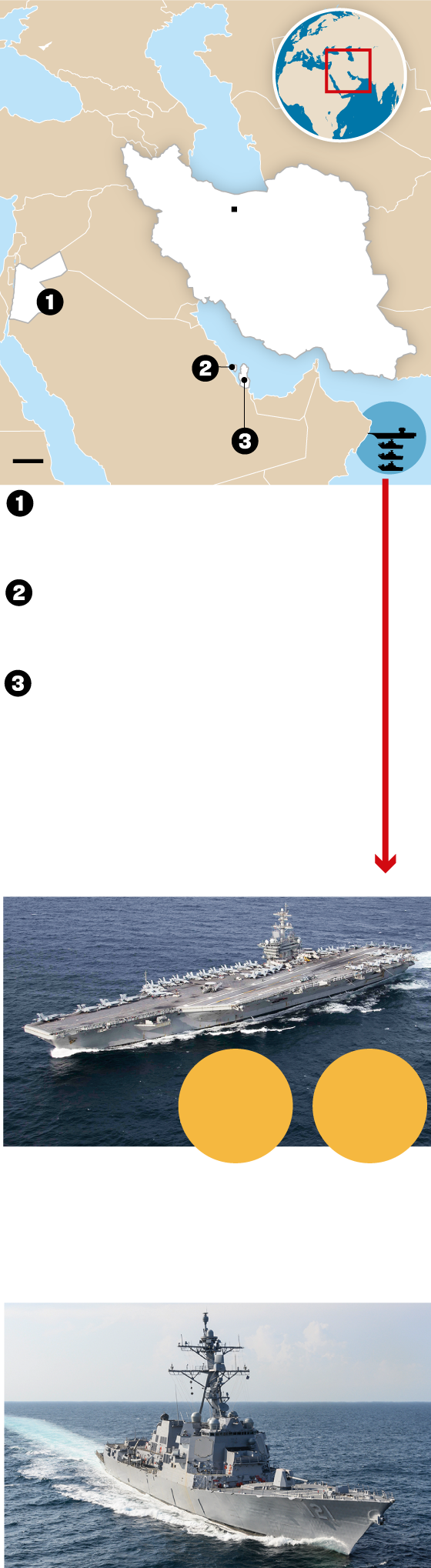
Washington is trying to advance on three fronts simultaneously: curbing Iran's nuclear program, preventing a large-scale regional war, and protecting the stability of its allies in the Gulf. The military buildup seeks to address these objectives, but without a clear political path forward, it also increases the risk of an unpredictable reaction from Iran. The US deployment in the region is visible and sustained. They operate the aircraft carrier Abraham Lincoln The US has reinforced bases in Qatar, Bahrain, and Jordan, and Central Command is conducting constant maneuvers. Although Washington avoids talking about an imminent attack, it maintains a large military presence in the Gulf.
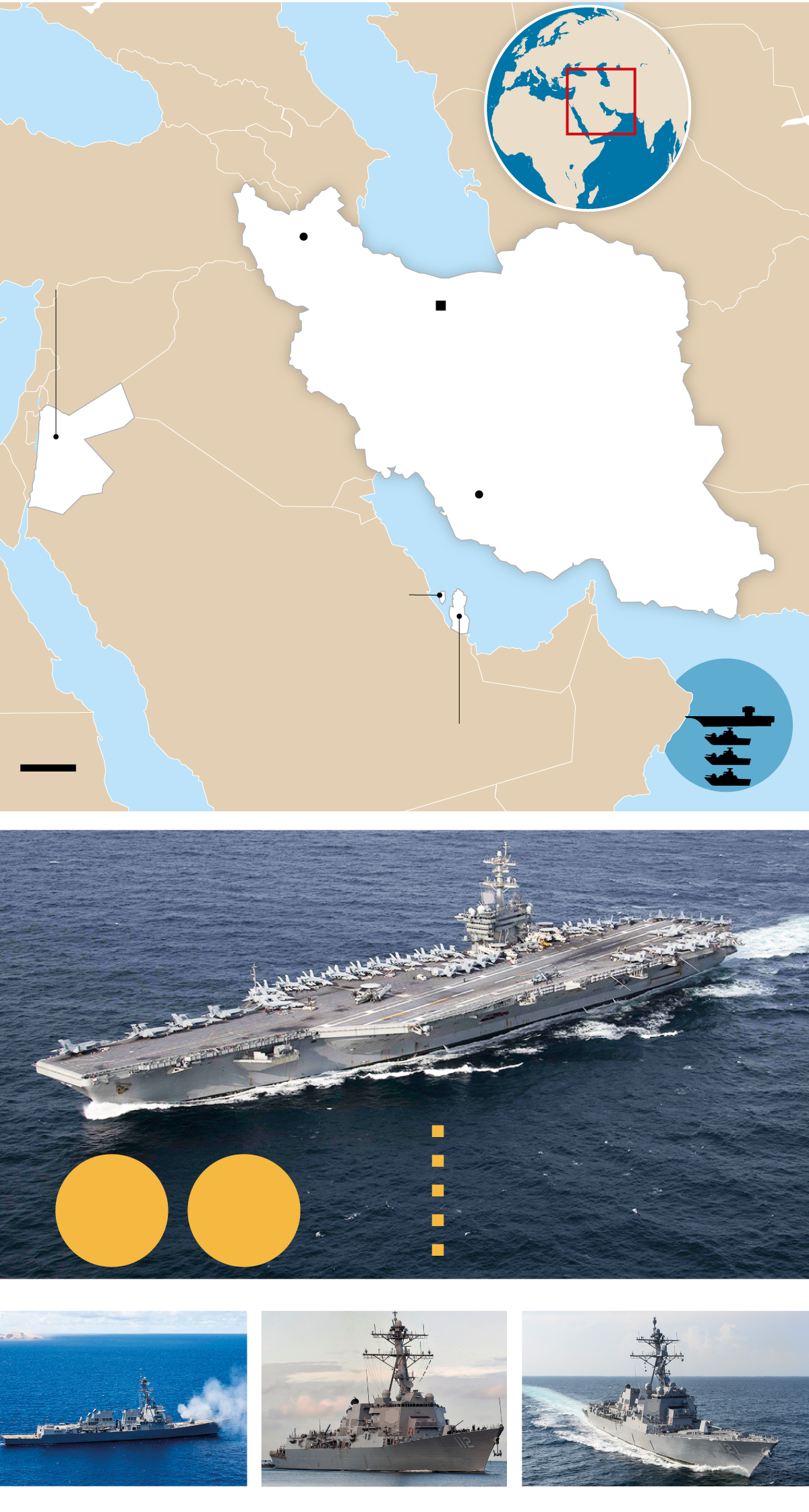
AZERBAIDJAN
mar Caspi
TURQUIA
TURKMENISTAN
Tabriz
Avions de combat a la base aèria de Muwaffaq Salti
Teheran
AFGANISTAN
IRAQ
IRAN
JORDÀNIA
Shiraz
KUWAIT
PAKISTAN
golf Pèrsic
ARÀBIA SAUDITA
BAHRAIN
Vaixells de guerra al
port Khalifa Bin Salman
QATAR
golf d’Oman
EAU
Noves defenses aèries a la
base aèria d’Al-Udeid
OMAN
200 km
‘ABRAHAM LINCOLN’ DELS EUA
Portaavions nuclear
Eslora (llargada) : 332,8 m
Mànega (amplada): 40,8 m
Alguns dels avions que transporta:
Caces bombarders supersònics Super Hornet
Avions de guerra electrònica EA-18G Growler
Helicòpters Seahawks antisubmarins
Avions de combat F35 Lightning II
Avions radar E-2D Hawkeye
Capacitat
Tripulació
5.680
90
persones
avions
Acompanyen al portaavions 3 destructors:
‘MICHAEL MURPHY’ DELS EUA
‘SPRUANE’ DELS EUA
‘FRANK E. PETERSEN’ JR. DELS EUA
AZERBAIDJAN
TURKMENISTAN
TURQUIA
Teheran
AFGANISTAN
IRAQ
IRAN
ARÀBIA
SAUDITA
EAU
OMAN
200 km
JORDÀNIA
Avions de combat a la base aèria
de Muwaffaq Salti
BAHRAIN
Vaixells de guerra al port Khalifa Bin Salman
QATAR
Noves defenses aèries a la
base aèria d’Al-Udeid
‘ABRAHAM LINCOLN’ DELS EUA
Portaavions nuclear
Eslora (llargada) : 332,8 m
Mànega (amplada): 40,8 m
Capacitat
Tripulació
5.680
90
persones
avions
Acompanyen al portaavions 3 destructors:
‘SPRUANE’ DELS EUA
‘MICHAEL MURPHY’ DELS EUA
‘FRANK E. PETERSEN’ JR. DELS EUA
AZERBAIDJAN
TURKMENISTAN
TURQUIA
Teheran
AFGANISTAN
IRAQ
IRAN
ARÀBIA
SAUDITA
EAU
OMAN
200 km
JORDÀNIA
Avions de combat a la base aèria
de Muwaffaq Salti
BAHRAIN
Vaixells de guerra al port Khalifa Bin Salman
QATAR
Noves defenses aèries a la
base aèria d’Al-Udeid
‘ABRAHAM LINCOLN’ DELS EUA
Portaavions nuclear
Eslora (llargada) : 332,8 m
Mànega (amplada): 40,8 m
Capacitat
Tripulació
5.680
90
persones
avions
Acompanyen al portaavions 3 destructors:
‘SPRUANE’ DELS EUA
‘MICHAEL MURPHY’ DELS EUA
‘FRANK E. PETERSEN’ JR. DELS EUA
Iran, for its part, has warned that any attack by Washington, even a limited one, will be considered an act of war and will receive a direct response that could affect not only US bases, but also the infrastructure of allied countries and maritime traffic in the Strait of Hormuz, through which nearly a quarter of the world's supply passes. The country faces sanctions, diplomatic isolation, and a deteriorating economy. aggravated by the repression of internal protests which has reduced the regime's legitimacy. However, the Islamic Revolutionary Guard Corps (IRGC) remains the central pillar of the political and security system, with its own military capabilities. Diplomacy also remains active. This Friday, Iranian Foreign Minister Abbas Araghchi visited Turkey and met with officials from the Ankara government to discuss the escalation with the United States and explore ways to de-escalate. Iran has reiterated that it would be willing to resume nuclear negotiations if military threats are eliminated and conditions for safe dialogue are created. Turkey reiterated its willingness to act as a mediator and publicly warned that a military intervention would exacerbate regional instability. Other countries such as Qatar, Oman, and Saudi Arabia are also maintaining discreet contacts with Washington and Tehran, concerned about the impact a conflict would have on regional security and energy markets. Iran's network of regional allies is showing signs of strain. Hezbollah, weakened after months of clashes with Israel, maintains a confrontational strategy that alienates it from the Lebanese state and exposes the country to renewed internal tensions. In Iraq, the United States has hardened its stance toward the Baghdad government and warned of possible sanctions if pro-Iranian militias intensify attacks against US interests. Despite these limitations, the network of armed allies remains a key tool for Iran, especially in a scenario of indirect retaliation. Europe supports US pressure, albeit without assuming a leading role. The recent inclusion of the IRGC on the European Union's list of terrorist organizations reinforces Tehran's isolation and reduces its diplomatic room for maneuver. Furthermore, several European governments insist that a military confrontation would have unpredictable consequences for both regional stability and global energy security. Different potential scenarios
The scenarios in the event of military intervention are varied. They range from limited and targeted attacks against military and nuclear installations to a difficult-to-control regional escalation. Between these two extremes, the possibility is considered that the Iranian regime will withstand the blows but be forced to adjust some aspects of its foreign policy and weapons program. The scenario that most worries many regional actors is the collapse of the Iranian state and the entry into a phase of prolonged instability, with internal tensions, humanitarian crises, and a direct impact on neighboring countries.
For now, deterrence maintains a fragile balance. The United States is keeping its options open, Iran is combining resistance and diplomacy, and regional mediators are trying to prevent an escalation. However, in a highly militarized region, any incident could transform the current pressure into a direct confrontation with consequences that would extend far beyond Iran and the United States.
