The most feared war in the Middle East has arrived
A potential conflict between the United States and Iran has sent shivers down the spines of people from Beirut to Abu Dhabi for years.


-
CAT -
CAST
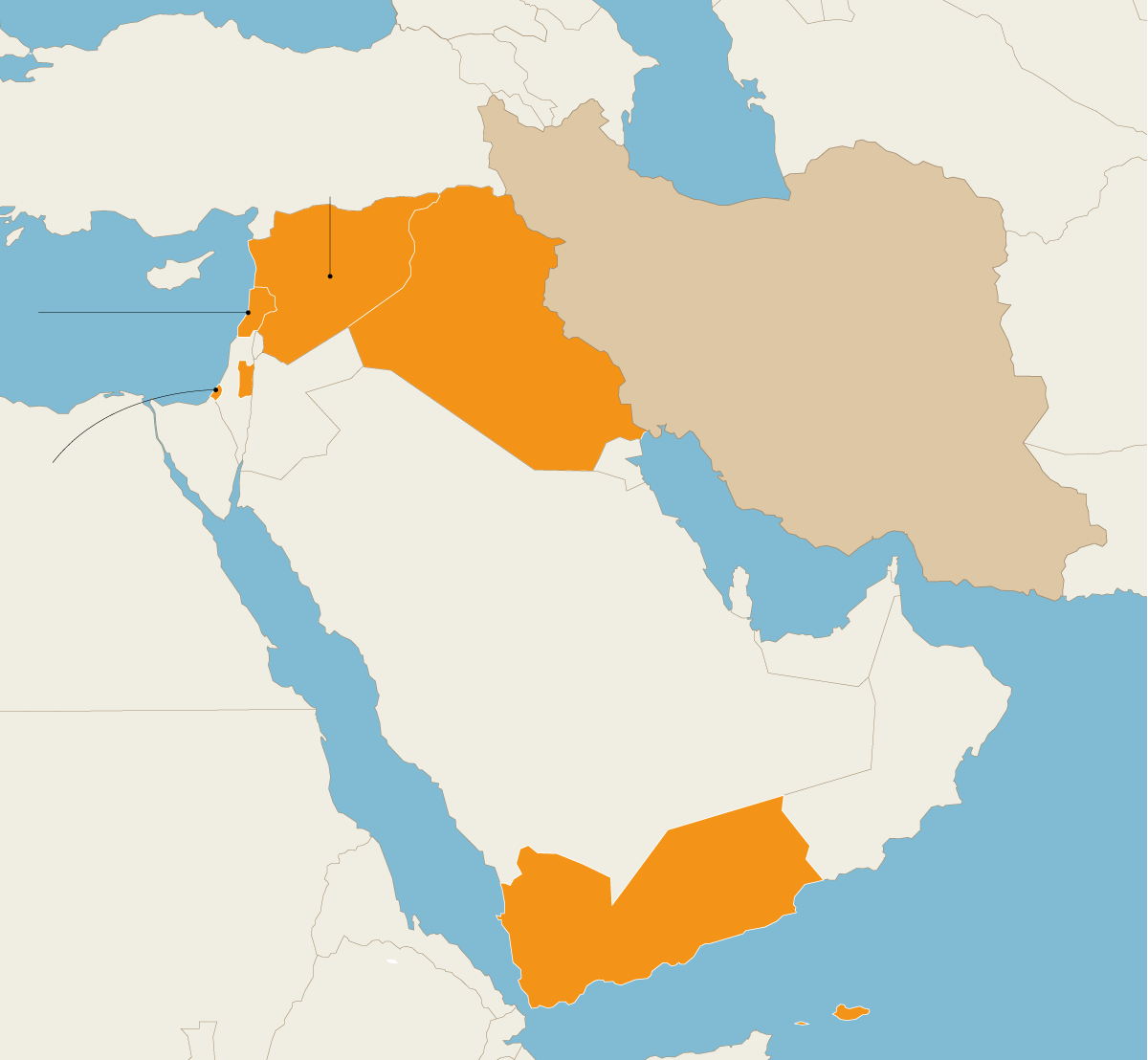
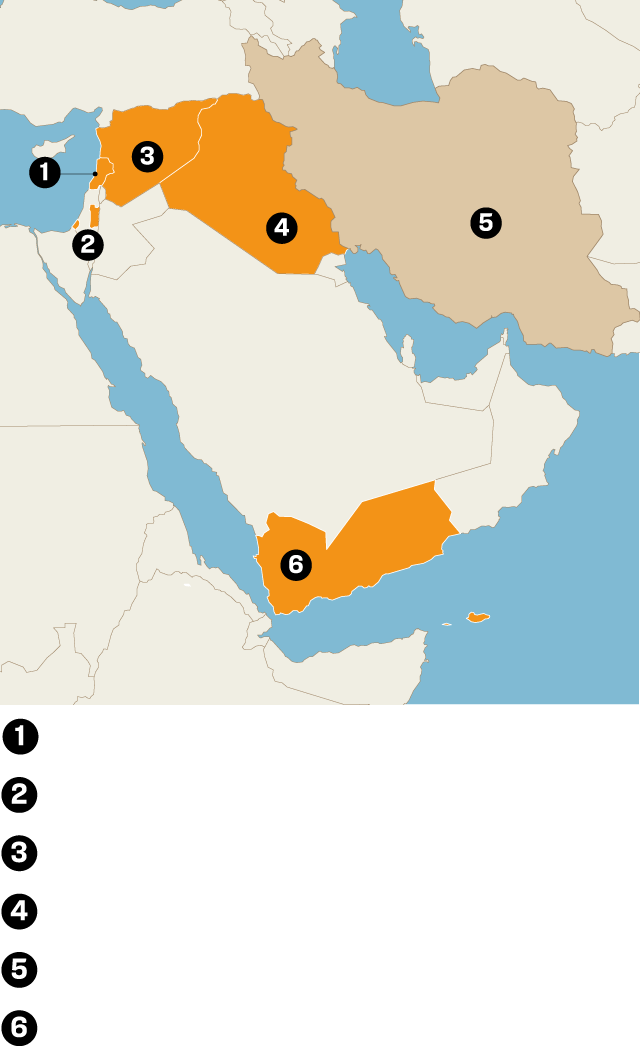
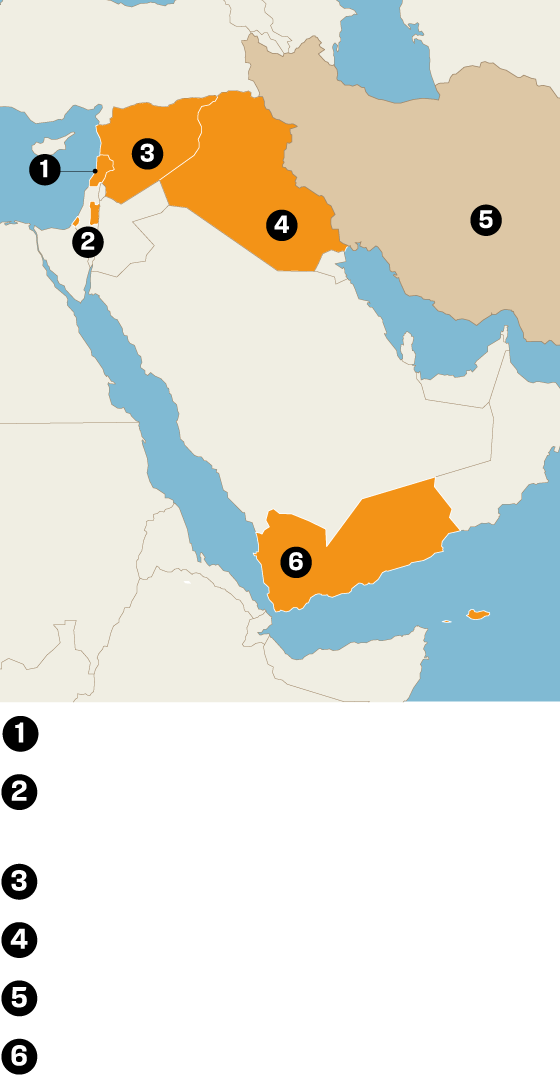
BarcelonaThe main geopolitical consequence of The US invasion of Iraq strengthened Iran as the only regional power capable of challenging US hegemony in the Middle East. As Tehran strengthened ties with and armed a network of militias across the region, the specter of a total war began to loom, pitting Iran and its allies—the self-styled "axis of resistance"—against the US. This war, they said, would set the entire Middle East ablaze. The scenario that sent shockwaves from Beirut to Abu Dhabi is now upon us. In the region's capitals, everyone is now calculating how the conflict will affect them and hoping that Tehran's current weakened state will limit its scope and the damage it will cause.
The first countries directly affected by the conflagration have been the Persian Gulf states that host US bases and are geographically closest to Iran: Bahrain, the United Arab Emirates, Kuwait, and Qatar. In fact, the Qatari network Al Jazeera had to briefly halt a live debate because its journalists' mobile phone alarms began blaring loudly.
SÍRIA
Milícies
xiïtes
TURQUIA
LÍBAN
Hezbollah
IRAN
Guàrdia
Revolucionària
de l’Iran
IRAQ
Milícies
xiïtes
ISRAEL
PALESTINA
Hamàs
Jihad Islàmica Palestina
ARÀBIA SAUDITA
OMAN
IEMEN
Houthis
LÍBAN / Hezbollah
PALESTINA / Hamàs i Jihad Islàmica Palestina
SÍRIA / Milícies xiïtes
IRAQ / Milícies xiïtes
IRAN / Guàrdia Revolucionària de l’Iran
IEMEN / Houthis
LÍBAN / Hezbollah
PALESTINA /
Hamàs i Jihad Islàmica Palestina
SÍRIA / Milícies xiïtes
IRAQ / Milícies xiïtes
IRAN / Guàrdia Revolucionària de l’Iran
IEMEN / Houthis
During the brief war last summerThe Qatari base of Al Ubeid, the main US air base in the region, has already been hit by a missile. However, on that occasion, the attack was choreographed, as Washington had been warned in advance, and the action was really aimed at de-escalating the crisis rather than serving as revenge. This time the situation is different: the scope of the attacks is more ambitious, which means that the economic losses will also be greater, as well as, perhaps, the loss of human lives. So far, one person has already died in Abu Dhabi, the capital of the Emirates, due to the impact of debris from an Iranian missile intercepted in the air. Those countries with Iranian-backed militias, such as Iraq, Houthi-controlled Yemen, or Hezbollah-controlled Lebanon, considered Tehran's main asset before last year's war with Israel, could fare even worse. In fact, Israel has bombed southern Lebanon once again in recent hours.
Experts agree that No country in the region, with the exception of Israel, wanted this war And that's why they tried to dissuade Trump from starting it. Even those countries more traditionally hostile to the ayatollahs' regime, like Saudi Arabia and the Emirates, didn't look favorably upon it. "The mere perception of instability has significant costs. From the perspective of the Gulf, a prolonged conflict that creates greater instability in the immediate area is a major threat," argues analyst Monica Marks, a professor at NYU Abu Dhabi.
Fear of the economic impact
The medium-term economic consequences could be astronomical for the Gulf countries. Several have already closed their airspace. The worst-case scenario would be if Iran managed to block the Strait of Hormuz, through which 20% of the world's oil demand passes. However, to prevent this, the US has deployed a third of its naval fleet. In any case, even if Iran were to attempt and fail, it could still disrupt oil tanker traffic by attacking ships with missiles from its coast. Aside from the effects on the oil trade, a prolonged war would seriously undermine the plans to diversify their economies, which all the Gulf petro-monarchies are implementing to some extent. Probably the best-known effort is that of Saudi Crown Prince Mohammed bin Salman, with his Vision 2030, which aims to move the country away from oil dependency. One of his key initiatives is tourism, a sector highly sensitive to the perception of insecurity. Likewise, the position of the United Arab Emirates as hub A significant portion of its trade with Iran, which is subject to sanctions, derives from regional trade. If its Persian neighbor collapses or becomes a failed state, the Emirati economy will suffer.

Iran's immediate attack—despite its military inferiority—against targets in the Gulf states could be a strategy to try to avert war. "They are trying to draw other countries into this war. They want to increase the cost for these countries, probably hoping that they will pressure the Trump administration to stop the war," Muhanad Seloom, a professor of strategic studies at the Doha Institute, told Al Jazeera. However, the ability of these capitals to influence Washington is quite limited, as demonstrated by the unsuccessful attempt by Oman, the country that was mediating the peace talks between Iran and the US. Hours before the bombing, its Foreign Minister, Bader bin Hamad al-Busaidi, revealed in an interview on CBS that Tehran had made a key concession that would have prevented Iran from acquiring a nuclear weapon. "We are talking about zero uranium stockpile capacity. Without that, you can't make a bomb. A peace agreement is close," al-Busaidi declared.
