Ten lessons from a month of war in Iran
The conflict that threatens the global economy drags on without a marked direction due to Trump's inconsistencies
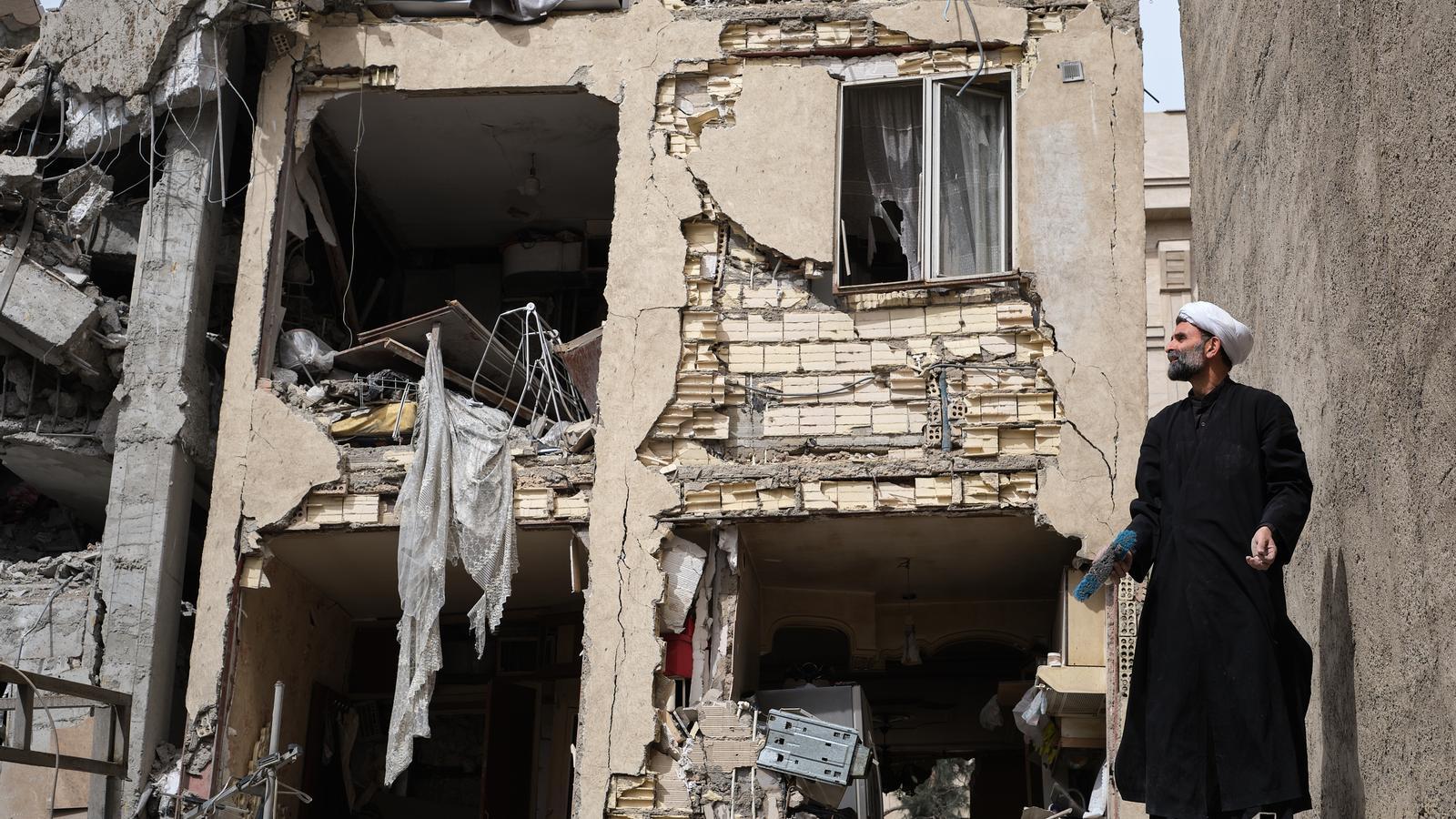

BarcelonaThe war of the United States and Israel against Iran has been going on for a month. Trump has twice backed down from his ultimatum in which he threatened to bomb Iranian energy plants, and now there are talks between Washington and Tehran. But in reality this does not mean much, beyond the fact that the war is not going according to the plans of Trump and Netanyahu. The ayatollah regime is resisting and does not seem willing to surrender, because it knows that it holds the key to a global energy crisis. No one knows if the ongoing negotiations represent a US backtrack, another TACO ("Trump Always Chickens Out) moment to find a way out. Or perhaps it is just buying time to accumulate more troops in the region and return to escalation, with attacks on infrastructure, with a ground operation to force the opening of the Strait of Hormuz, or with control of Kharg Island, Iran's main oil export hub. It would be the third time the United States has attacked Iran during negotiations. Whatever happens in the coming weeks, this war that has disrupted the global economy already leaves us with some lessons.
1. Overwhelming military superiority does not guarantee victory
The first lesson is not new: it only confirms what we had already seen in Gaza or Ukraine, to give only the latest examples. The United States has the most powerful army in the world, unrivaled naval power, and precision bombing systems. But Iran, militarily much weaker, has played its cards in an asymmetric war, based on low-cost weapons (drones, missiles, naval mines), on economic disruption, and on a strategy of regionalizing chaos that is difficult to counter with conventional means. In fact, it could be said that the United States and Israel have found themselves in a situation where a militarily spectacular bombing campaign (on the first day they killed the supreme leader and the regime's military leadership) has led to a muddy political, geostrategic, and economic situation.
2. The Strait of Hormuz and geography as a strategic lever

The key to this asymmetry is the Strait of Hormuz, a passage through which a fifth of the world's oil traffic flows. This war has shown that geography can be a strategic lever. Tehran has only suffered seventeen attacks against ships in the area, threats, and the tactic of placing naval mines to block the passage, where there are now two thousand stranded ships. The rise in oil prices has affected stock markets and had a global economic impact. The closure of Hormuz is no surprise: since the Iran-Iraq war of the 80s, Tehran has threatened with this tactic. What is surprising is that the United States and Iran did not have a strategy to prevent it before initiating the attack.
And Tehran still has another card to play: closing access to the Red Sea through the Bab el-Mandeb Strait, which its Houthi allies in Yemen control, in case of a ground invasion. Maritime transit to the Mediterranean through the Suez Canal also depends on the free passage through the Red Sea.
3. Lethal and cheap drones and missiles that don't run out
Iran also wages an asymmetric war with its Shahed drones, which it perfected to sell to Russia in the Ukraine war. They are lethal, effective, and cheap (costing between 17,000 and 45,000 euros per unit), which is why some analysts call them "the poor man's cruise missile." In contrast, the Patriot missiles used by the United States and Gulf countries to intercept them cost about 2.6 million euros each. Basically, what the United States is doing from its bases in the Gulf countries is killing flies with cannon fire. The costs are less unequal in the case of Israel, which uses Tamir interceptors, with a cost similar to that of Iranian drones. But the impregnable Iron Dome, the Israeli anti-aircraft defense system, is increasingly being overwhelmed by Tehran's strategy of launching drones in swarms and cluster bombs to saturate it.
By combining the use of drones with its ballistic missiles, Iran threatens to deplete the defense systems of the Gulf countries and Israel. It uses its missile arsenal with an economy of munitions: launching a handful of missiles each day, even if almost all are intercepted, is enough to completely paralyze life in a country. According to U.S. intelligence sources, in these months of war, attacks on Iranian missile launch platforms have only depleted one-third of their arsenals.
Furthermore, Iran plays with its constellation of allied militias in the region: the Houthis in Yemen, various armed groups in Iraq, and Hezbollah in Lebanon, which allow it to open secondary fronts and expand the theater of operations, thereby increasing global costs.
4. Iran's regime does not collapse by decapitating it
It seems that the strategy of the joint attack by the United States and Israel was based on the idea of assassinating the supreme leader of Iran, Ali Khamenei, and other regime officials, and instigating a revolt in the country. Both the US president, Donald Trump, and the Israeli prime minister urged Iranians to rebel in the early days of the war. What has happened has been precisely the opposite: instead of imploding, the Iranian regime has entrenched itself, the military wing has gained centrality, and the protest movement that had erupted in January in the country and was brutally suppressed has continued silenced under the US and Israeli bombs. Now both US and Israeli intelligence services admit that the prospect of overthrowing the ayatollahs' regime is not on the table.
In reality, the Iranian system was conceived from the beginning not simply as the shadow of a single man, but as a complex and militarized ideological system led by a religious authority, behind which there is a solid network of security, political, administrative, and economic institutions working to preserve the regime, not to serve a single individual. In this framework, the Islamic Revolutionary Guard is not just another institution, but the backbone of the system and the one that has now assumed power.
5. The vulnerability of the Gulf petromonarchies
The war has exposed the weakness of the Persian Gulf petromonarchies, which had always seen the presence of US bases in their territories as a security guarantee. The model of an oasis of peace and prosperity in a region in flames has been shattered, and the fragility of their energy infrastructure has been revealed, as well as the possibility of them suffering situations that would threaten their survival, such as an attack on desalination plants, which would leave them without a supply of drinking water.
6. Netanyahu and the Greater Israel project
Donald Trump's decisions may seem erratic, but Benjamin Netanyahu's are not at all. The Israeli prime minister has based his entire long political career on denouncing Iran as an existential threat. And also on the construction of Greater Israel, which is materialized with the border expansion south of Lebanon, where the Israeli army uses the methods it imposed in the Gaza Strip. The materialization of Greater Israel today consists, above all, in becoming an indisputable military power in the region. This autumn, Netanyahu must call elections, the first time Israelis will go to the polls since the Palestinian attacks of October 7, 2023. And although the majority support the war with Iran, Netanyahu still does not have the re-election of the government coalition guaranteed.
The war, however, has a strong impact on the daily lives of Israelis, and has paralyzed their economy. After more than two years of genocidal war in Gaza, with the intensification of colonial violence against Palestinians in the West Bank and with the open front in Lebanon, there are also signs of military weakening. Because Israel has an almost unlimited supply of weapons from the United States, but not enough soldiers. The Chief of Staff Eyal Zamir warned on Wednesday at the security council meeting that the Israeli army could “collapse” if it does not achieve more recruitment. Now that the Israeli government has shelved the law to force the ultra-Orthodox to join the ranks and is also not extending the mandatory military service period or the operation of reservists, the military command says it lacks 15,000 soldiers, half of whom are combat soldiers, to be able to attend to all fronts.
7. Hezbollah was not dead

The Lebanese Shiite militia allied with Iran has resurged from what appeared to be its ashes. Hezbollah has gone from apparent containment to open confrontation with Israel, and it has now been seen that the 2024 withdrawal it staged after the ceasefire with Israel was actually a tactical pause to rebuild. Following the death of Hassan Nasrallah and under the more pragmatic leadership of Naim Qassem, the movement reorganized its forces, strengthened its arsenal with support from Iran, and prepared a war of attrition strategy based on guerrilla warfare, drones, and launching attacks to saturate Israeli air defenses. Hezbollah, although weakened and with less internal legitimacy, does not seek to defeat Israel, but to resist to avoid its disarmament and remain a key player in Lebanon.
8. Trump's loneliness and European division
The United States called on its allies to form a military coalition to reopen the Strait of Hormuz, and neither European nor Asian partners wanted to support it. Trump has gone so far as to call NATO partners “cowardly”. The change is not minor. For decades, the United States has projected its power through military coalitions, and now its strategic planning capacity, long-term objectives, and ability to contain the economic impacts of its military actions, which are perceived as unpredictable and without a clear way out, are being questioned. Wars often reveal underlying dynamics, and this one is demonstrating that the United States continues to be the hegemonic power, but is increasingly finding it difficult to materialize it.
Europe continues to react divided and tepidly to the new world order that Trump wants to impose. The divisions we had already seen among member states regarding the genocide in Gaza have now been reproduced: with Germany and France positioning themselves in favor of the attack on Iran, Pedro Sánchez's government has been left alone chanting “No to war”. But as things have become more complicated for Trump and Netanyahu, and especially after the United States' threats to Spain for refusing to cede bases on its territory, Madrid has been gathering more support. This time the rift has also reached European institutions with an open clash between the President of the Council, António Costa, and the President of the Commission, Ursula von der Leyen, who also had to back down after supporting the attack against Iran and saying that Europe should adapt to the end of the world order based on international law.
9. Putin wins without trying and China sells stability
Without seeking it, Russian President Vladimir Putin is, indirectly, one of the winners of this war. Attacks against Iran have caused oil prices to skyrocket, the Kremlin's main source of income, making it easier for him to sustain the war effort at a critical moment for his economy. The United States has even temporarily lifted sanctions on Russian oil. Moscow is also the world's second-largest exporter of fertilizers, another strategic product that is blocked in the Strait of Hormuz and is already increasing its sales.
Now the focus of the United States has shifted from the war in Ukraine to the Middle East, and although Kyiv has been able to sign agreements with Gulf countries to share its experience in drone combat, it is clear that Washington will now prioritize the war in Iran. The longer the war drags on, the stronger Russia's position will become. Negotiations on Ukraine are now stalled. Putin also benefits from the transatlantic fracture, from tensions within NATO and the EU, and sees his contempt for international law legitimized by the actions of the United States and Israel against Iran.
As for China, which has had to lower its growth expectations and has been engaged in a trade war with the United States for a year, it now sees the crisis in the Middle East affecting both its main shipping routes and its energy supply. 12% of the oil imported by China came from Iran, but just as it did with Maduro's capture, Beijing has limited itself to discreetly condemning the attack on Iran. The reality is that China lacks the military capacity to counterbalance the United States or defend its allies, despite its economic power. And Xi Jinping can do nothing but position himself as a stable and predictable leader, in contrast to Trump, and denounce the hypocrisy of the West.
10. Decarbonize the economy for a safer world
This war highlights that the current energy model not only contributes to climate change but also generates systemic insecurity. Ending the dependence on fossil fuels is not only an environmental urgency but also a security one. Fossil fuels concentrate power in certain actors and territories, facilitating geopolitical coercion and increasing the risk of conflict. Economies that depend on oil are particularly sensitive to supply disruptions and price fluctuations, limiting their response capacity. Although in the short term high prices may further incentivize oil and gas exploitation, this same volatility makes a transition to clean, more stable, and conflict-resilient energies more urgent than ever.
