Netanyahu uses the war as a smokescreen for his trial
The corruption case is again suspended while the defense alleges security and readings grow about the use of the conflict with Iran as a political shield
-
CAT -
CAST
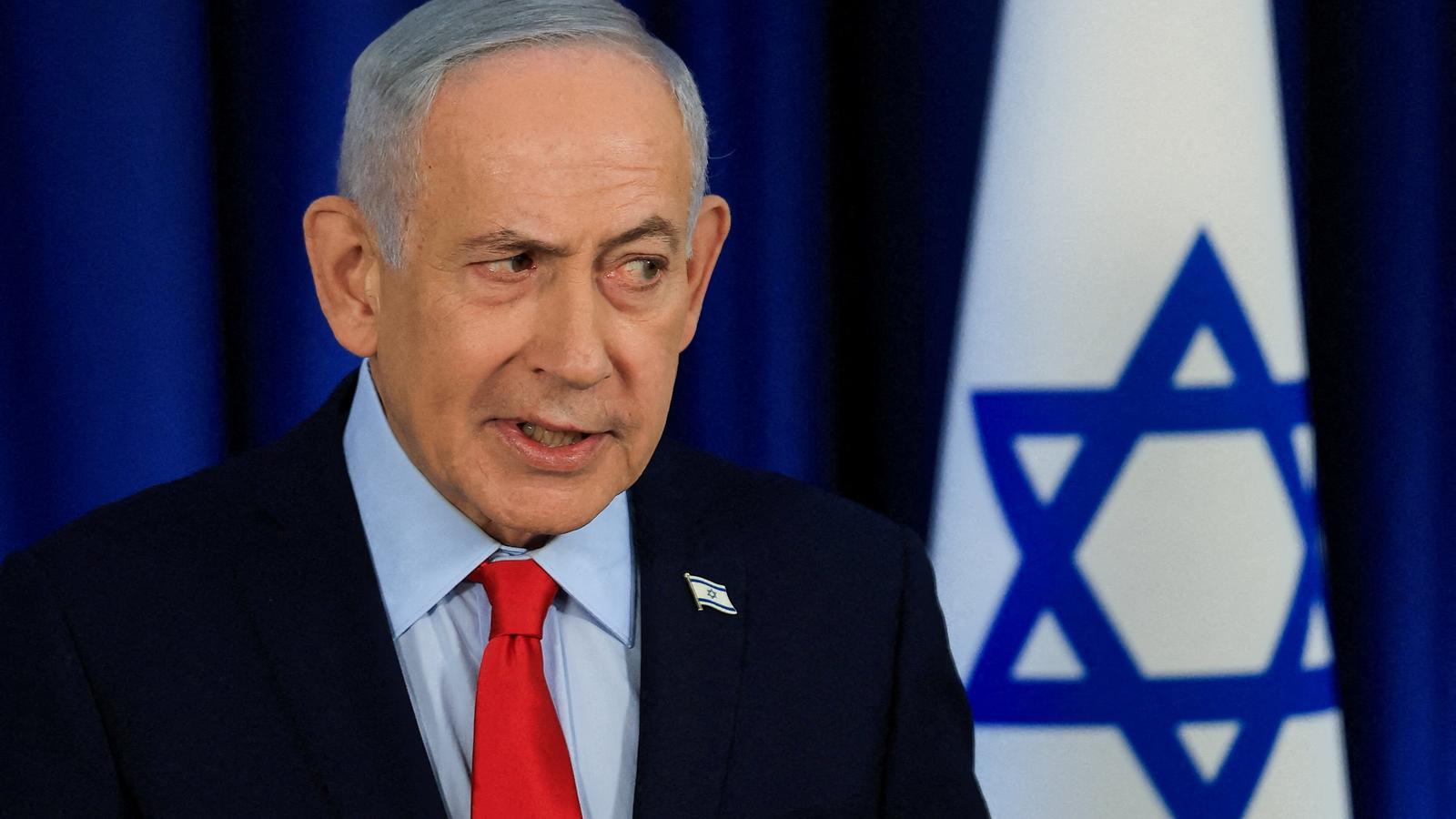
The corruption trial against Benjamin Netanyahu has been postponed again after the Jerusalem District Court canceled the sessions scheduled for this week, following a new request from the prime minister's defense. The argument: "Classified security and diplomatic reasons" linked to the regional situation. According to the document filed with the court, Netanyahu will not be able to testify "for at least the next two weeks." The decision maintains the process, which had already been frozen for more than a month due to the military escalation with Iran, formally active but repeatedly interrupted.The case, which represents the first time an Israeli head of government is prosecuted while in office, is in the full phase of testimonies of the well-known cases 1000, 2000, and 4000. Case 1000 investigates the alleged receipt of 260,000 euros in gifts from businessmen such as Arnon Milchan and James Packer. Case 2000 analyzes an alleged negotiation with the editor of the newspaper Yediot Aharonot, Arnon Mozes, to obtain favorable coverage in exchange for limiting the influence of the rival newspaper, Israel Hayom. Case 4000, the most serious, focuses on alleged regulatory favors to businessman Shaul Elovitch in exchange for positive coverage on the Walla! portal, and includes the accusation of bribery.What was to be resumed these days was not unimportant sessions, but the prosecution's cross-examination, a key moment in which the narrative built by Netanyahu is tested since the beginning of the case in 2020. Netanyahu has denied all accusations and has called the case a "witch hunt" and a conspiracy by the "deep state". He even asked for a pardon in November to the Israeli president, Isaac Herzog, arguing that the judicial proceedings hinder his ability to govern and would benefit the unity of the country. The pardon remains pending resolution.In this context, the war with Iran has been interpreted by various analysts as a possible smokescreen for the trial. “I am sure that this is one of the main reasons for the timing of the offensive against Iran, not only because of the trial, but also because he is still partly held responsible for the events of October 7, 2023”, the Israeli historian and political scientist, Ilan Pappé, tells ARA.Along the same lines, the Arab Center Washington points out that the prolongation of the conflict serves Netanyahu for a double objective: to maintain internal political control in an uncertain electoral context and, at the same time, to divert public attention and delay his judicial processes. In fact, shortly after the start of the offensive against Iran on February 28, Netanyahu himself called his trial an "absurd circus" and asked for it to be suspended to focus on the war.According to a source in the prime minister's coalition cited by the newspaper The Times of Israel, the leader was confident that a “victory narrative over Iran” would boost his re-election chances and shift attention from October 7th. He considered that a regime change in the Persian country and a normalization agreement with Saudi Arabia would be enough to reinforce this scenario.Hit popularity and political tensions
Netanyahu's popularity was severely affected after the Hamas attacks on October 7, 2023. Several sectors of Israeli society accuse him of avoiding responsibility for a serious security lapse, while he rejects any blame and insists on military successes against the armed group. Furthermore, public trust has also been eroded by his insistence on pushing for a government-controlled investigation instead of an independent commission.Meanwhile, the government faces growing internal tensions over the reform of the military recruitment law, especially regarding the exemptions demanded by ultra-Orthodox parties. Military service in Israel is mandatory, but Netanyahu's ultra-Orthodox allies are pressuring to maintain these privileges. A law of this kind, currently stalled due to the regional situation, would be highly unpopular among the majority of the population.The ceasefire in Iran weakens Netanyahu
In the early stages of the conflict with Iran, the war strengthened the prime minister's leadership image. In a context of high tension, more than 80% of the Jewish population supported the offensive, and a large part of the political spectrum rallied behind the government. Some analysts pointed out that a quick end would have consolidated Netanyahu as the great political winner, and several polls indicated a slight improvement in voting intention.With Wednesday's ceasefire, considered by political and social sectors an unsatisfactory result, and the feeling that objectives such as the neutralization of Iran's nuclear and ballistic program or a regime change are far from being achieved, the success narrative has weakened.The latest polls reflect this trend. Likud, the prime minister's party, would go from 28 to 25 seats according to the poll by Israel's public broadcasting corporation, Kan, while Netanyahu's coalition would be around 51 seats, far from the 61 needed for a majority. In parallel, opposition parties would approach 59 seats. A significant part of this drop is explained by the rejection of the ceasefire with Iran, with 56% of respondents disagreeing.In this context, the elections scheduled before October 27 are shaping up as a referendum on three simultaneous fronts: the corruption trial, the management of the war, and the credibility of Netanyahu's leadership.
