Israeli ultras pressure Netanyahu over Trump's "capitulation" to Iran
Part of Tel Aviv's policy criticizes Washington's negotiations with Tehran and fears a "bad deal"
“Netanyahu’s promises of victory over Iran end in a glorious capitulation by the United States”. “Israel entered the war as a partner of the United States and ends it on the sidelines.” These have been some headlines in the Israeli press in recent days to describe the negotiations between Washington and Tehran to agree on an end to the war. The military campaign that Israel presented as an existential battle against Iran would be closing with an uncomfortable image for Tel Aviv: Israel has gone from being a key player to being progressively left out of the talks. Israel's leader "will do whatever I want him to do," Trump said last week to the press. These were statements that in Israel were interpreted as an explicit demonstration of the current relationship between both governments. The divergence between the objectives of the United States and those of Israel is evident: Washington prioritizes the reopening of the Strait of Hormuz and regional stabilization, while Tel Aviv continues to defend a strategy of sustained pressure on Iran and its allies. “Trump wants to see if it is possible to reach an agreement with Iran, while Israeli Prime Minister Benjamin Netanyahu was waiting to resume military action”, Leonie Fleischmann, an expert in Israeli policy at Saint George’s University of London, explains to ARA. According to her, in Israel there is an increasingly clear perception that the United States prioritizes regional containment above Israeli strategic objectives.The feeling that Netanyahu had been sidelined was further accentuated when Trump, last Saturday, had a conversation with several regional leaders to inform them about the negotiations with Iran without including the Israeli prime minister. Netanyahu and Trump spoke later. In parallel, Reuters has cited two Israeli officials according to whom the prime minister would have admitted in private conversations the difficulty of influencing the White House's decisions while negotiations with Tehran advance. According to these sources, the Israeli leader has expressed concern about the content of the agreement.In this regard, several Israeli political and security officials have described the emerging pact as a “bàd deal” because, as they claim, it does not address key issues such as Iran's ballistic missile program or the network of Tehran's allied groups in the region. Others warn that the understanding “dòes not serve Israel's interests” and could give Iran time to recover economically and militarily, according to the Israeli media outlet Channel 12. All of this, for the moment, is based on information published by various media outlets, but still without any official document. Internal criticism is growing
The Israeli opposition has also taken the opportunity to lash out at the government. Opposition leader Yair Lapid has stated that the supposed agreement "is bad for Israel, bad for the region, and even bad for the Iranian citizens." Lapid accuses Netanyahu of having allowed Washington to negotiate practically without coordination with Israel and affirms that the Israeli government is "at the lowest point of its influence capacity in Washington."This perception is compounded by growing criticism within Israel, particularly from sectors of the political right and the security establishment, who believe that Netanyahu's initial promises have not been fulfilled. The Iranian regime remains, retains a significant part of its ballistic arsenal, and maintains its regional influence.At this time, the agreement is not yet finalized but, according to the latest information, Iran could agree to hand over its enriched uranium reserves and reopen the Strait of Hormuz in exchange for the lifting of sanctions and the end of the American blockade on Iranian ports. The most sensitive issues of the nuclear program would remain pending negotiation for a period of sixty days and it is not yet clear whether the agreement will address Iranian missiles or support for regional armed groups, one of the main red lines for Israel.The Lebanon front, a political objective for Netanyahu
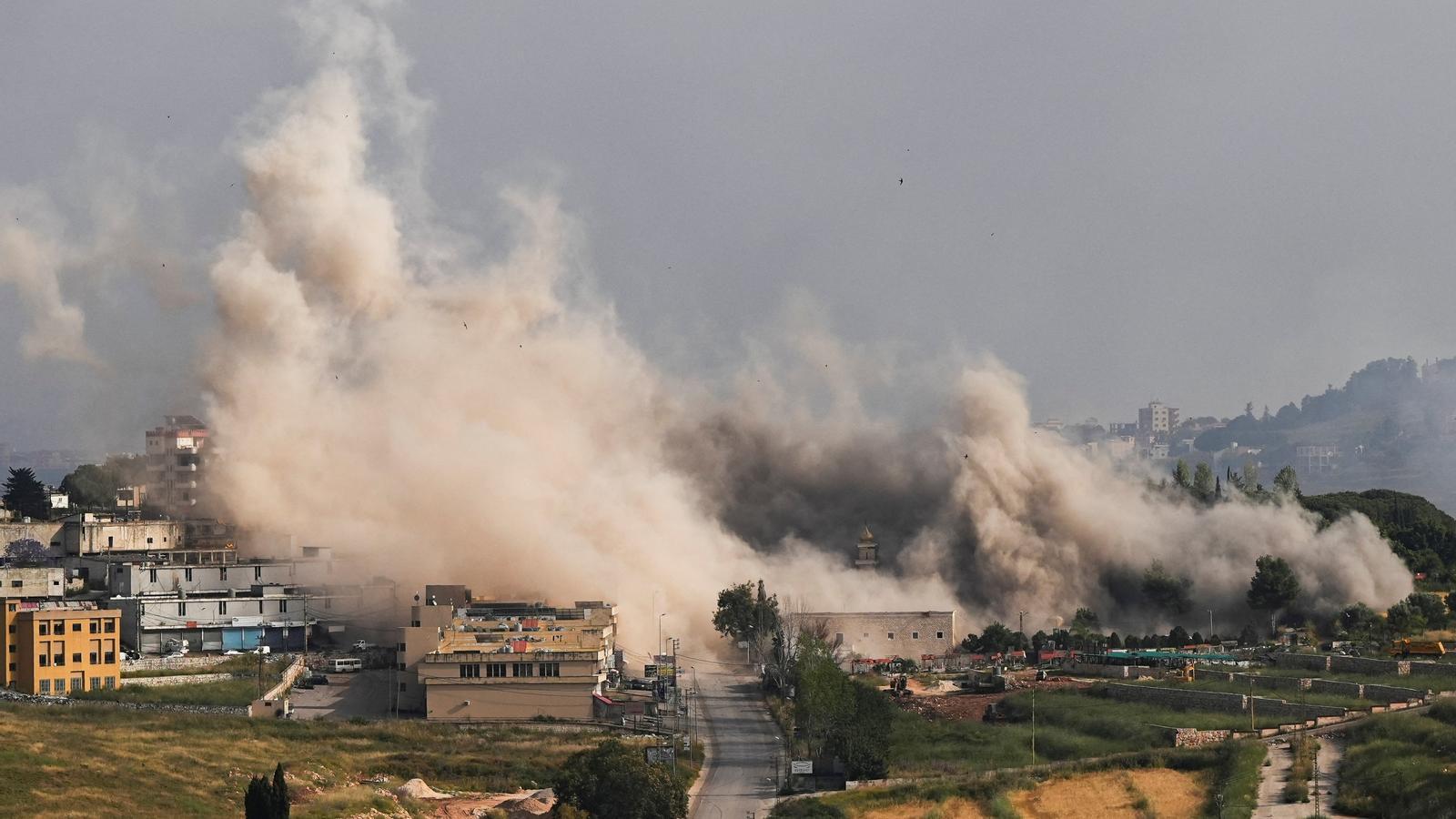
It is precisely in this context that the Lebanon front has acquired central importance. In the last few hours, Israel has intensified military operations against Hezbollah in southern Lebanon and in the Bekaa Valley.“There are real security concerns on the northern border, but at the same time, Israel must hold elections before October and Netanyahu is also acting with internal political calculations”, describes Fleischman. According to the analyst, the prime minister's image as “Mr. Security” has been greatly eroded since the Hamas attacks on October 7, 2023, and now also by the results of the war with Iran. “The escalation in Lebanon can be understood as an attempt to rebuild this image and maintain political relevance”, he concludes. In this fragile balance, while Washington and Tehran continue to define an agreement and Israel seems to have little capacity for direct influence, Lebanon functions as a political space. A space where Netanyahu tries to preserve his power through the most active front: the northern one.

