Iran announces a "general understanding" on the main points of negotiation with the US
The Iranian regime temporarily closes parts of the Strait of Hormuz due to military maneuvers by the Revolutionary Guard.


-
CAT -
CAST
WashingtonIran has announced that it has reached a "general understanding" on the main points of negotiation with the United States during Tuesday's meeting in Geneva. "We have reached a general agreement on a series of guiding principles, on which we will base the drafting of a possible agreement text," Iranian Foreign Minister Abbas Araghchi told reporters. However, he clarified that this does not mean a final agreement is imminent, as "when you get to the drafting of the text, the work becomes more difficult." Iran will present a more detailed proposal to finalize some outstanding issues related to its nuclear program, according to US sources speaking to Reuters. The rapprochement by the ayatollahs' regime comes amid an increased military presence from Washington, which last weekend deployed another aircraft carrier to the region.
The Iranian foreign minister met in Geneva with Trump's special envoys, Steve Witkoff and his son-in-law Jared Kushner, in a meeting held at the Omani embassy, with the Omani foreign minister acting as intermediary. Araghchi stated that this second meeting was "more serious" than the first and that "positive progress" had been made, although details have not yet been made public.
The meeting comes after both countries Negotiations on the development of Iran's nuclear capabilities will resume on February 6. Last year, talks broke down because Israel launched an attack on Tehran, initiating the 12-day war that ultimately led to the US partition plan. It was then that Trump sent B-2 bombers to attack the nuclear facilities, which the Pentagon claimed were completely "destroyed."
Last week, the Israeli Prime Minister, Benjamin Netanyahu precipitated his trip to Washington —initially planned for this week— following the positive feedback Trump had expressed regarding negotiations with the Iranian regime. Netanyahu, who considers Tehran an existential threat to Israel, wanted to try to convince the US president to adopt a more aggressive stance toward Iran and to reinstate the option of a military strike. Although Trump brought up the idea again after the closed-door meeting, he also made it clear that he had informed Netanyahu that his "preference, if anything," remained the diplomatic route. "If that's not possible, we'll have to see what the outcome will be," he added.
However, on Friday, the Republican ordered the deployment of the aircraft carrier USS Gerald Ford, which was moored near Venezuela, to the Strait of Hormuz. The deployment intensified Washington's military siege, which two weeks ago also included the deployment of the Abraham Lincoln, one of the other major aircraft carriers in the US Navy.
Over the weekend, Trump said that "the best thing that could happen" in Iran would be regime change and the end of the Islamic Republic established in 1979. On Tuesday, Supreme Leader Ali Khamenei responded, asserting that this would not happen. "The US president says his army is the strongest in the world, but even the strongest army in the world can sometimes be hit so hard that it cannot get back up," Khamenei said, according to state media.
Closure of the Strait of Hormuz
Before the meeting between the two delegations began in Geneva, Iran announced the temporary closure of parts of the Strait of Hormuz for military exercises. "Parts of the Strait of Hormuz will remain closed for several hours today to comply with safety and navigation principles," the agency stated, although it did not specify the duration of the closure or which areas were affected. The military exercises began on Monday, involving warships, helicopters, drones, and missiles, and were intended to assess the "rapid response" of the National Guard, the elite branch of the Iranian armed forces, to "conspiracies against the security" of the country, according to the official news agency.
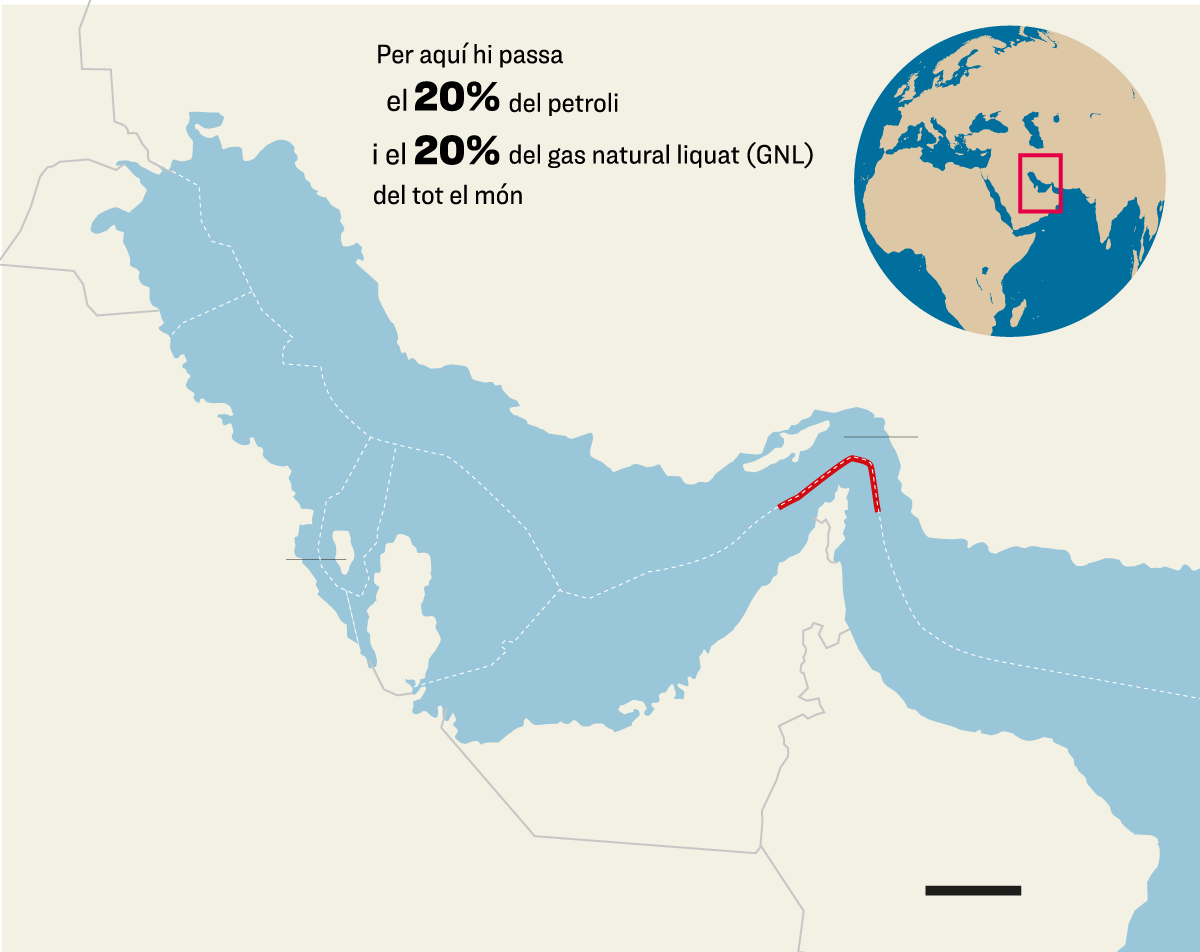
IRAQ
KUWAIT
golf Pèrsic
IRAN
ESTRET D’ORMUZ
160 km de longitud
33 km d’amplada
BAHRAIN
QATAR
golf d’Oman
ARÀBIA SAUDITA
EMIRATS ÀRABS UNITS
OMAN
OMAN
100 km
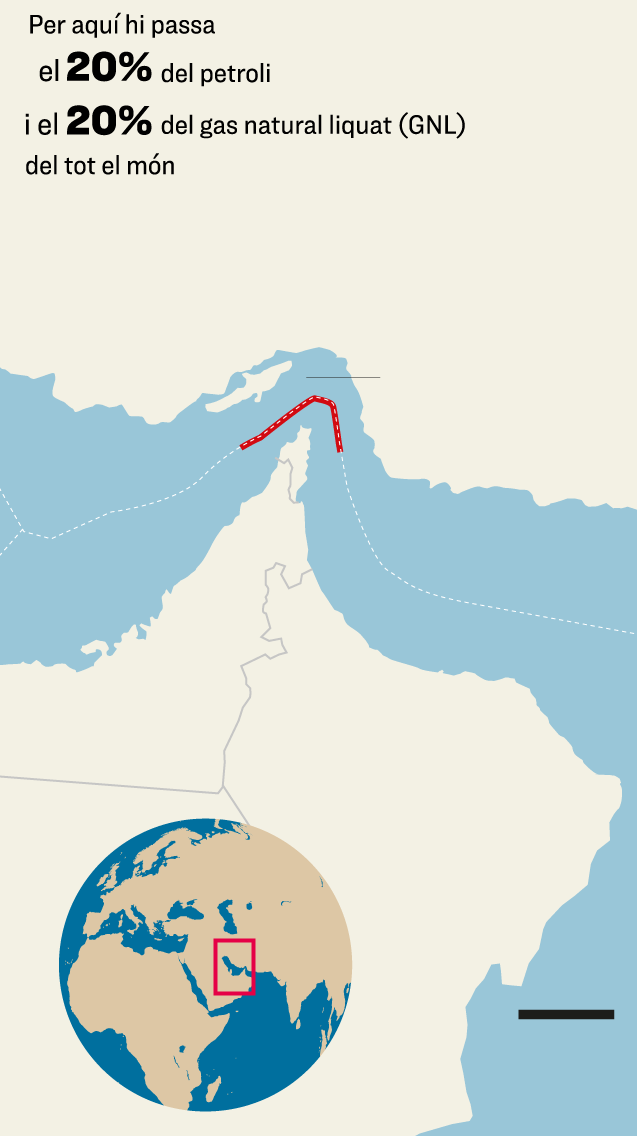
ESTRET D’ORMUZ
160 km de longitud
33 km d’amplada
IRAN
golf d’Oman
EMIRATS
ÀRABS
UNITS
OMAN
OMAN
100 km
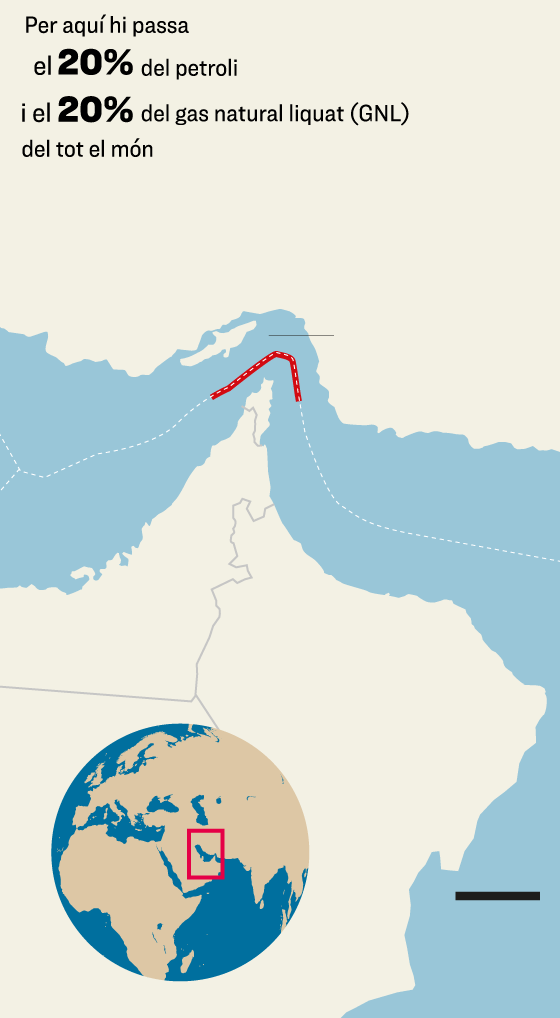
ESTRET D’ORMUZ
160 km de longitud
33 km d’amplada
IRAN
golf d’Oman
EMIRATS
ÀRABS
UNITS
OMAN
OMAN
100 km
Closing the Strait of Hormuz is one of the cards Iran has up its sleeve to threaten the United States in the event of an attack. It is the world's most important oil export route, through which approximately 20% of global oil and 20% of liquefied natural gas pass. Restricting passage through this area would cause major disruptions to the global hydrocarbon trade.
