Hegseth acknowledges before Congress that the US was aware of the economic risks in attacking Iran
The high military commands estimate the cost of the conflict so far at 25 billion dollars

-
CAT -
CAST
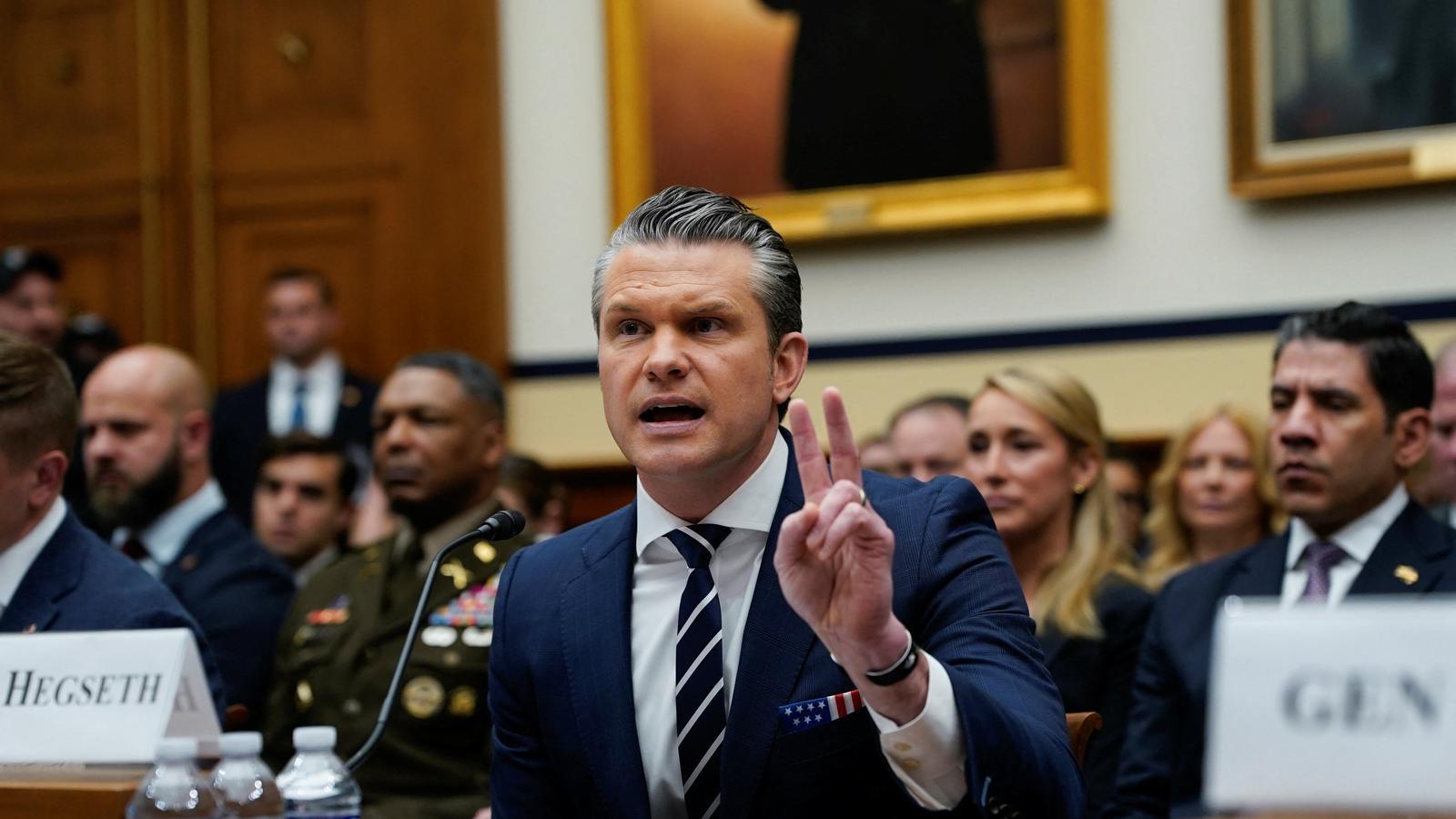
WashingtonThe Pentagon chief, Pete Hegseth, has acknowledged before the US Congress that the Trump administration was aware of the risk that Iran would block Hormuz if attacked. "This department took into account all aspects of this risk," Hegseth said this Wednesday, as the war is about to complete two months and the price of a barrel of crude oil has skyrocketed to $119. It was the first time the Secretary of Defense had faced congressmen since Trump launched the offensive against Iran on February 28 without consulting the legislature.
Hegseth starred in a tense hearing before the House Armed Services Committee, where congressmen raised uncomfortable questions about the conflict. When the Secretary of Defense assured that his team had considered all the risks regarding Hormuz, Democrat Seth Moulton retorted: "And why did Defense send the only minesweepers [military ship] we had in the Gulf to Singapore weeks before the war began?". Moulton highlighted the fact that if the Pentagon was aware that the Iranians could mine Hormuz, how could it be that they sent the ships so far away? And Hegseth's answer, like so many others, was pure verbal contortion: "We have many capabilities that you may or may not be aware of in the realm of classified information."
Hegseth's statement on Hormuz confirms two elements that have already been observed about the war: that the White House miscalculated and that Trump is prone to taking risks. Before attacking Tehran, the chief of staff, General Dan Caine, had warned the US president of the numerous risks the operation entailed. Beyond the possible casualties of American soldiers and the reduction of the dwindling ammunition arsenal, the danger of a possible blockade in Hormuz was also on the table.
It was remarkable how Caine, who was also next to Hegseth, weathered the storm of legislators without getting to the heart of the matter. When Moulton asked the general the same question, the answer was as follows: "I will answer it this way: we always offer a wide range of military options that are carefully considered according to the risk associated with them." Sources familiar with military circles described this scenario in the ARA last December: normally when presidents saw a high percentage of risk, they aborted the mission, but this is not the case with Trump.
Hegseth's response on Hormuz further erodes confidence in a war that has already cost the public coffers about 25 billion dollars. The figure also comes from the hearing. The acting Under Secretary of Defense for Finance, Jules Hurst III, revealed the estimated cost of the last two months and assured that most of it has been spent on ammunition.
last December: normally when presidents saw a high percentage of risk they aborted the mission, but this is not the case for Trump.
One dead soldier who had not been reported
The hearing also served to reveal that there has been another soldier death that the Pentagon had not yet officially reported. General Caine spoke of 14 military service members killed during Operation Epic Fury, although as of Wednesday morning the official count still spoke of 13 casualties. ABC News has been able to confirm the facts and has revealed the identity: it is Sorffly Davius, a member of the National Guard who died on March 6.
Hegseth also argued in Congress that U.S. troops would give "neither truce nor quarter to enemies." This type of order implies killing all enemy combatants, even those who have surrendered or are seriously wounded. The Secretary of Defense has framed it within his "fight to win" doctrine, despite the fact that several legal experts have already warned that it could constitute war crimes.
The heated session lasted more than four hours, and Hegseth lashed out at any critic of the conflict, whether Democrat or Republican. "The main challenge, the main adversary we face at this moment, are the reckless, irresponsible, and defeatist words of Democrats in Congress and some Republicans," he said.
The timing of the hearing is particularly delicate because, according to federal law, the president needs explicit authorization from Congress to continue military operations once 60 days of conflict have passed. If after this period he has not received parliamentary approval, American forces must withdraw. Even so, the White House could still invoke a 30-day extension for national security reasons. Beyond the legal deadline, many Republican congressmen pointed to the two months of war as a turning point at which they would reconsider their support. So far, Republican congressmen have voted against Democratic proposals to limit the president's war powers. But if the White House now fails to provide explanations, vote discipline could break down.
