The Generalitat rejects a wind project for landscape reasons for the first time
The sector labels the decision as "arbitrary", and assures that the project has passed "the assessment of all objective environmental impacts"
-
CAT -
CAST
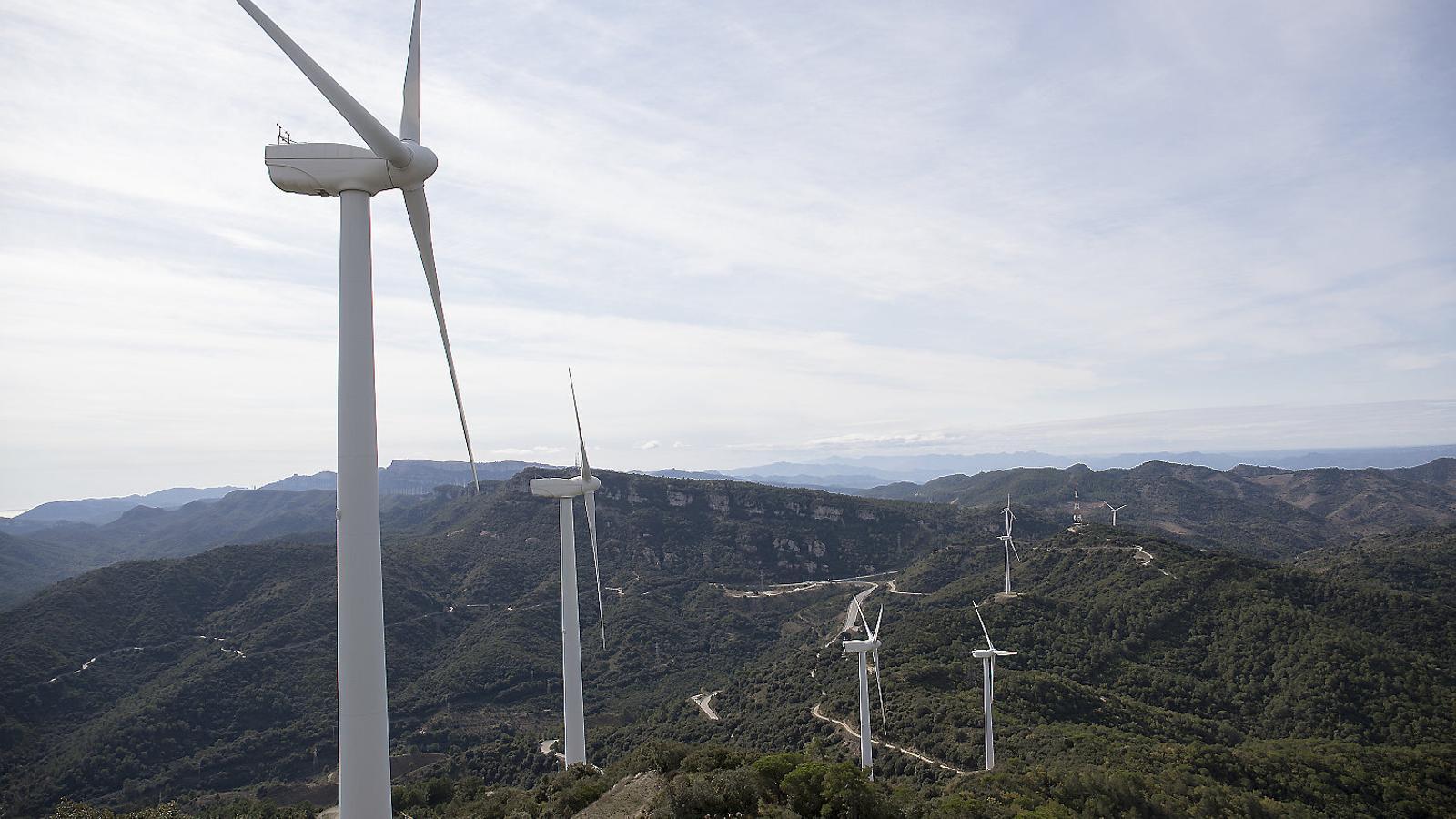
BarcelonaThe Government of Catalonia (Generalitat de Catalunya) has issued an unfavorable environmental impact statement (EIS) for a wind energy project due to landscape concerns. It is the first time that this reason has caused a renewable energy project to be rejected. Specifically, the resolution affects the four wind turbines of the Pla de la Tallada, in the Baix Empordà region, with a combined capacity of 22.8 MW. “It is an arbitrary decision. The project has passed the assessment of all objective environmental impacts and is falling through because someone considers that it alters a scenic background. The message being sent to the sector is that no project is safe, no matter how well-processed it may be,” stated Víctor Cusí, president of EolicCat, the association representing the wind energy sector in Catalonia.
The Government of Catalonia points out that the four wind turbines planned at this location in La Tallada d'Empordà contradict three specific guidelines regarding the impact they could have on the landscape. Firstly, they highlight the need to preserve the high-value agricultural environment found in the Empordanet plain, and the second guideline focuses on the impact that the wind turbines could have on the visual field of viewpoints and routes in the area, such as the Montgrí castle, as one of the priority consolidation viewpoints. The third guideline emphasizes the need to avoid placing wind turbines in iconic scenic backgrounds, such as the Montgrí and its entire surroundings, where municipalities like Bellcaire d'Empordà and La Tallada d'Empordà are located, two centers that seek to preserve and revalue the landscape to maintain them as visual benchmarks.
As the organization explains, the only reason justifying the rejection is the assessment by the Girona Territorial Urban Planning Commission regarding what the resolution calls “the impacts that it will generate on the scenic background of the Montgrí.” "The project meets the objective urban planning criteria indicated by the department itself," asserts EolicCat in a statement, adding that "the resolution does not only affect wind energy: it introduces a factor of legal uncertainty in the entire portfolio of renewable energy projects in Catalonia." In the Government's report, however, the opposition of the La Tallada d'Empordà City Council and the counter-allegations to the project from other neighboring towns are also highlighted.
The Plater, "unauthorized"
The association that represents the wind energy sector in Catalonia asserts that the decision "contradicts" the Territorial Sectoral Plan for the Implementation of Renewable Energies (Plater), which the Generalitat itself has developed to identify suitable locations based on environmental, territorial, and landscape criteria: "If an area suitable according to the Plater does not allow the installation of four wind turbines, the country's renewable planning loses all its practical value. Baix Empordà is assigned 568.7 MW of wind power for 2050".
Since the Generalitat de Catalunya established urgent measures to address the climate emergency and accelerate the implementation of renewable energies, as explained by EolicCat, the Girona regions have not incorporated any wind farms and continue without any operating wind power. The Plater forecasts 2,649 MW of onshore wind for the territory by 2050, of which 1,968.7 MW correspond to Alt and Baix Empordà, within the 23,136 MW that the Proencat 2050 sets for the whole of Catalonia.
"That the Girona regions continue without a single wind turbine and that the Generalitat rejects the few projects that arrive there is an inadmissible territorial grievance", denounces Víctor Cusí, who adds that "there are regions, such as Terra Alta, Ribera d'Ebre, Conca de Barberà, and Segarra, that have been assuming wind farms, solar plants, and transmission lines for years to produce the energy that the whole country consumes, including Girona".
