The Circle warns of the danger of EU fragmentation: "It doesn't know how to agree"
Demands "brave decisions and massive investments" to guarantee strategic autonomy in Europe

-
CAT -
CAST
BarcelonaThe Cercle d'Economia is approaching its annual conferences, increasingly focused on the health of the European project, with a touch of pessimism. In the opinion note prior to this year's meeting, which will be held between June 1 and 3 at the Palau de Congressos de Catalunya, the entity warns of the "fractures" and "divisions" that risk the Twenty-seven's ability to become autonomous in an increasingly disjointed world.
The organization chaired by Teresa Garcia-Milà picks up, like the rest of the Catalan economic world, the gauntlet of proposals such as the reports by former Italian prime ministers Mario Draghi and Enrico Letta. However, it maintains that the Twenty-seven do not suffer from a knowledge problem, but from "political will and execution capacity." "Europe knows what it has to do. What it doesn't know is how to agree to do it," they argue.
The Cercle's note regrets that Europe has not managed to operate jointly, especially now that the "need for change" has become evident. The "geopolitical fragility" of all global powers, as well as the "technological transformation of a scope that is still difficult to calibrate," force the Twenty-seven to reposition themselves in the world, and the organization considers that the necessary foundations have not yet been laid to do so. Building, they warn, "will not be easy"; as the great political division they observe in the community sphere is between pro-European and Eurosceptic forces, which is reproduced on both sides of the traditional party system. "This fracture runs through all debates, and it is the main obstacle to moving forward," they add.
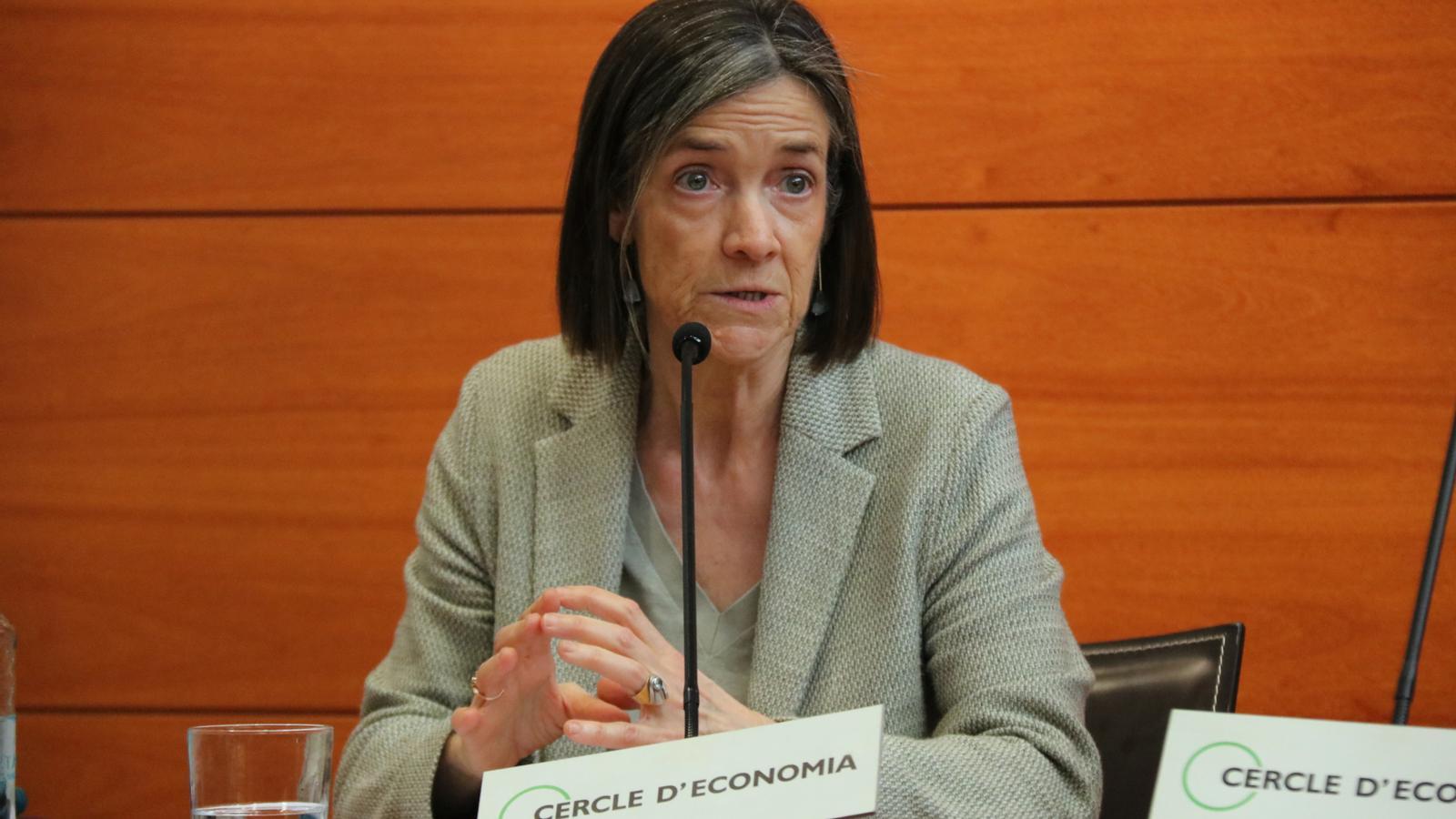
In this regard, Garcia-Milà places Spain in a kind of political bubble. The president of the Cercle has declared herself "calm" regarding the advent of Eurosceptic political positions in the State, even if early elections were to be called. "We are a central country in Europe. The majority of the Spanish population is very pro-European," the economist stated.
The path to industry
Despite the bad political climate, the Cercle observes certain executive projects in Brussels that are on the right track. Garcia-Milà's team celebrates the roadmap drawn by the Industrial Acceleration Regulation, still in progress, which proposes a horizon of 20% of industry's weight in GDP and better control of trade borders.
However, they warn of several immediate limitations in applying the project. The biggest, in the Cercle's view, is the "pending assignment" of the internal market, still an economic patchwork that does not seem to find a way to unify. "The single market is far from being a reality in key sectors," warn the experts; such as telecommunications, energy, or banking. Without this unity, the document questions the ability of the Twenty-Seven to meet one of the business objectives of the European Commission chaired by Ursula von der Leyen, which is the creation of "European champions" capable of competing with large Chinese and American companies.
The economic club, in this regard, values the antitrust reform that Brussels has proposed, which facilitates mergers between large continental players, although it warns that it will be limited if the market is not coordinated correctly. Without a single economic environment, "national mergers that create larger companies within a country" can be encouraged, but they will not become "more competitive global community powers." Contradictory examples of this reality are the latest major banking takeovers that Europe has registered: BBVA's over Sabadell, exclusively national, and that of Italy's UniCredit over Germany's Commerzbank, which could create a massive international entity.
Catalonia in Europe
In the opinion of the Circle's members, both the State and Catalonia have essential roles in the multiple transitions that Europe must undertake. On the one hand, they highlight the "base assets" that the Spanish productive system has, from its "prominent position" in 5G connectivity and digitalization to the availability of cheap energy thanks to the renewable network. They also praise Barcelona's positioning as a capital of research and transfer in the biomedical, pharmaceutical, and biotechnological fields, as well as in deep technologies, which continue to grow in the Principality.
Conversely, they point out the general and sectoral "shortcomings" that still limit Spain's scope as an economic player within the EU. The major wound is productivity, "lower than that of European competitors." The Circle attributes the scarce productive capacity to a poor effort in research and development, as well as to a business fabric smaller than that of the rest of the continent, where micro-enterprises account for more than 98% of the private sector.
Thus, both Garcia-Milà and the entity's general director, Miquel Nadal, have taken up the challenge of the Fènix Report, the document prepared by various Catalan economists that points out the gaps in the Principality's productive model. According to Nadal, the study "reinforces many of the ideas that the Circle has put on the table," such as productive shortcomings, tourism monoculture, or the failures of the migratory model. "The Spanish economy must be more intensive and less expansive," concluded the president.
To resolve this, they call on the Spanish authorities to defend a European industrial policy that is "coordinated, ambitious, and based on common financing instruments." An initiative that is particularly controversial in the northern and central countries of the continent, less friendly to joint financing projects.
