The AI's assault on the stock market, a "turning point" for Claude and ChatGPT
The technology sector discusses the effects of OpenAI and Anthropic's IPOs on users after SpaceX's jolts

-
CAT -
CAST
BarcelonaThe stock market entries of the two competitors leading the race of commercial artificial intelligence – Anthropic (Claude) and OpenAI (ChatGPT)– are touching. While the market entry of Dario Amodei's leading company is assumed to occur this fall, Sam Altman's tech company "will be a listed company in 2027, or even sooner", according to the company's chief financial officer, Sarah Friar, as reported last Wednesday in a meeting with employees.
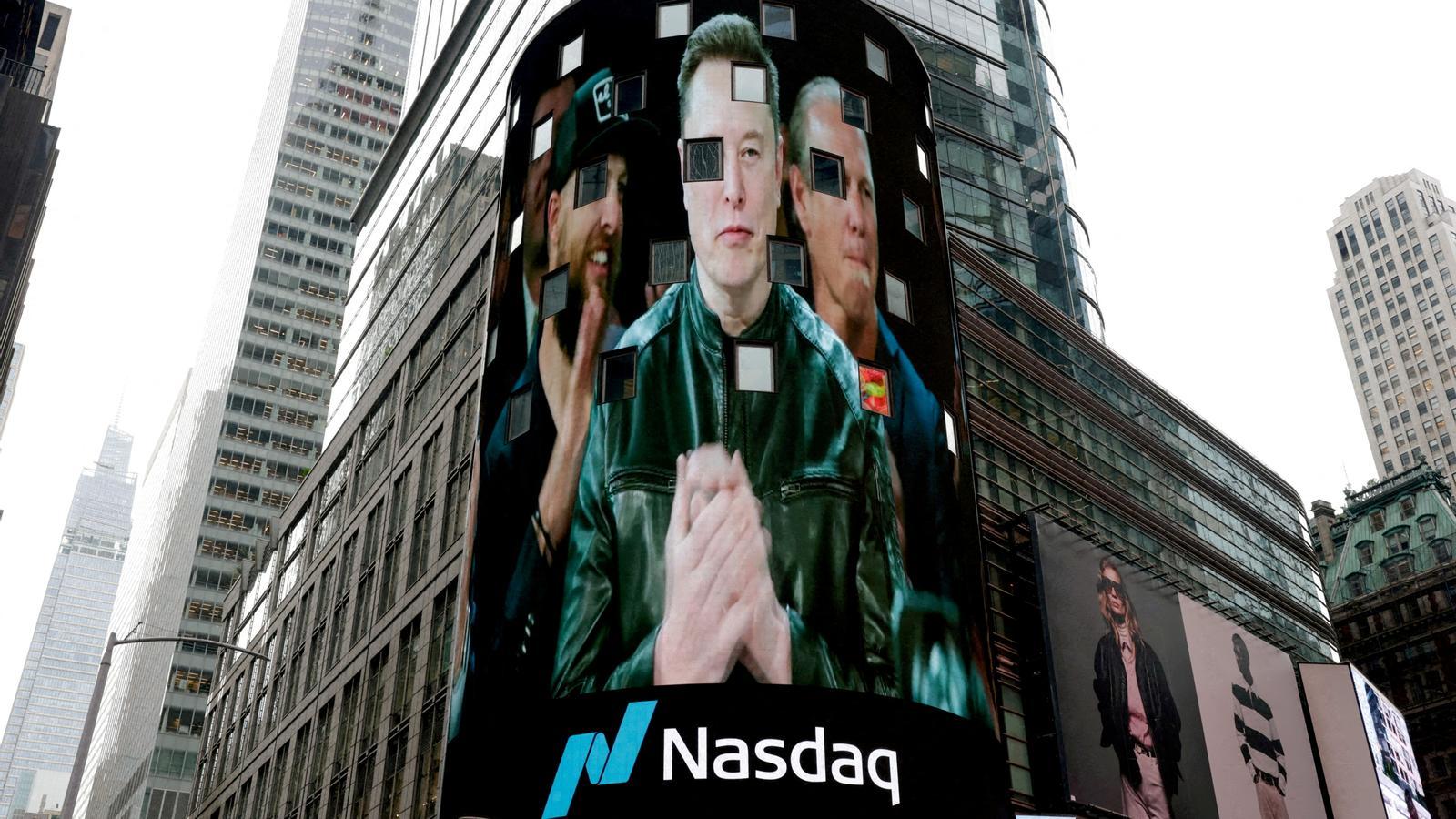
Both companies are accelerating the race to achieve a higher valuation than their rival, under the watchful eye of the market. The two stock market exits will be judged by the same yardstick with which the first partially AI-focused player that broke into the New York indexes was judged: SpaceX, by Elon Musk. The technology company, with aerospace roots, made the largest IPO in history in June after raising $75 billion from new investors. Although there are no concrete projections yet, the market expects Anthropic's to be even larger, with an initial valuation around two trillion dollars – for Musk's $1.77 trillion tag – and could raise over $100 billion.
These stratospheric figures inevitably generate a certain dizziness among analysts and sector experts. XTB analyst Adrián Hostaled pointed out in a recent article on the financial firm's website the "unprecedented magnitude that the AI boom" is reaching on the stock market. This boom, however, could affect business models in the short term, given that both Anthropic and OpenAI "will come under scrutiny, because they will have to report results to the stock market regulator, and the market will be watching them," according to Aleix Valls, founder of WeArtificial.
The effects of surveillance
Both the market and the technology sector, that is to say, are still waiting to see what the investors' reaction to the stock market listings will be. As Josep Curto, founder of Athena Core, explains, the entry of OpenAI and Anthropic into the public market means "no longer being start-ups funded with venture capital". It also states that initial public offerings mark a paradigm shift where shareholders could start demanding "better investment returns", and that at the end of the road lies "the end of AI subsidies": the moment when service providers will stop depending on external investments and will have to fill their income statements with their own business model.
Valls, however, anticipates that investor return demands will not be immediate. Despite shareholder scrutiny, the expert sees it as more relevant that the two AI giants "fulfill their strategic narrative." For ChatGPT, this would mean accelerating user acquisition even further, while Claude would be more geared towards the corporate world. Of course, both companies face an "inflection point" in their business strategies or, rather, in the margin they have to demonstrate their viability.
In any case, the stock market entry makes it more urgent to address the big problem of the two AI service providers: monetization. In fact, as the Reuters agency reported last week, a good part of the valuation that Anthropic may receive in the IPO will depend on its ability to approach 200 billion dollars in revenue by 2028, a figure that would more than quadruple its current annualized projection, which is around 47 billion. Therefore, although in Valls's view "it is still too early to ask for monetization models", the market expects paths to profit.
For Curto, this expectation will have effects on users and he believes there will be "more aggressive segmentation" between free and paid accounts, with "many more restrictions on capabilities" for those who do not pay. It should be noted that these distinctions already apply now: the paid versions of Claude and OpenAI give access to greater generation capacity, and also open the doors to more advanced models. However, it is not yet a "significant enough differential" to channel users to the paid segment. "The use of tokens is still miserable", observes Valls, meaning users rarely consume all the margin left by applications.
For the founder of WeArtificial, stock market exits are the starting point for "new experiences" that add value to models. "We don't want AI, we want the benefits of AI," he says. Thus, according to Valls, we will see how investments accelerate in programming or purchasing new applications that can be integrated into their chatbots. Not going any further, Anthropic announced at the beginning of August the acquisition of Decart AI, an Israeli platform for video creation and system optimization within AI models. "We will begin to see new native businesses, where artificial intelligence is structural," reflects Valls.
The myth of advertising in AI
Beyond paywalls and new applications, AI companies have long been looking for a gold mine: advertising content within applications. So far, all attempts have failed, as demonstrated by the attempt to create an AI-based search engine, Perplexity, to implement an advertising strategy. Its head of advertising, executive Taz Patel, left the position just nine months after taking it on due to difficulties in implementing a profitable model.
For the experts consulted, advertising within AI clashes with two particularly solid barriers: critical mass and consumer trust. Unlike digital environments like Google, which are already practically universal, ChatGPT or Claude still have few users for an ad monetization model to be profitable, says Valls. On the other hand, Curto maintains that an overly aggressive advertising implementation "would break the trust" between the user and the application. "If the responses given by an LLM [large language model AI] are sponsored, they won't be the best, but rather the ones that pay best," he observes.
While waiting for new ways to generate revenue, then, ads are "an unsolved challenge" in a segment where business will become increasingly urgent. For Valls, innovations will be essential to keep capital tied up. "Investors' patience will be there if companies are able to build native experiences and applications" and, with them, AI-based billing models. What they will be is still a mystery: "And what will come next? No idea".
