Claudia Durastanti: There are authors who work at the margins and do not give lessons
Writer, author of 'Missitàlia'
-
CAT -
CAST
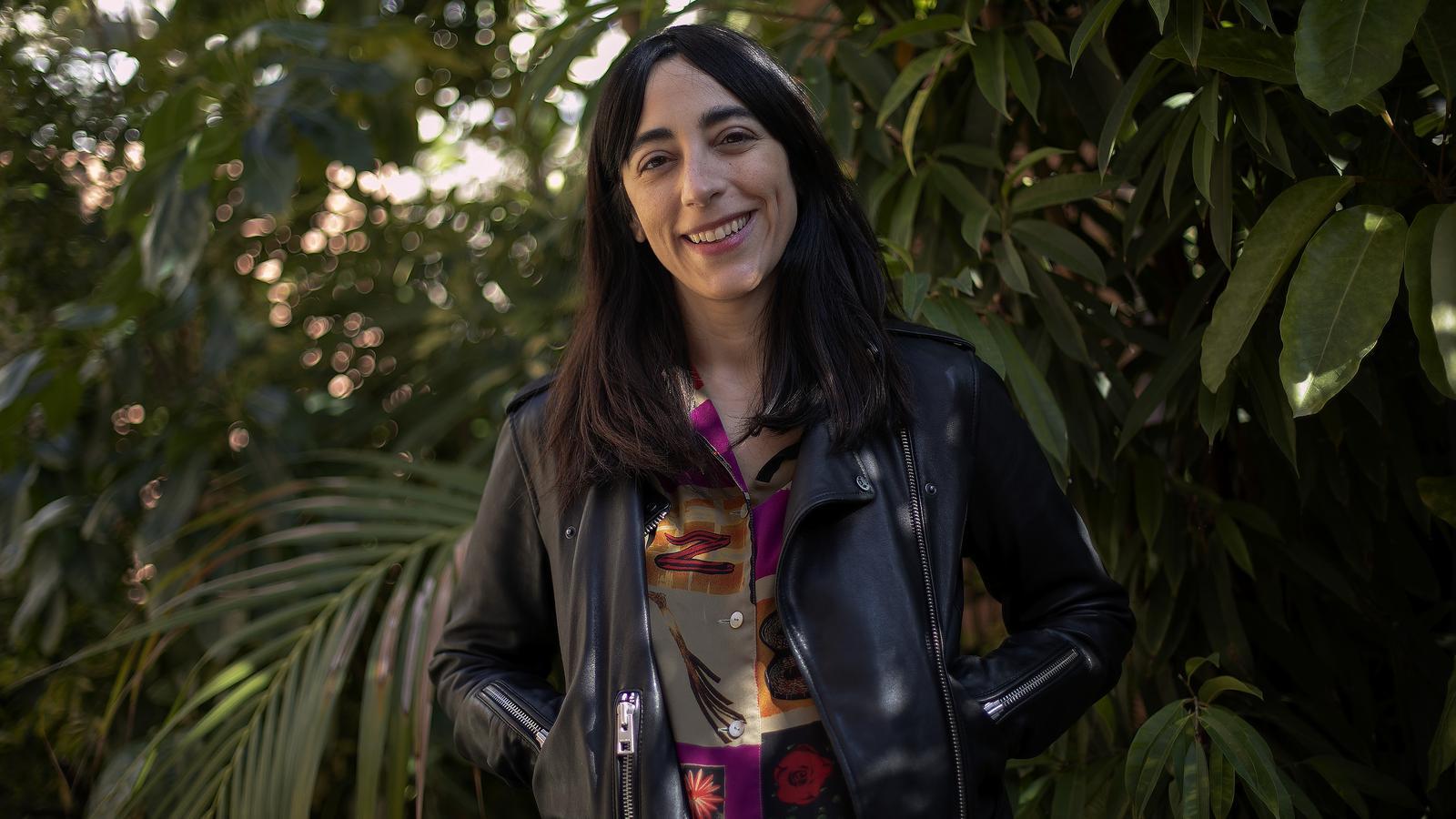
BarcelonaClaudia Durastanti was born in Brooklyn, emigrated to a small town in southern Italy at the age of six, then lived in London and returned to the United States. She now lives in Rome. With L'estrangera, she was a finalist for the Strega Prize and the Prix Fémina, won the Strega Off Prize and the PEN Award, and was featured among the best books of the year by The New Yorker magazine. Missitàlia (L'Altra Editorial / Anagrama; translated by Mercè Ubach) is a historical journey that goes from the south of Risorgimento Italy to an imagined future on the Moon. There is nothing conventional in this book, where the protagonists are women who live on the fringes, and which combines genres such as western, espionage, dystopia, or intrigue.
Why a title like Missitàlia?
— Initially it was supposed to be La malalingua. A title like that would have led to a more conventional and predictable novel, based on the idea of writing from the position of marginal characters, women from the south colonized by those from the north. All my life I have moved between English and Italian, and a friend told me I needed a third language. And, half-jokingly, I thought of a false German title, a compound word. Since the book talks about the birth of a nation, about young women (especially in the first part) and about lost opportunities, it seemed interesting to me that miss was a polysemous word: it can mean youth, but also that something is missing. I knew it could confuse readers because it reminds of a beauty contest. At first, I insisted it had nothing to do with beauty contests. But I remember that, in contests like Miss Italy or Miss America, the presenter would ask the participants what they wanted from life, and they would often answer very banal things, such as an end to war or hunger. And I thought: "That's not what they really think." Perhaps they would want to say they want more money, more relationships, a better sex life. It seemed fun to me to treat the characters – especially the girls in the first part – as Miss Italy contestants who are allowed to say what they really want.
It speaks of people on the margins. In the book there are many: deserters, outcasts... Some choose to live on the margins. Is it a way of claiming freedom?
— I don't want to idealize the margin. Nevertheless, I have learned throughout my life, perhaps because my mother has always lived on the margins, that it is a privileged position from which to observe the world and form thought. These characters are anti-ideological by vocation. For example, they may fight for the environment, but they also know that industry can bring money and progress. The margin is the ability to move between different positions and adapt. There is a strong connection between freedom and margin, because you do not have an inheritance to preserve. I was greatly influenced by the Italian radical feminist Carla Lonzi, who said that women should “deculturize” themselves because culture has been marked by a patriarchal vision. Deculturizing oneself is a form of liberation. That is why many characters embrace the margin as a place of observation.
There is a sentence that caught my attention: a character says that history is like a werewolf.
— It comes from a lesson by Nabokov on literature. He spoke of the story of the boy who shouts “The wolf is coming” and no one believes him. When we repeat too many times that there is a monster, we stop believing it. Something similar happens with history: because we see so many tragedies repeat themselves, we lose the capacity to believe that it is real. Perhaps only changes in the physical world –a glacier disappearing, a species becoming extinct– seem truly serious to us. We have a great historical memory, but at the same time we don't quite believe that certain things can end forever, like massacres or exterminations. Think about recent wars, like Gaza. If preserving memory doesn't make us act differently, what makes us change? At school we learn that if you preserve memory, you can improve things. But what if that's not the case...?
It also speaks a lot about the difference between north and south. A character talks about being a “new woman”. What does that mean?
— When we study paradigm shifts, we often talk about the “new man”. I wanted to show that there is also a parallel history of women. Amàlia is interesting because she understands that progress is neither good nor bad in itself; it depends on how you respond to it. Nor does she accept the idea of a single South or a single feminism. There are many Souths and many feminisms. This multiplicity is what makes her a new woman.
It says that there are women who give lessons and become leaders and others who tell stories and remain on the sidelines.
— We have rediscovered many female authors and now some of them are more visible. At the same time, there is a kind of literature led by women, or films with female characters, that is a bit pedagogical and moralizing. And there are other female authors who work on the margins and do not give lessons. We often understand female characters as a kind of female genealogy, a matriarchy or sisterhood; there is always some connection. My main characters are not related by blood, they do not share the same family, they do not share the same values. There is no inheritance or possession to transmit, and it is liberating. Because, in a way, as a writer, I am always placed in a constellation of people I appreciate. But it can be constricting.
The second part is narrated in the first person, but it is post-war Italy. To immerse yourself in that era, you use many literary references.
— I was inspired by The Bell Jar by Sylvia Plath and Annie Ernaux. The protagonist arrives in the city and feels like an impostor. I wrote it in the first person because, in a way, it's me traveling back in time. I studied anthropology, I worked for a cultural magazine, I met fake fathers and fake mothers, like Ada. One idea in the book is that the community we choose isn't always easier than family. Sometimes it's harder to break free from mentors. We think that everything we choose outside of family will make us progress and be free. Personally, like Ada, I found it even harder to emancipate myself from my mentors than from my family, because I had a peculiar mother, she didn't place any expectations on me. That left a lot of space. On the other hand, when you want to please your first boss or your university mentor, you see this great woman you admire so much and you want to be like her, it's harder to escape.
Is it also a journey towards autonomy?
— Lonzi started a practice called autocoscienza. She gathered women in a room, who spoke aloud, and she said that the main meaning in life is to find authenticity, the point where you connect with yourself and feel authentic in every expression of your life. This influenced what she wanted to say about these characters. There is a path to autonomy, to self-determination, but there is also a crystalline moment where the women in the book feel, in some way, at peace with who they are. They feel almost dazzled by self-knowledge. There is a cost, and solitude can be one of them.
In the third part of the book, the protagonist goes to the Moon. Not to another country, nor to another territory, but to another planet.
— For me, America was always the Moon, because it was the country I loved, the country I thought I would return to. And, finally, after The Stranger, I returned to New York and thought it would be forever. What America means, however, has changed in the last five years. Right now, I feel almost de-Americanized in a way. So I was looking for something that could give that sense of longing, of wonder, of radical change. As a civilization, we are obsessed with everything beyond Earth, because we think we have destroyed it. It was more of a nostalgic place where a character could be alone. Also, from the Moon, you can see planet Earth. And then you can, if not look back, at least look at the place you come from, where you have lived, and ask yourself: "What kind of relationship do I have with this place that brought me to life?" And to return to Cesare Pavese: there is a beautiful line in The Moon and the Bonfires where the main character, who has lived for a long time in the United States, moves to northern Italy. He is asked: "What is America like?" And he says: "There is nothing there. It's like the Moon." So I thought everything connected in a way, all the concerns they had. I needed a place to look forward in a very optimistic sense.
