The Visigoths had little genetic impact on the Iberian Peninsula
A study led by the IBE dismantles the role of Germanic elites in the peninsular population and shows the potential of paleogenetics to find our ancestors
-
CAT -
CAST
BarcelonaThere is a traditional historiography and some recently published books that argue that everything began with the Goths. At school, many generations had to memorize the endless list of their kings to consolidate an official narrative that saw in those Germanic elites the first stone of the future Spanish state. Genetically, however, their impact was much smaller, as demonstrated by an international study led by the Institute of Evolutionary Biology (IBE), the Natural Science Museum of Barcelona, Harvard University, and the University of the Basque Country (EHU), and published in the journal Cell.
Based on the analysis of 243 ancient genomes from 31 different sites, the research shows that the arrival of the Suebi, Vandals, Alans, and Visigoths from the 5th century onwards did not alter the demographic composition of the Iberian Peninsula. The footprint of these peoples was limited to between 12% and 22% of the genetics depending on the region, and it was concentrated almost exclusively in the ruling elites. "If the Visigothic kingdom was a precursor to the idea of Spain, it must be said that it was an idea designed by an elite so small and impermeable that when the Muslims arrived it collapsed in very few years," reflects researcher Carles Lalueza-Fox, director of the Natural Science Museum of Barcelona and one of the lead authors of the research.
The Roman upheaval
The real genetic shake-up, at least in the Iberian Peninsula, was caused by the Romans, when millions of people traveled thousands of kilometers and deeply transformed the population mosaic with contributions from the eastern Mediterranean and North Africa. Before and after, the population was quite stable, as also recently demonstrated by a study by the UAB on the genetic evolution of the Iberian peoples who inhabited the northeast of the Iberian Peninsula from the beginning of the Iron Age until the Roman conquest, between 2,700 and 2,100 years ago.
The arrival of Germanic migrations to the Peninsula also cannot be compared with the situation in other European regions, where Germanic migrations did cause a massive demographic replacement. In present-day England, the impact was much greater: with at least 50% of the genetic contribution, and in the Balkans, the migrations accounted for between 40% and 60%. As Lalueza-Fox recalls, in those territories the invasions were more massive and were accompanied by decades of looting and episodes of great violence. On the Peninsula, however, the reality was quite different: the newcomers were a ruling minority of about 200,000 individuals against a mass of about six million Hispano-Roman inhabitants.
Two brothers 725 kilometers apart
Beyond the numbers, tracking ancient DNA has allowed for the recovery of stories about the personal circumstances of those who lived on the Peninsula more than fifteen hundred years ago. The study identified two siblings of Central European ancestry buried 725 kilometers apart: he in Mérida—the ancient Augusta Emerita—and she in Ildum, on the plain of Castelló, next to the Via Augusta. "Finding two first-degree relatives separated by such a distance is unprecedented in the global archaeological record. The closest thing is a father and daughter who were found in England, from the Bronze Age, but they were only separated by six kilometers," says the director of the Museum of Natural Sciences.
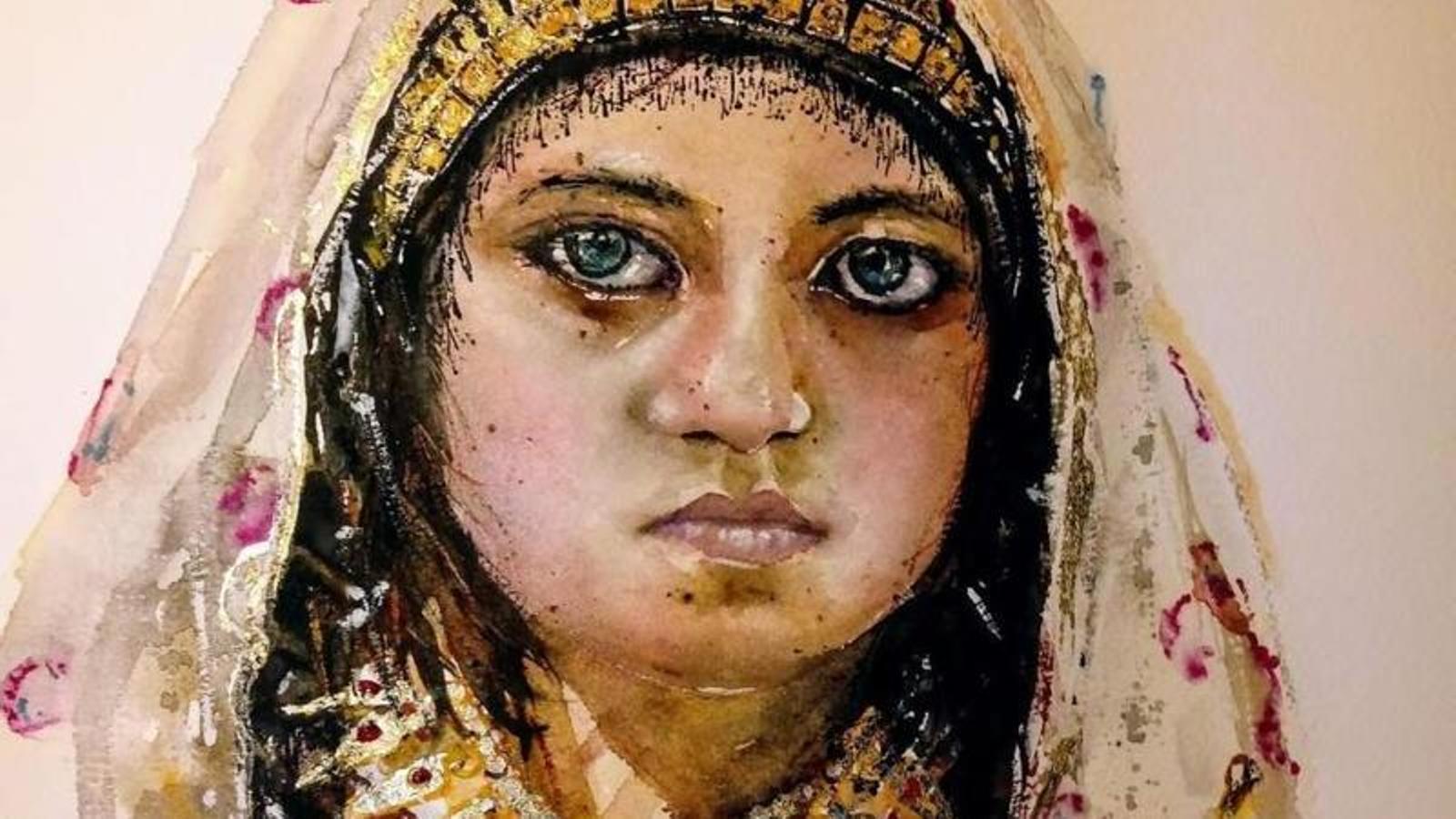
Another story is the one found in the funerary complex of Mérida, discovered in 2021. It is one of the most important elite funerary testimonies of the period, and historiography and archaeology have debated intensely about who the nine women found were. The DNA of one of these girls buried with jewelry of Germanic tradition has revealed that she was genetically local. "The finding demonstrates that, in this case, there was a certain political and cultural fluidity and a local family was able to integrate into the high Suebi or Visigothic society through marital alliances," says Lalueza-Fox. Even so, it must have been quite exceptional, because both the Suebi and the Visigoths were of the Arian faith and were forbidden from marrying the Catholic population, until King Reccared converted to Catholicism in the year 589.
The fact that six of these young girls—all of whom were between 6 and 18 years old when they died—appear buried together without any pathogens associated with an epidemic having been found may suggest that they met a quite tragic end, surely because they were women and, therefore, could be mothers. There are some hypotheses that argue it was an execution ordered during the disputes over the succession to the throne to eliminate any potential rival.

And the impact of the Muslims?
The Iberian Peninsula has historically been one of the most heterogeneous meeting points in Europe, a space where flows from North Africa, the Mediterranean, and the Atlantic have crossed. Although we now live in a highly globalized world, according to the study, the Iberian populations of late antiquity were genetically more heterogeneous than those of today. "In the last 500 years, with the consolidation of modern nation-states, internal migratory flows and links within state borders favored the creation of genetically more homogeneous populations," details the director of the Museum of Natural Sciences.
The next challenge, according to Lalueza-Fox, is to study the Andalusian period. With the analysis of numerous archaeological sites and remains of individuals from across the Iberian Peninsula, the Balearic Islands, and Portugal covering from the 8th to the 16th century, the aim is to determine the genetic and social impact brought about by the arrival and presence of the Muslims.
Do we have relatives at the sites?
In the future, according to Lalueza-Fox, these studies will even be able to connect directly with our individual identity. "By going back 300 or 400 years in our genome—about ten generations—we continue to share chromosome fragments that are completely identical to those of our ancestors. This implies that current genetic techniques can identify, in an archaeological site, whether an individual is our direct ancestor, and go far beyond what any traditional documentary or genealogical record allows," he asserts. From a collective point of view, he adds, it provides valuable information about the dynamics of migratory movements, the functioning of elites, and also patterns of integration or isolation between different communities. Ultimately, it reveals social mechanisms throughout the centuries.
