"The Trapezi Fair has become the epicenter of circus in southern Europe"
The Reus festival turns 30 with a new edition that seeks to show the diversity of contemporary circus

-
CAT -
CAST
BarcelonaThe friendship between two women who grew up together. The need to reinvent oneself in a world dominated by technology. Being young, finding yourself in a black hole and not knowing how to get out. Growing old and facing oblivion. These are not arguments for novels, nor for films, nor for plays, but for circus performances. The Fira Trapezi de Reus, which will take place from May 13 to 17, celebrates its 30th anniversary with a program focused on the diversity of the discipline and with the mission of showing that the circus goes far beyond technique: it is also dramaturgy and can also tell stories that leave the audience satisfied and moved. It will do so with productions such as Refugi, by Manolo Alcántara; Ínsula, by Alexandre Duran; Salar la pena, by Juan Carlos Panduro; 20 years later, still here!, by Lotta & Stina, and Conhort, by Hotel Iocandi, among many others. In total, the fair will host 60 Catalan and international companies with the mission of being a showcase for the circus being made abroad, but above all for what is being made in our country.
"Contemporary circus has evolved enormously compared to those nomadic artists who traveled in caravans and promised the most difficult acrobatics. That still exists, and it must be protected because it is our historical memory, but now circus is also a hybridization of languages and performances in many formats, in the street and also in theaters. We are at a moment of maturity and we want to show it," emphasizes Cristina Cazorla, co-director of Fira Trapezi together with Alba Sarraute. Since they took office four years ago, the directors have worked to give visibility to emerging companies without neglecting the veteran ones. To keep the past in sight, they have put together an exhibition titled Les golfes del Trapezi which can be seen during all days of the fair at Cal Masó and which will bring together costumes, programs, videos and scenography from the last 30 years.
Reducing the border
When he looks back, Cazorla sees how the Trapezi Fair has grown and consolidated. "When the fair started, it became an unmissable event for Catalan artists. It was a showcase for international shows and an ideal school for observing what was happening in the world and learning. Now it's a showcase, but also the other way around: without losing sight of the outside, it has transformed into the epicenter of circus in Southern Europe and teaches the world what we are doing here. It is a window into our art, a space for exhibition that generates more exhibition possibilities," points out Cazorla, who cites other reference countries such as Canada, Sweden, Belgium, and France and says that Trapezi "has managed to reduce the border".

One of the fair's objectives is to attract municipal venue programmers to build an exhibition circuit in Catalonia that will move and bring shows to life. "The artist should not create in isolation. Programming technicians must take risks and understand that they cannot always wait to see a finished show to program it. We also try to break away from the idea that perhaps their audience is not ready. Often, spectators surprise themselves," says the co-director. Although her view of the sector's present is positive, she cannot help but point out the shortcomings that still weaken Catalan circus. "We don't have higher circus schools, and this causes an incredible brain drain. Working and economic conditions in other countries are incomparable: intermittency is taken into account, you can live off your work not only when you are performing —Cazorla argues—. We no longer ask for protection, we ask for equality with other performing arts."
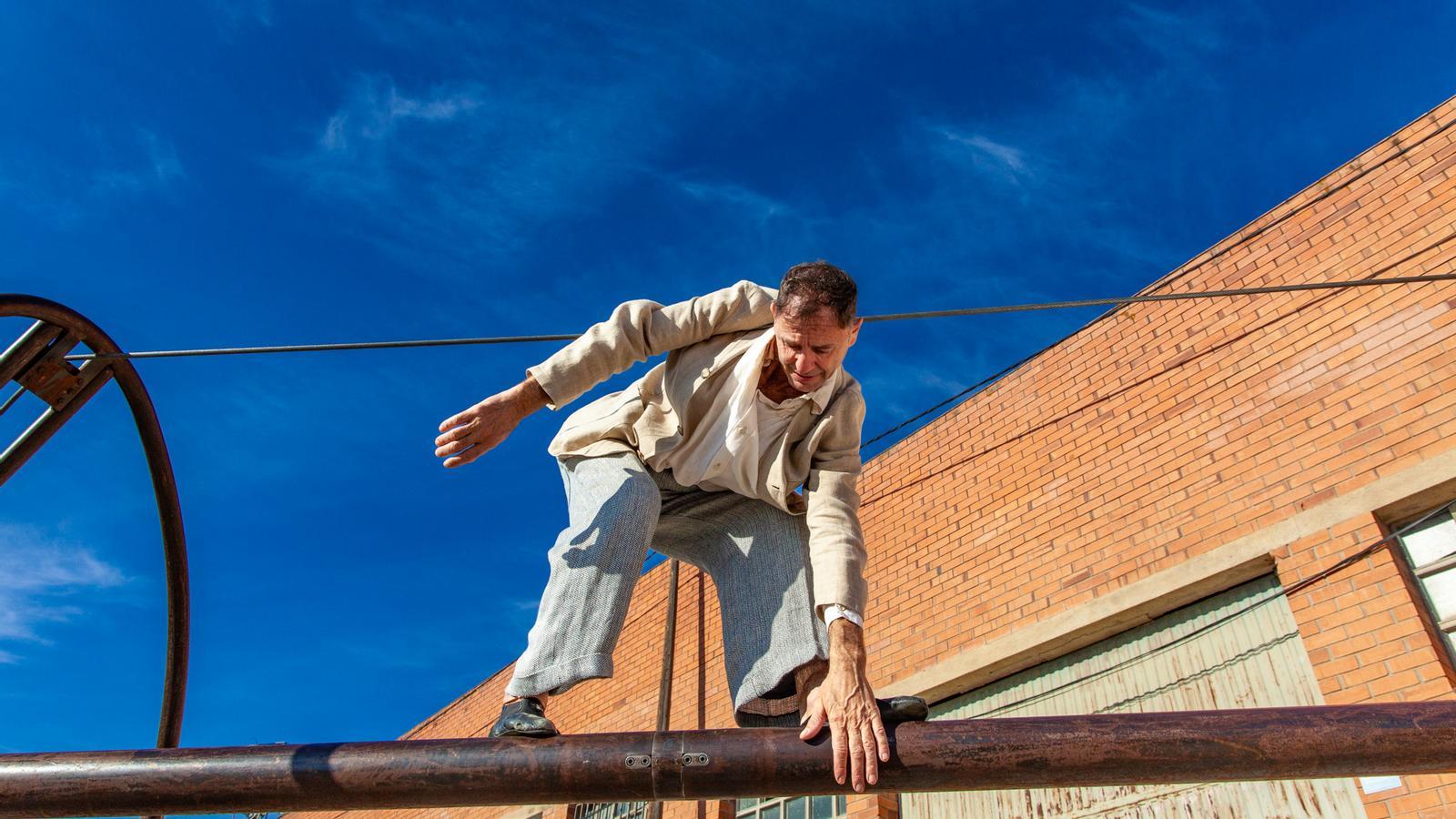
- 'Refugi', by Manolo Alcántara "He is the most elegant creator we have," says Cazorla when defining Manolo Alcántara. In his latest show, the artist talks about age and the passage of time through balances with a large iron piece that he uses to explore the idea of refuge and solitude. It is an intimate and poetic piece that moves away from virtuosity and glamour to bring vulnerability, simplicity, and sincerity to the forefront.
- 'Entre el cel i la terra', by Circ Pistolet The directors of Trapezi have chosen the company Circ Pistolet to open this year's edition of the fair. "They were among the first in Catalonia to trust in hand-to-hand acrobatics and create a collective," emphasizes Cazorla. In Reus, they will present a large-scale show with 12 performers on stage from three different generations. Together they will create a tribute to the circus filled with humor and acrobatics, but also tenderness.
- 'Fragments', by La Víspera The Valencian company La Víspera presents a show of those that play with surprise and confusion in the gaze. A pole dance pole is the center of the staging, and the performers interact with it dressed in masks. As they move, the viewer will doubt where each person's face and back are, and whether they are right-side up or upside down. "It is a show with a young and mischievous gaze, and plastically very interesting," highlights Cazorla.
- 'Ki no nagare', by Collectif Malunés The Belgians Malunés will set up a small wooden tent in the Parc de la Festa to perform 'Ki no nagare', a piece that plays precisely with this emblematic tent in the circus and transforms it. The show is performed by two artists with very different bodies who question ideas such as positivity and neutrality. According to Cazorla, "they are a benchmark company in Europe, with a very particular language that must be seen."
- 'Topdown', by La Triochka This French company, made up entirely of women, questions the relationships of dominance and submission in society, both at work and in everyday life, through acrobatic balances. Energetic and very fun, the performers of La Triochka will present 'Topdown' in the middle of the street and demonstrate that sometimes a small gesture, like holding out a hand or smiling, can lead to a breakdown of pre-established rules.
