The incredible life of the French aristocrat pioneer of fascism
The Italian historian Sergio Luzzatto demonstrates how the Marquis of Morès used many of the ideas and techniques that later triumphed with Mussolini and Hitler
-
CAT -
CAST
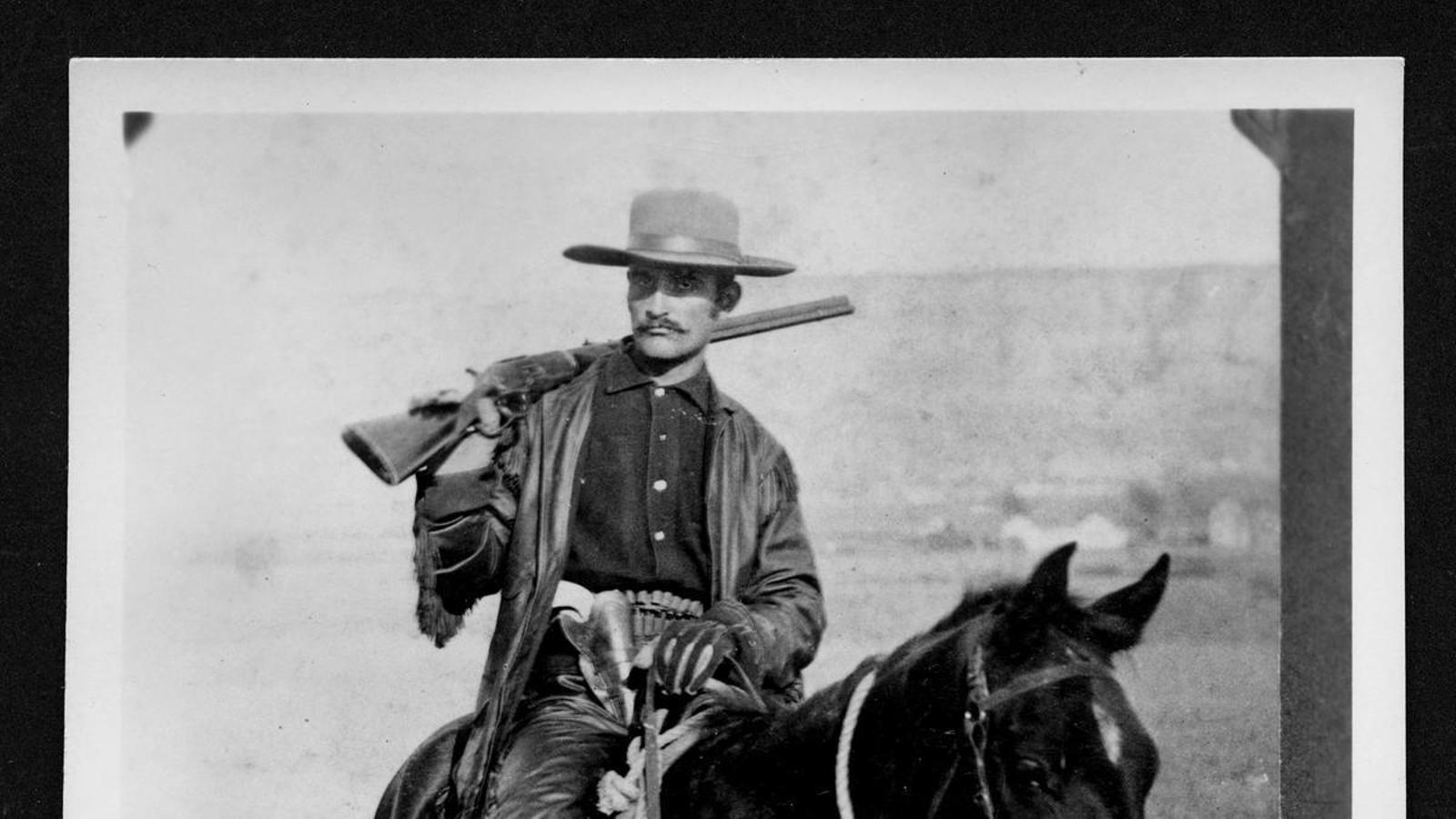
BarcelonaTraditionally, there has been much debate in France about whether French fascism did not exist or if it had been a marginal phenomenon before the Nazi occupation. There is growing consensus that no country can boast of being immune to fascism, but the Italian historian Sergio Luzzatto (Rome, 1963) goes a step further and states in the book El primer fascista (Pasado y Presente) that the first fascist was a French aristocrat: Antoine-Amédée-Marie-Vincent Manca Amat de Vallombrosa (1858-1896). Better known as the Marquis de Morès, he soon became convinced that the capitalist elites were contaminated by what he considered the Morès failed in practically all the projects he undertook: as a rancher in the Dakota territory, where he tried to revolutionize the meat industry; in the construction of a railway line in Asia, and, finally, when he returned to France to make a career as a populist leader and antisemitic demagogue. In this latter context, he played a particularly dark role within the , a political scandal that deeply divided French society. Luzzatto maintains that Morès's activism contributed to creating the ideological climate that made the accusation against the Jewish French officer credible. Morès ended up being murdered in the Moroccan desert, but, despite his failures, Luzzatto believes he was a visionary.
According to the historian, Morès was “the first Western leader to emerge on the political scene as an antisemitic populist, fueling incendiary rhetoric and using provocation and violence as political tools”. He knew how to manage the combination of racial hatred, supposed interclass solidarity, and paramilitary violence. He even went so far as to organize a personal militia that paraded through the streets of Paris with a strong visual impact: butchers, slaughterhouse workers, and apprentices marched with blood-stained aprons. Although he fell into disgrace, his legend would later be vindicated in Vichy France. Luzzatto considers that Morès anticipated many of the characteristic elements of European fascism before Benito Mussolini came to power. Although he did not triumph politically, he already showed the way that others would follow. “He was a man of action, but also a man of thought, albeit in his own way, not very intellectual,” he points out.
Parallels with Trump
The historian explains that his interest in Morès was born almost by chance. “I came across a reference from one of my favorite professors, Robert Paxton, who suggested paying more attention to this strange 19th-century figure. This sparked my curiosity, and then I saw parallels with current American affairs, especially with Donald Trump; someone who, although not intellectually brilliant, knows how to interpret the spirit of the times and mobilize the people,” he explains.
Regarding the origin of his anti-Semitism, Luzzatto highlights the cultural and religious context of the 19th century. The Jesuits educated many people from European elites at that time. Not all students became fascists or anti-Semites, but this elitist environment could have contributed to making Morès particularly sensitive to what he perceived as the harm that Jews supposedly caused to France and Europe in the late 19th century. The term term anti-Semitism began to be used around 1879, when Morès was finishing his education, and it added to a Christian tradition that had presented Jews as responsible for the death of Jesus Christ. During his time in the United States, Jews were part of his contacts in the cattle business, and they became an easy scapegoat in his political narrative.
Although not a profound thinker, Morès stood out for his skill in using the media of the time, and his stay in the United States influenced his political vision. According to Luzzatto, Morès "learned to take advantage of the media and interpret the spirit of the times, even in very different contexts." "From the great North American plains to the streets of Paris, he made constant connections, adapting experiences from one continent to another," he says. This ability allowed him to devise mass mobilization tactics before they were common in European politics, such as the use of private militias or the theatricalization of political confrontation.
Very skilled with the mass media
An example of Morès' great ability to gain media attention was through duels. Participating in duels was not exceptional at the time, but he knew how to turn them into public events. On one occasion, he summoned photographers to document a duel with Camille Dreyfus, a journalist and deputy, founder of the newspaper La Nation, and one of the most hated figures by antisemites. After a political rally during which Morès had lamented that Jews were not lynched in France as African Americans were in the United States, Dreyfus responded with a highly critical article denouncing his antisemitic discourse and aristocratic opportunism. The photographs of the duel circulated everywhere and crossed the borders of France.
Morès also knew how to simplify populist messages to connect directly with the people. Slogans like “France for the French” or slogans against the elites were simple but effective. Despite being an aristocrat and a privileged person, he knew how to present himself as a defender of the people. According to Luzzatto, if we look back at the main ingredients of fascism – antisemitism, racism, populism, corporatism (understood as a supposed solidarity between social classes that rejects class struggle) and the use of political violence –, Morès was one of the first Western politicians to use them intentionally and coherently. He also resorted to street violence and private militias as an instrument to gain power when the electoral route proved difficult.
Although many of his projects failed, his career shows how certain ideas can emerge before society is fully aware of their destructive potential. His figure allows us to understand how fascism can be gestated in unexpected contexts and how certain forms of populism, based on ideological simplification and emotional mobilization, can anticipate far-reaching political transformations.
