The fruit of 22 years walking among vineyards
-
CAT -
CAST
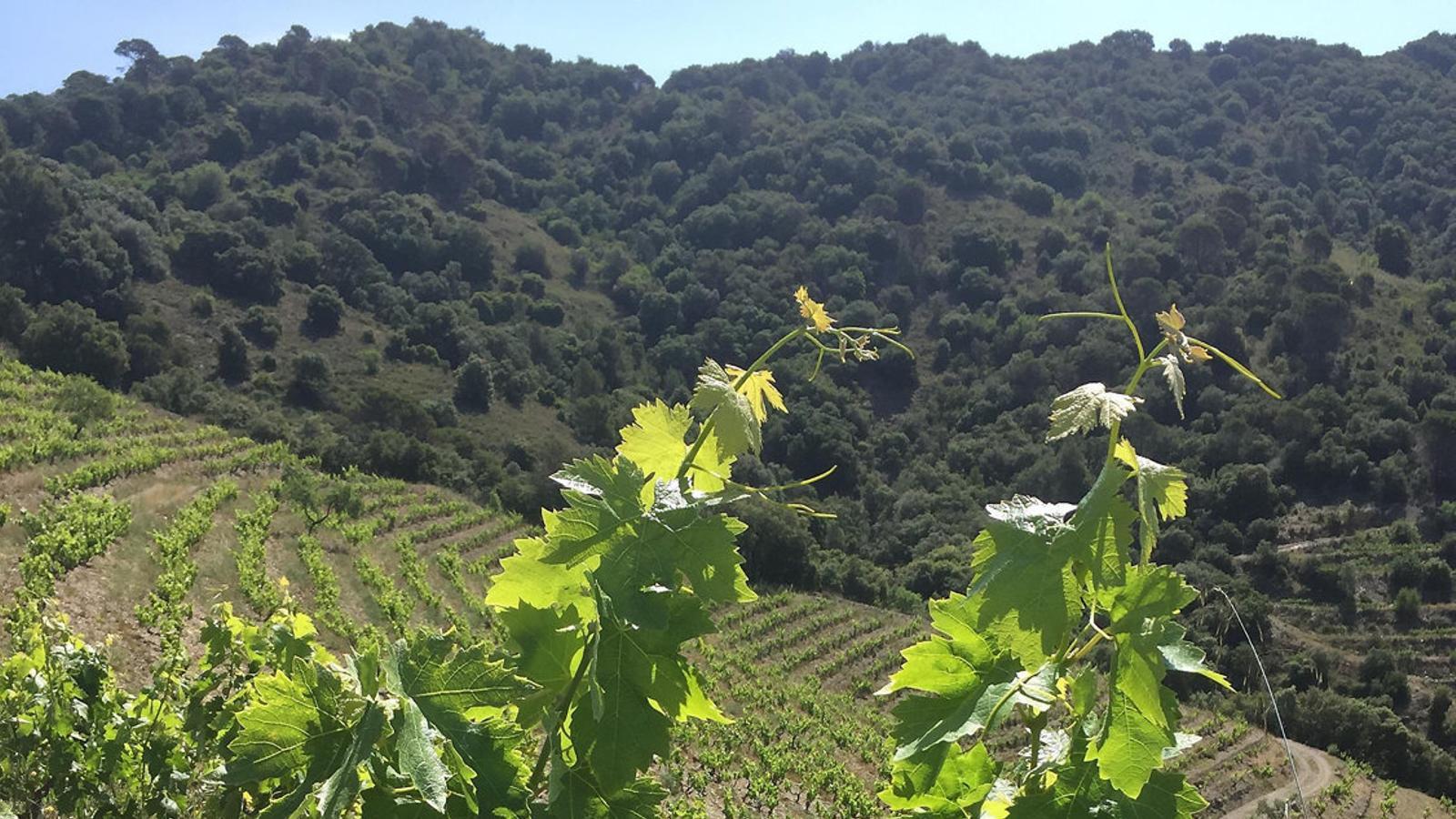
BarcelonaDoes the genius loci exist, do places have a soul? Is Escaladei, the corner of Priorat where the Carthusian monks settled in the 12th century, a magical place? Without that monastic gesture, the region would not be a land of vineyards today. Why do we get emotional in certain environments? Is it because we are predisposed? Did the first people who set foot in the place and decided to stay feel something special, a spirit, a daimon? What were they looking for, what seduced them? Beyond the ideas and baggage we all carry, beyond our capacity for suggestion and imagination, beyond the language with which we describe it, nature is always an here and now. An autonomous reality. A powerful fact.
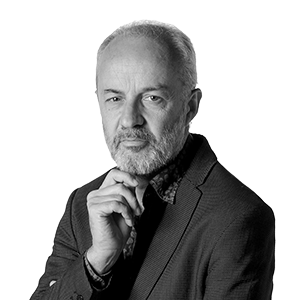
Joan Gómez Pallarès (Igualada, 1960), professor of Latin philology at the UAB, has spent twenty-two years walking among vineyards and going to wineries with a notebook in hand. Especially in Priorat, starting with Escaladei, but not only there. He has done so from his background of readings. Letters and land. An unbeatable classic combination. Specifically, he has used 50 notebooks and covered more than 25,000 kilometers. Perseverance. Obsession.
Why? To observe the constant metamorphoses of natural life with open eyes, with a sharp spirit. Letting oneself be moved: emotion is also a source of knowledge. And of recognition. From grape to wine, from vine to table, from seeing to drinking. This classical philologist turned winemaker has wanted to merge with nature, somewhat in the pantheistic way: God and nature understood as the same thing. Then yes, a glass of wine is something divine. He has titled his theology of wine La vida bona (Vibop Edicions). Not to be confused with the good life, although they are not incompatible.
"Nature exists with and without man," writes the author. In nature, people bring a point of view, a gaze. Experience. In his case, an intellectual contribution on the surface, through a diverse range of texts by authors who have loved nature: Thoreau, Giono, Burroughs, Mancuso... And many others. Erudition empathetic with the greenness of the world.
In nature, people also bring work and the drive for survival, of course. And at the same time, we have the immense treasure of ingenuity: "Maintaining a naturally childlike attitude is what allows you to escape the comfort of the known and live on the border of surprise and the unknown, riding curiosity." This is largely what he has done in his measured approach to the world of vineyards. And, furthermore, at the other extreme, he has applied science: "The red blood of human beings has almost the same chemical composition as what makes plants plants. You just need to swap an iron atom for a magnesium one and we go from hemoglobin to chlorophyll."
With Joan Gómez, this wine-tasting essay becomes an adventure both philosophical and earthly, learned and sensual. The power of words at the service of observing nature. It offers us the pleasure of surprise, of slowness. A fundamental realization, typical of the twisted trunk of a vine (the same could be said of an olive tree and its oil): no wine is the same, nor are we ever the same when we drink them. Everything flows and everything changes. "From Thales of Miletus to Hermann von Helmholtz, we have consolidated the idea that energy is neither born nor dies, but transforms itself".
Many wineries try to establish a formula for success. An immutable taste. Joan Gómez seeks the opposite, the nuances of each harvest, the small differences from year to year: "Wines that move me. Living wines". "Those in which the energy of the earth and the person who works it, who harvests the grapes and makes wine from them, is transferred to the bottle and the glass".
Idealism? Romanticism? Well, there is increasing evidence that we can work with nature, not against it. Our attentive walker and reader explains it thus: the more life and diversity there is in the vineyard – birds, native vegetation, etc. – the more life we will find in the glass. "Wine is life, and its beauty lies in its constant capacity for change".
The book was handed to me by its editor, Montse Serra, who also makes each volume a unique work, a delightful tasting. A glass of wine. This one features illustrations by Maggie Adrover, like ancestral marks on the landscape. Joan Gómez's objective: that "the cultural chain and the symbolic heritage born from a good life around the vineyard and wine are not broken due to our clumsy contemporaneity". He concludes, therefore, with the wish of his beloved Catullus: "May it last a long season".
