Writer and academic Luis Goytisolo, author of the monumental 'Antagonía', dies
Renewer of Spanish literature and academic of the RAE since 1995, he had won the National Prize for Spanish Literature in 2013

-
CAT -
CAST
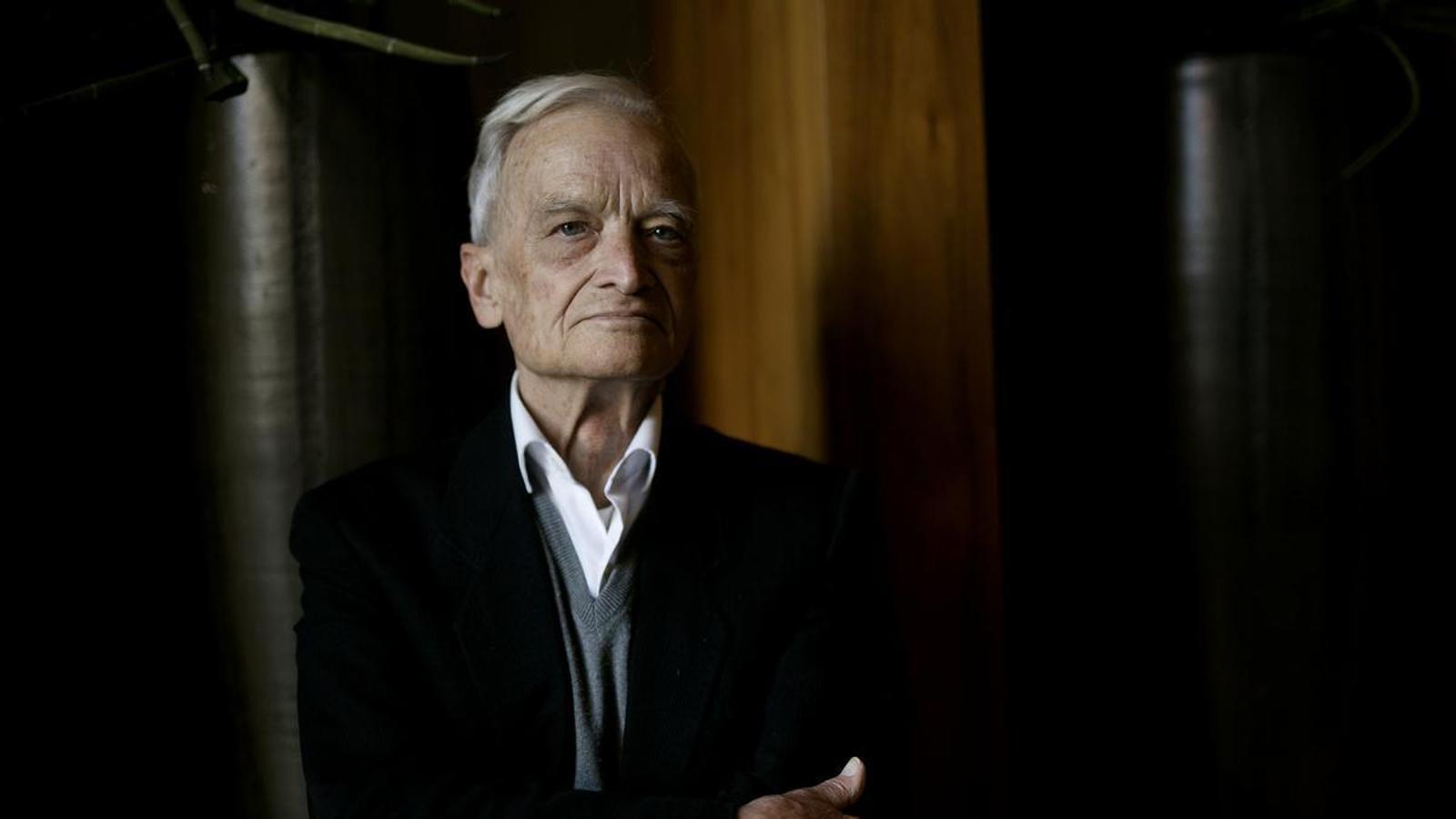
BarcelonaThe Barcelona-born writer Luis Goytisolo, the last member of a lineage of writers who renewed contemporary Spanish narrative, died on Sunday at the age of 91 in his rural retreat in Vimbodí, in Conca de Barberà, as reported on Monday at midnight the Royal Spanish Academy (RAE), an institution of which he had been an academic since 1995. Goytisolo is the author of an extensive literary work characterized by his capacity for innovation both formally and narratively. One of his most celebrated literary projects is the monumental tetralogy "}Antagonism –formed by the volumes Count, The green of May to the sea, The wrath of Achilles and Theory of knowledge–, which spans from the Civil War to late Francoism and which represented a literary milestone for the narrative of the 70s and 80s. His constant search for new literary territories earned him the National Prize for Spanish Literature in 2013 and recognitions such as the National Literature Prize in 1993 for "Statues with pigeons.
Born in Barcelona on March 17, 1935, Luis Goytisolo was the son of the Barcelona scientist José María Goytisolo Taltavull and Júlia Gay, who died during one of the bombings of Barcelona in 1938. He was the brother of the also renowned writers José Agustín and Juan Goytisolo, who died in 1999 and 2017, respectively. He debuted in 1958 with The outskirts, a collection of seven seemingly unconnected stories with a common setting: post-war Barcelona. The book won the Biblioteca Breve prize and marked the writer's leap towards a literary career. "The award changed my life. The 30,000 pesetas they gave me were an important help, but it was even more decisive to start working as a reader for Seix Barral. Shortly after, I dropped out of law school," Goytisolo explained in 2018 in an interview with ARA. His debut was already a controversial book for the literary radicalism it offered: it stirred up dust among the more conservative critics, who, despite praising Goytisolo's style, questioned whether that artifact could be considered a novel.
In 1960 Carmen Balcells founded her literary agency and Goytisolo became the first Spanish author she represented. That same year, the writer spent four months in Carabanchel prison for having participated in the VI Congress of the Czech Communist Party in Prague. In prison, he began to conceive what would be his great masterpiece, the tetralogy "Antagonism. "I spent five weeks of incommunicado that were very fruitful. I was taking notes on toilet paper that a PSOE leader managed to get out under the table through his lawyer", remembered the author in 2012, when he was 25 years old. The tetralogy starts from the writer Raúl Ferrer Gaminde and reflects on the mechanisms of creation, while also constituting an X-ray of Spanish society in the final years of Francoism.
Goytisolo began to write Antagonism in 1963 and would dedicate 17 years to it. The Seix Barral publishing house, however, did not want to wait for the work to be finished and published the first volume, Count, in 1973 in Mexico and in 1975 in Spain. Then would arrive The greens of May to the sea (City of Barcelona Award, 1976), The wrath of Achilles (1979) and Theory of knowledge (1981) which, together, would form a tetralogy of over a thousand pages. In 1976 he was awarded the Ciutat de Barcelona Prize. In 2012, Anagrama published the tetralogy for the first time in a single volume and the following year would receive the National Prize for Spanish Letters for this work, which the North American newspaper The New York Times would be considered one of the fundamental creations of the last century. "It broke molds and opened paths —certifies to ARA the professor, writer and also academic Carme Riera—. At that moment literature needed new aspects, it needed to get out of the social realism that even he had used in The outskirts and the bet was very interesting. He created a rigorous work that didn't seek an audience but rather explored new elements in textuality and language. It was very well received by critics and by followers of his early works, for whom he is a cult author." Riera highlights the uniqueness of the Goytisolo family, with three such important figures in literature: "There is no similar case. They are children who grow up without a mother and with an authoritarian father. The Goytisolos are helpless children, and I believe this makes them writers".
Language before image
The 80s decade was also very profitable for Goytisolo. He published Estela del fuego que se aleja (1984), with which he won the Critics' Award in 1985, and other titles such as La paradoja del ave migratoria (1987) and Fábulas (1981). In 1992 he dared to publish one of his most autobiographical books, Estatua con palomas, in which he linked his experiences and reflections at the end of the 20th century with those of the historian Tacitus during 2nd century Rome, playing with the times and spaces of both eras. The title earned Goytisolo the National Narrative Award. At that time he was also chosen as an academic of the RAE. Goytisolo took office on March 24, 1994, with the speech titled L'impacte de la imatge a la narrativa espanyola contemporània, in which he analyzed the effects of cinema on literary creation and defended the autonomy of language over image. The writer was also a member of the RAE Governing Board between 2000 and 2002 and censor between 2000 and 2008.
In the final stretch of his career, Goytisolo also dedicated himself to essays with titles such as Naturaleza de la novela (Anagram Essay Award, 2013), in which he details the characteristics of the genre and confronts the crisis of the genre, which he attributes to the irruption of television and the internet. The writer described them as "invasive" and predicted at the time that novel writers "will be exhausted" because "someone who is not literarily educated will not want to be a novelist." Among his latest works are Chispas (2019), Coincidencias (2017) and El sueño de San Luis (2015). In 2015 he sold his personal archive to the National Library of Spain for 200,000 euros.
In one of his latest books, El atasco y demás fábulas (2016), the writer championed humor "irreverent, scatological and absurd" to confront "a jammed world". His view of the present was acidic and sprinkled with cynicism: "In our world politicians no longer rule, and the Pythagoreans of Silicon Valley could solve Greece's debt by squaring a few numbers, but they don't. There are no workers left either, even though it was said before that the golden rule of capitalist society was to ensure that the lowest rungs of society had jobs, because then they could consume", said the writer during the book presentation. Luis Goytisolo was also a regular contributor to media such as El País, ABC and Diario 16, and he also wrote and directed television documentaries such as the series Índico and Mediterráneo, broadcast by Televisió Espanyola.
The president of the Generalitat, Salvador Illa, lamented Goytisolo's death this Tuesday. "We are losing a key writer for understanding our 20th-century literature. Committed to democracy and letters with the same rigor and audacity", Illa pointed out. Anagrama, the publishing house where Goytisolo had published, recalled that the tetralogy Antagonía is considered "one of the great European novels of the 20th century" and the publishing house Siruela, where the author had also published, described him as "one of the fundamental voices of contemporary narrative".
