Pere Arquillué and Imma Colomer premiere Lluïsa Cunillé's 'Hamlet'
Albert Arribas directs 'Denmark', a duel between mother and son, at Beckett

-
CAT -
CAST
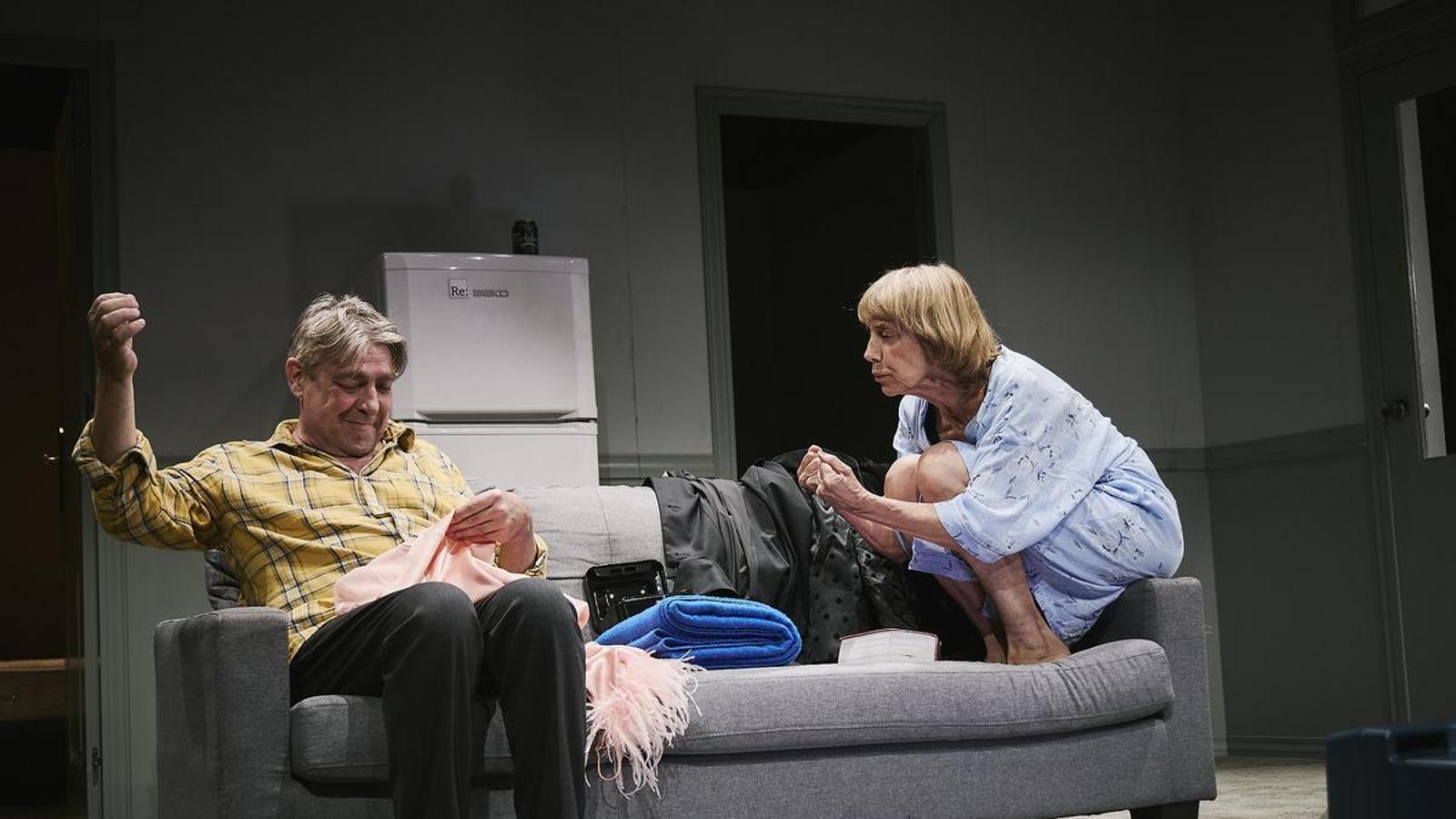
BarcelonaThe playwright Lluïsa Cunillé (Badalona, 1961) wrote the play Dinamarca in 2014 and published it in 2017. The text is, according to director Albert Arribas, "a contemporary classic that has impacted many people" but which, until now, had never premiered in Catalonia. Sala Beckett and the production company Bitò have joined forces to bring it to the stage, in a production starring Pere Arquillué and Imma Colomer under Arribas's direction. The play will be performed from May 15 to June 14 at the Beckett and, from the autumn, will tour Catalonia. "Dinamarca is Lluïsa Cunillé's Hamlet. It revisits the ghosts of two characters marked by resentment and the need for revenge. The world had made them promises that have been broken, and they consider whether to be or not to be, whether to commit suicide or not," explains the director.
Making the obvious nod to Shakespeare's iconic work, Cunillé sets the action in an apartment in Copenhagen, where a mother and son live precariously. Together they have created an oppressive coexistence and have secluded themselves "in inertia and dynamics that have nothing to do with what the future could have offered them," says Arribas. The conflict arises when considering how the mother should live, with whom the son has a relationship of absolute dependence but at the same time, for him, it is beginning to be a burden. "She has a strong ability to tie the son down, confront him, and keep him locked up. They reach very high levels of violence and confrontation," notes the director.
In this regard, Colomer highlights that "the two characters are very attractive, with very powerful reasons for existing and fighting". In the case of the mother, she emphasizes "the resentment she suffers and the son's tireless effort to make her feel guilty all the time, to annihilate her". For Arquillué, one of the strengths of the play is "the theatrical game that the director proposes" and which moves away "from the idea that Cunillé's works are dark and slow". The two actors had worked together before —they coincided on projects like Vida privada (2010) at the Teatre Lliure and Morir (1998) at the Teatre Romea—, but it had always been with much larger casts. Dinamarca offers them the opportunity to share, according to the actress, "a very powerful tennis match between the two characters".
Very explosive theatricality
The connection of Denmark with Hamlet is present from the beginning of the show, when it is put on the table whether, for the protagonists, it would be better to stop living. Cunillé also plays at confusing reality and fiction, without clarifying whether what the spectator sees is or is not a fantasy of the protagonist in the same way that in the Shakespearean play it is not clear whether Hamlet is or is not mad. For this reason, scenographers Sílvia Delagneau and Ona Grau have constructed a realistic and conventional chamber space that, as the staging progresses, will mutate towards a more surreal territory. All of this "catapults the characters towards very explosive theatricalities", points out Arribas, and makes the fight for vitality the central axis of the show. "This is the great theme of all of Lluïsa Cunillé's works —defends the director—, but it gains strength when the corsets and difficulties against which one struggles are enormous. Starting from the ghost of suicide, Cunillé tells us how the struggle for vitality can transform identities, existences, and lives".
