The Espurnes Barroques festival celebrates its ninth edition from May 9 to June 7, 2026, with a program inspired by the world of dreams. Over five weekends, it will feature 25 events across thirty municipalities in Central Catalonia, combining heritage, music, and gastronomy with concerts, workshops, meals among vineyards, and educational activities. Among the highlights, in addition to the inaugural concert-show based on Calderón's 'La vida es sueño' in Cervera, are performances by Xavier Sabata in Castelltallat (May 31), Marco Mezquida and the Cor de Cambra del Palau in Manresa (May 10), the Neva Sufi Ensemble in Sant Ramon (May 23), or Mozart's Requiem with the Orquestra del Miracle in Riner (May 30). The festival also includes the La Rêveuse cycle, with various readings of the Goldberg Variations between May 16 and 31, the opera 'Il combattimento di Tancredi e Clorinda' in Súria (June 6), and a closing event at the Molí dels Cups in Olius with Baroque and electronic music (June 7).
Albert Recasens: "Musical heritage is also memory"
Director of La Grande Chapelle. Premieres at the Espurnes Barroques festival 'Life is a dream... in music'

-
CAT -
CAST
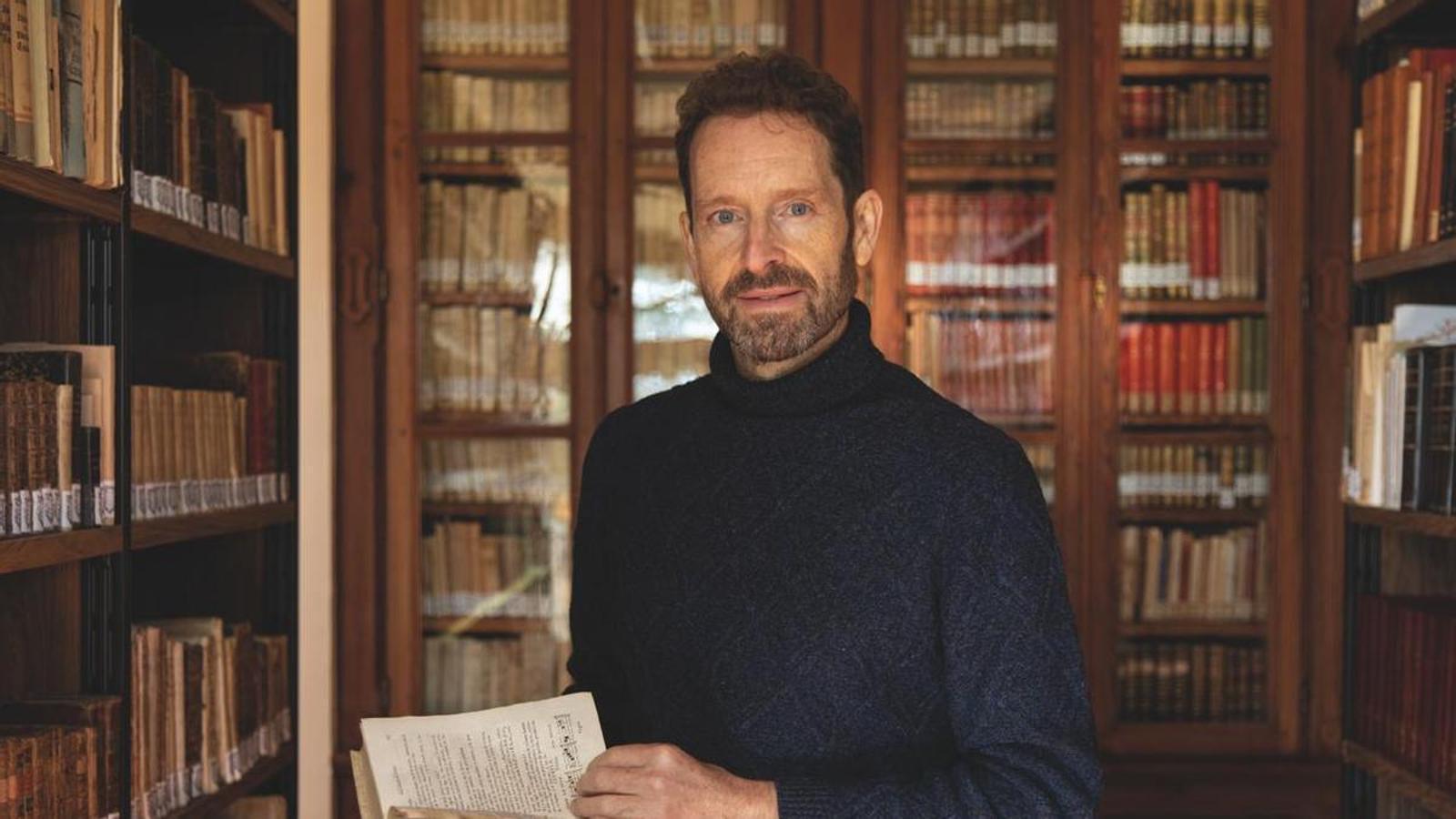
GironaAlbert Recasens Barberá (Cambrils, 1976) is one of the foremost specialists in Hispanic classical music from the 16th to the 18th centuries. Director of the historicist ensemble La Grande Chapelle, for two decades he has combined passionate musicological research with performance and artistic direction, always with the recovery of unpublished works from the Spanish baroque as a common thread. This Saturday, May 9, in Cervera, as the inaugural event of the Espurnes Barroques festival, he premieres La vida es sueño… en música, a hybrid proposal that intertwines theater and music based on the mythical text by Calderón de la Barca, a master of the Golden Age. The show-concert, produced in collaboration with Ignacio Arellano, editor of the playwright's works, and stage director Eva Rufo, features some fifteen performers who combine theatrical dialogues on stage with villancicos, tonos, motets, and madrigals by composers with whom Calderón had worked, such as Juan Hidalgo, Tomás Torrejón, and Cristóbal Galán.
How do you define this original proposal?
— Fragment from Calderón's text. And based on the author's own annotations in the original text, we incorporate the music of the era, as a commentary, as the chorus of Greek tragedy did. All composers are very carefully chosen, Calderón knew them and they were choirmasters of the Habsburg court when "Life is a Dream" was written, in 1635.
Is the result not an opera, but rather incidental music?
— Yes, a play with music, but not an Italian-style opera, because in Calderón's play, the essential element is the text, not the music. Unlike opera, which was born with Monteverdi, where the main weight is carried by arias, choruses, and vocal virtuosity, here the music has a specific and structural function: to comment on the text, reinforce the action, or contradict it without interfering with the verses. La Grande Chapelle offers almost an hour of music inserted within the play, in a hybrid format that was performed in that era and which, later, eventually evolved into the genre of the zarzuela.
Are the program pieces retrievals of forgotten pieces?
— Of what will be heard on Saturday there are some better-known pieces, such as Ay, que siento morir, by Juan Hidalgo, but most of them are works that I have been researching and some will be performed for the first time in modern times. The research has been very extensive, with manuscripts from the Library of Catalonia and the National Library, especially from the Libro de tonos humanos of 1650. Many of these pieces are part of a repertoire that circulated throughout the Peninsula and even through America, and often they have only been preserved in copies due to the fire at the Royal Alcázar of Madrid in 1734.
Among the soloists there will be singers. How do the sung texts fit with the philosophical and mystical language of Calderón's play?
— In certain specific sung passages, we have even applied new lyrics, in what is known as the contrafactum procedure. It consists of including text inspired by Life is a Dream, but not literally, because we do not want to replace Calderón either. What we do is adapt parts of the sung pieces from the plot of the play. And this is not a modern license, but a historical practice: we have documentary evidence that at the time these pieces were performed in many works. Melodies circulated between the theatre or the church simply by changing the lyrics.
Why is it important to recover all this 17th-century musical heritage from the 21st century?
— It is the axis of my life. When I was studying musicology in Leuven, in Belgium, in the music history courses everything was Italian baroque, French baroque, Bach, Monteverdi, Buxtehude... the great European traditions. And we founded La Grande Chapelle precisely because I believe there was a great gap. Musical heritage is important because it is also heritage, it is memory. It is as important to know Gothic architecture when you visit a city, to understand classicism in painting, or to go to the theater and see Molière or Shakespeare, as music. For me, we are who we are because we have a past.
The Espurnes Barroques festival is perfectly aligned with this philosophy.
— Yes, it always looks for very unique productions, little gems. Josep Barcons [festival director] surely called me because he knows that everything we do is the recovery of heritage. And, furthermore, it is fundamental that all this repertoire is not restricted only to large capitals or very specialized circuits. Precisely because it is everyone's heritage, it makes a lot of sense that it can be heard in a city like Cervera, with less than 10,000 inhabitants.
