An unpublished work by Velázquez comes to light
'The Count-Duke of Olivares in armor' would be the first portrait the Sevillian painter made when he arrived in Madrid

-
CAT -
CAST
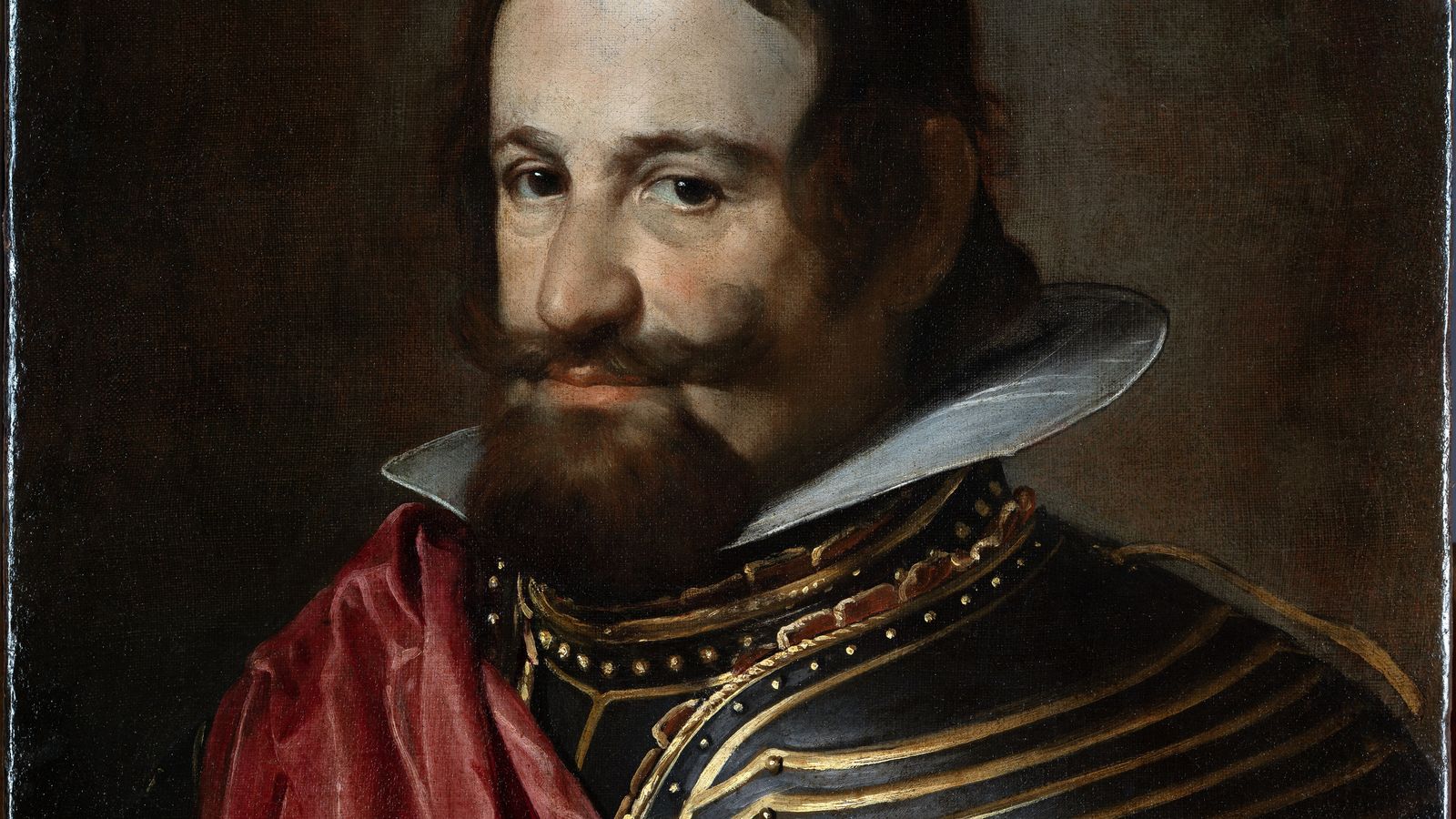
BarcelonaExceptional discovery in the legacy of Diego de Velázquez: an unpublished portrait of the Count-Duke of Olivares in armor has appeared in a private collection. The find was made by the director of the Detroit Institute of Arts, Salvador Salort-Pons, as he himself explains in the July issue of the magazine ARS Magazine. This would be the first portrait Velázquez made when he arrived in Madrid from Seville. Salort-Pons plans to exhibit it at his museum in the fall. The article does not specify the location of the painting, which would reach astronomical prices in the art market, nor whether it is cataloged.
The origin of the research stems from the travel diary of Cassiano dal Pozzo (1588-1657), secretary to Cardinal Francesco Barberini, who documented the life in Madrid of the delegation sent by Urban VIII to negotiate a truce between Spain and France over Valtellina, a strategic valley in Lombardy, northern Italy. In this context, Olivares commissioned two portraits from a still young Velázquez who had recently entered the service of Philip IV: one of himself and another of Barberini, intended to be exchanged as visible proof of the understanding between Madrid and Rome. Neither, however, convinced the Italian delegation. Dal Pozzo described Barberini's portrait as "melancholic" and "severe," and the cardinal commissioned another portrait of himself from Juan van der Hamen.
Despite the initial rejection, Salort-Pons maintains that the small bust of the Count-Duke of Olivares in armor and with the red band of a general fits the description inventoried in 1631 in Rome as "a painting, with the portrait of Mr. Count Olivares, that is, head and torso, armed." Beyond the documents, Salort-Pons bases his attribution on an exhaustive technical study that compares the canvas with the portraits of Philip IV from the same period preserved in the Prado Museum: they share the same reddish preparation layer, the palette of blacks, reds, and ochres, the use of lead white, and halos of light to model the face. Furthermore, the way the gaze is sharpened coincides with the painter's first courtly period.
The radiography of the painting also provides an internal history of the work: Velázquez would have first conceived Olivares as a statesman, with a dark fur-lined suit and a narrower collar, which he would have later replaced with armor, and would have made adjustments to the shoulders, neck, and ear to reinforce the monumentality of the bust. The change in iconography coincides with the years in which Olivares promoted the Union of Arms, the great project of military centralization of the Hispanic monarchy. For Salort-Pons, sending a portrait in armor of Philip IV's strongman to Rome would not, in this sense, be just a courtly detail, but "a declaration of strategic leadership to the Church and European chanceries".

However, there is one detail that Salort-Pons highlights as a specific characteristic of Velázquez: the representation of an imperfection in the armor. While in a contemporary engraving the armor appears impeccable, the canvas only shows one of the two rivets on the upper part of the left arm, as if the other had been lost or were not there. The historian interprets this gesture as a deliberate trompe-l’oeil effect, conceived to draw the spectator's attention and showcase Velázquez's technical skill in a court fascinated by optical illusions. At a time when the painter was competing with established masters to establish himself as the king's portraitist, turning a visual "error" into a display of virtuosity could be an artistic and, at the same time, political strategy.
The appearance of this portrait of Olivares in armor, Salort-Pons maintains, is one of the most significant contributions to Velázquez's catalog in recent years: it provides the first documented image of the "favorite" in a military context and allows for a nuanced reading of his iconographic construction among the office, the throne room, and the symbolic battlefield. At the same time, it invites a rereading of the role of painting in the relations between Madrid and Rome at a "decisive" moment in European politics.
