Àlex Rigola: "I would have liked to go to the Factory parties"
The director sets 'A Midsummer Night's Dream' in the creative space that Andy Warhol boosted in 1960s New York

-
CAT -
CAST
BarcelonaÀlex Rigola wanted to recover the magic of A Midsummer Night's Dream which he premiered in a macro-production in Düsseldorf in 2014. The idea was to place a production with a large cast in a small room like the Heartbreak Hotel theatre. "When I think of Grec, I think of a festival, a party and, therefore, Grec should serve for special things to happen in the city's venues", argues Rigola, who was a candidate to direct the festival. With this maxim, he premieres a show that requires a special commitment from all participants, both interpretative and economic, because even filling the room doesn't make the numbers add up: twelve performers will perform throughout July on a stage for seventy seats (which are practically sold out).
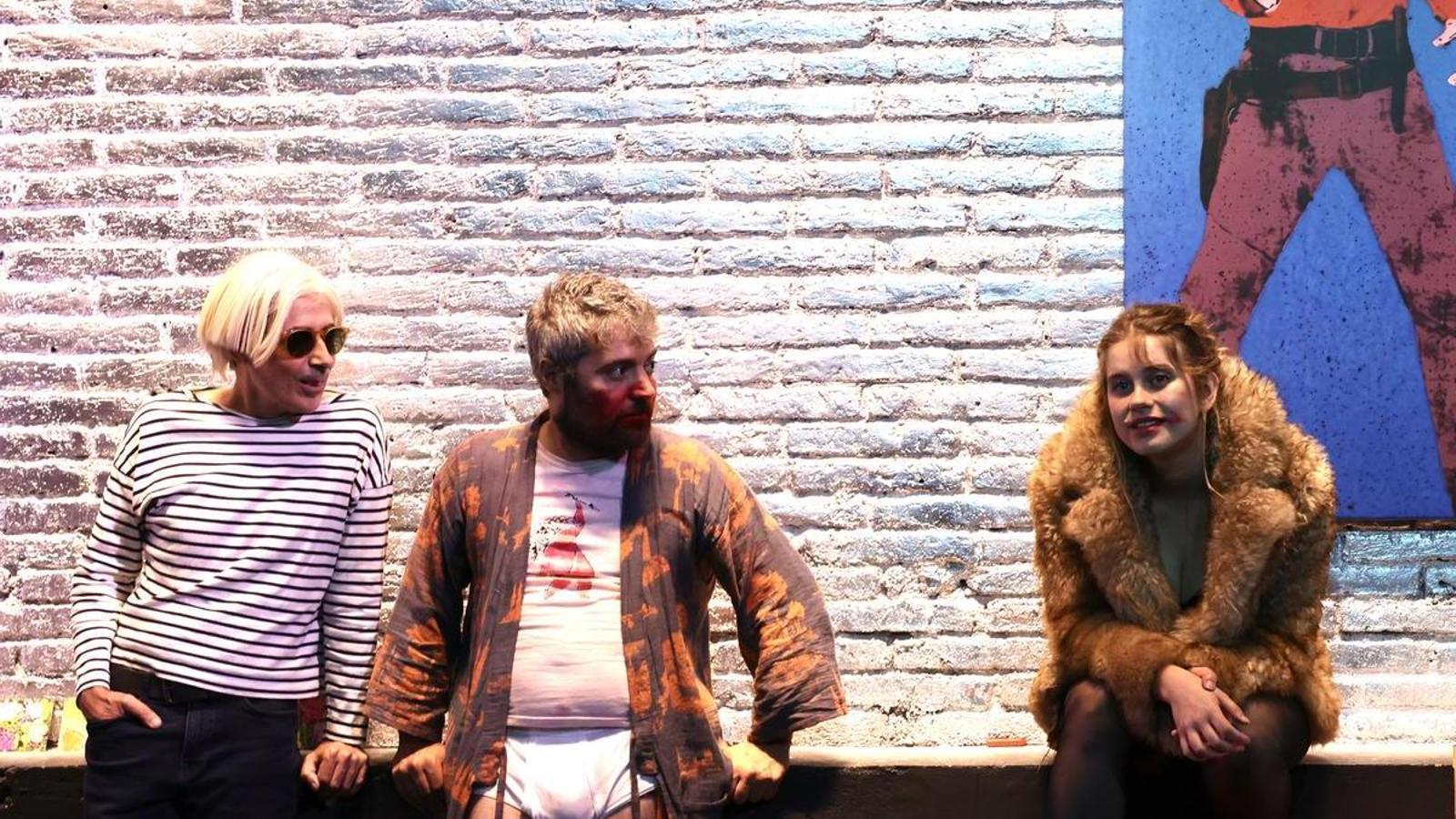
But it's not just the size of the show that's the attraction, but also the dramaturgical approach. "Basically, they are lovers who escape and end up in a magical forest of love and freedom where chaos reigns. In short, they end up at a rave with fairies", summarizes Rigola. "What party would I have liked to go to? – asks the director–. My magical forest is Warhol's Factory in the 60s". For this reason, as he already did in Germany, the Dream is transformed into the Factory and the real characters from that world of freedom, as radical as it is dangerous, are made to fit with the characters from Shakespeare's comedy.
But, with another twist, Rigola has now decided to change the age of the protagonists. The four young lovers who flee are not adolescents, but rather elderly people escaping from a residence. Thus, Muntsa Alcañiz, Toni Sevilla, Francesca Piñón, and Oriol Genís become the protagonists of the play, while Lluís Villanueva (a Warhol with a wig but no imitations), Jordi Oriol, Biel Duran, and Jordi Rico are the characters of the Factory; and the young Nil Cardoner, Elisabet Casanovas, David Menéndez Boye, and Roger Julià are Shakespeare's group of artisans who here represent The Velvet Underground preparing a concert and a performance. At the theater entrance, there is a who's who so that the spectator can follow both threads, if they are interested in delving into the connections. Because there is both Shakespeare's original text (version by Salvador Oliva) and a lot of real events that took place at the Factory. The Heartbreak Hotel has been transformed into a silver-colored space, with serialized pop art, Campbell's soup cans, and silver clouds. And all this in just seventy minutes.
"I wanted to talk about the possibility of being different – Rigola advances –. The Factory was a place where everyone could find themselves, whatever their tastes, including sexual ones. Obviously, there were excesses and it ended badly [that first Factory was closed due to an attack]. They were very intense people, it's true. But those of us who dedicate ourselves to creative things are intense and strange. I wanted to champion love within this strangeness, which leads us to have ways of relating that are not always easy," says the director. Rigola wanted to talk about freedom and the creative power of the artist, but the show ends up talking about love when it makes the change of protagonists. "When the love verses intended for adolescents are spoken by a 75-year-old person, from their simplicity and their emotions, they have a weight and a force," says the director. "It's a masterful change," states Lluís Villanueva.
