Actor and director Manel Dueso dies, a free verse of Catalan theatre
Co-founder of the Sala Beckett, playwright and poet, he is the author of a poignant and incorruptible body of work
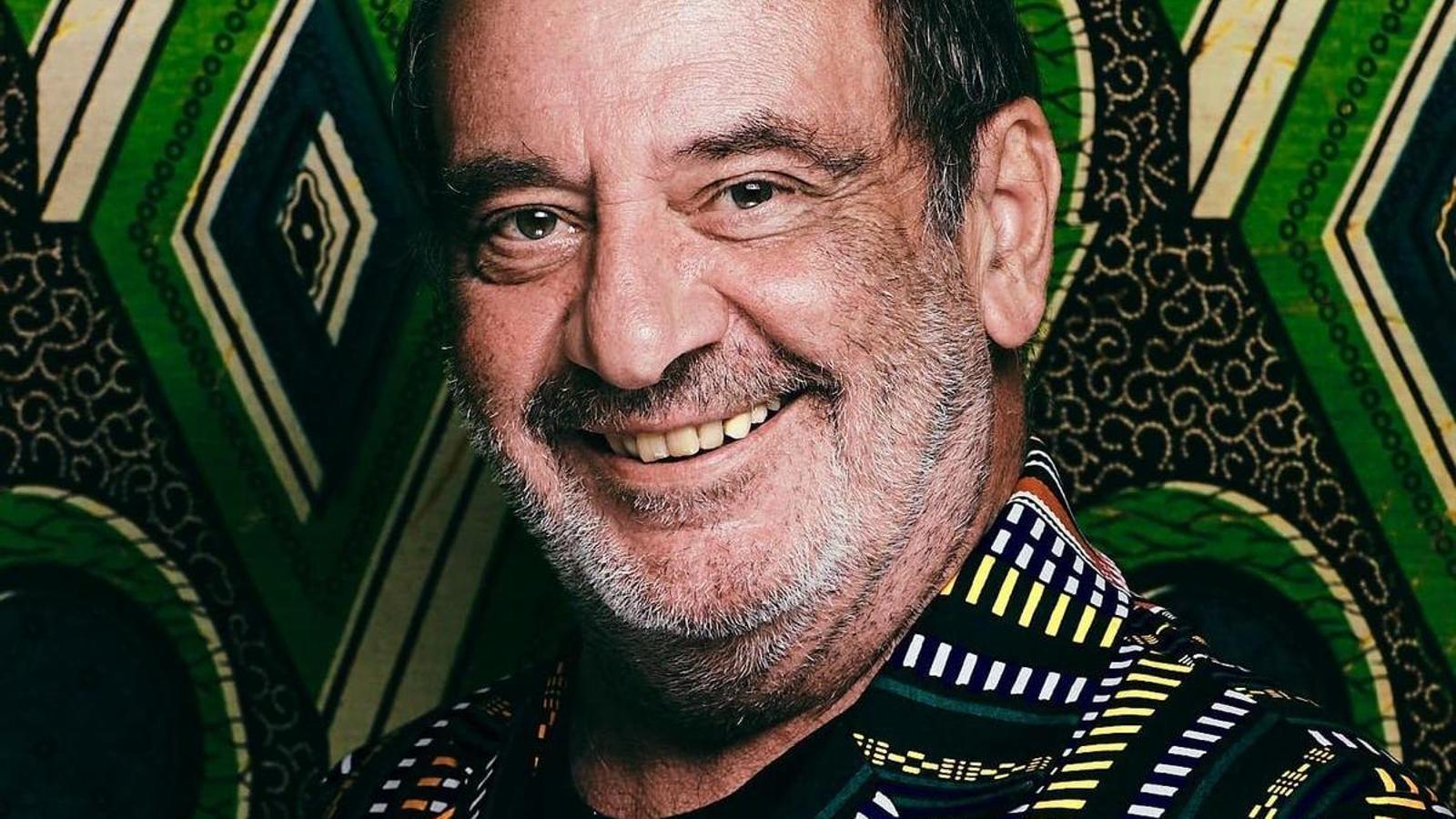
BarcelonaManel Dueso, actor, director, playwright and poet with an extensive and prestigious theatrical resume, passed away this Tuesday at 73 years old as a result of cancer. He performed and directed more than a hundred plays by authors such as Shakespeare, Chekhov –his great predilection–, Molière and Beckett, among many others, and wrote more than twenty plays, a body of work that validates him as a top-tier stage animal. As an actor, he was a familiar face thanks to popular series such as La Riera, Nit i dia, Cuéntame, Isabel, El cor de la ciutat, Secrets de família and Laberint d'ombres, and in cinema he worked under the direction of filmmakers like Jaume Balagueró (Mientras duermes) and Manel Huerga (Salvador).
Creator of a committed and demanding theatre, he did not always find the support and echo he desired. "He was a very lucid and creative guy, who until the very last moment had been writing poetry —explains actor Francesc Orella to ARA, one of the performers who has recited his work in the poetic show Som cavalls d'escuma en camps de menta—. He had a very personal universe. He was not only unconventional, he really unsettled you, his texts move you from within. A great friend and a very talented artist has left us, one who did not receive the recognition of the public and private theatre companies of Barcelona. He made poignant and politically incorrect theatre, he was against bourgeois and comfortable theatre, and that still bothers people. When one is direct and stark, people feel uncomfortable," laments Orella.
"Theatre was his life, his way of being in the world. He understood it as a way to shake consciences and to discomfort those who sat in the stalls to make them understand the complexity of the human being. He did not write friendly theatre, but rather poetic, flirting with the absurd, with surrealism and always from the love and deepest respect for this art. That is why he was intolerant of mediocrity. His principles always came before everything else, even if that made him step outside the margins," states Montse Germán, another actress and friend, who considers him a master and whom he had directed in five productions.
Born in Sabadell in 1953, Dueso was a precocious actor and took to the stage for the first time at the age of five at the Sant Vicenç Parish Center, in the Creu Alta neighborhood. His passion for the stage came from his grandmother, a great theater enthusiast, but at 10 years old his parents forbade him from doing theater, although he continued to train in secret. After doing his military service in Lleida, at 21 he bet everything on theater and entered the Theater Institute of Barcelona to study acting. Some of his teachers were Carlos Gandolfo, José Sanchis Sinisterra, and Pierre Chabert. As a director and author, however, he considered himself self-taught.

Dueso did street, guerrilla, and laboratory theater and co-founded several companies. He was also one of the founders of the Sala Beckett, where he debuted as a playwright in 1991 with Per a no res. He had premiered thirteen plays in theaters such as the Sala Beckett, La Villarroel, the Mercat de les Flors, and the Sala Muntaner. At the end of last year, he premiered at the Teatre Nacional de Catalunya Jambo Bwana, inspired by a personal memory from the 80s, when he met a young Gambian man who had become a quadriplegic while working cutting down trees in Sant Hilari Sacalm.
As a theater director, he was interested in the densest and most complex authors: he directed works by Edward Bond, Connor McPherson, Bernard-Marie Koltès, and Jean Genet. In this capacity, he directed top-tier performers such as Julieta Serrano, Mercè Sampietro, Emma Vilarasau, Blanca Portillo, Montse Germán, Àurea Márquez, Daniel Brühl, Javier Cámara, Tristán Ulloa, Pablo Derqui, Leonardo Sbaraglia, Gonzalo de Castro, or Marc Martínez.
In recent years, the publisher Lapislàtzuli published his poetic play Mata'm (2023) and the poetry collection Som cavalls d'escuma en camps (Lapislàtzuli, 2026). "His poetry contained a lot of magical realism, it was full of non-existent, invented, undomesticated creatures. He was an existentialist poet, who spoke a lot about death and life. His poetry is very raw, not at all intellectualized, lived-in. He had many things to say," recalled editor Jon López de Viñaspre this Wednesday.
