Warming up airplane engines: that is what Kärcher did before dedicating itself to pressure water
The pressure washer company invoices almost €3,500 million annually and employs 17,000 people
-
CAT -
CAST
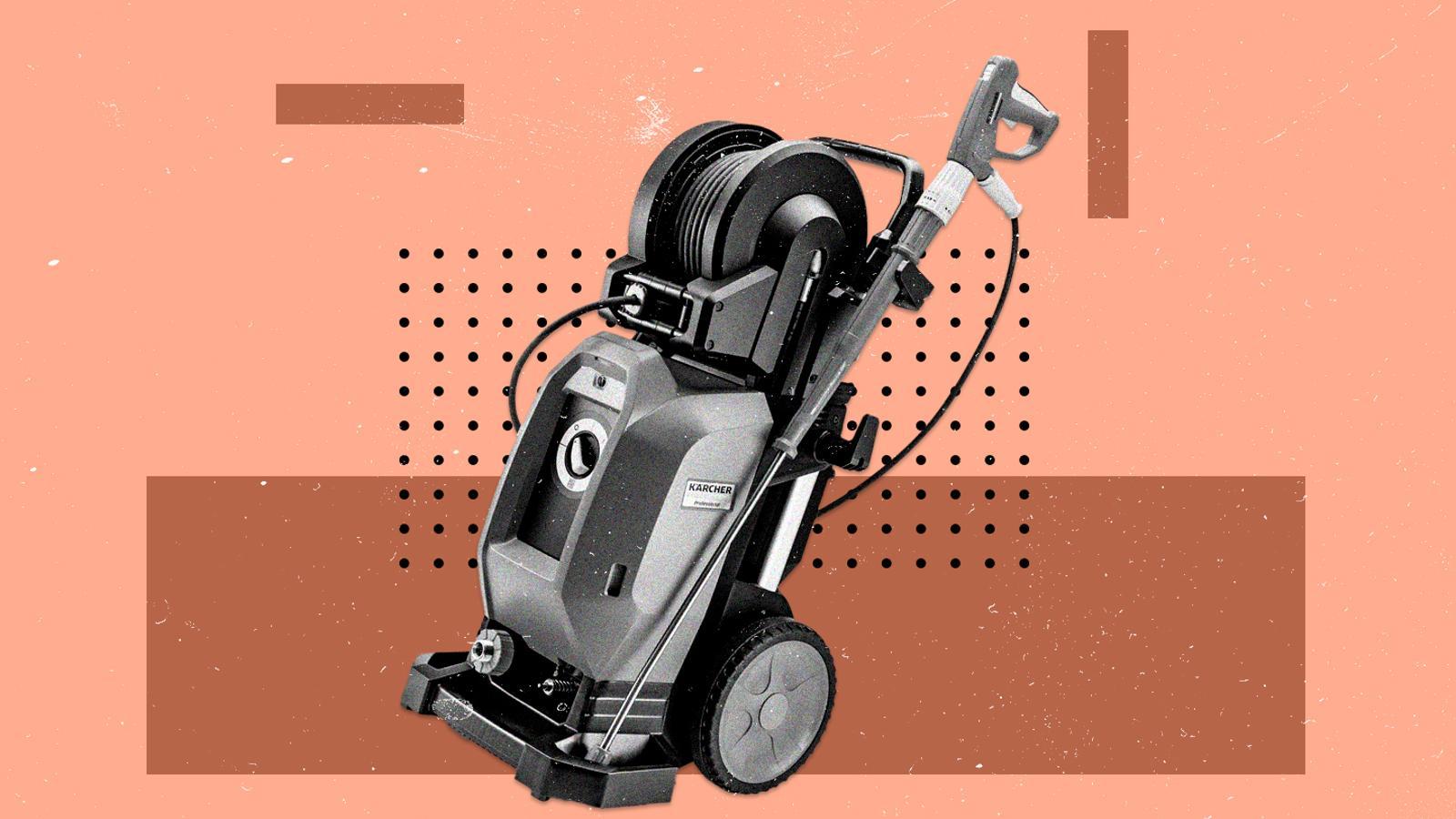
It is Saturday morning, in a housing development of single-family homes. In one of the gardens, a man has been aiming a high-pressure water jet at the terrace tiles for a while. With each pass, the dirt accumulated over months disappears. The machine is yellow and black. A few streets away, a neighbor is using a similar device to make their car rims shine. It is also yellow and black. Meanwhile, inside another house, a woman is running a machine over the windows to clean them without leaving any marks. Yellow and black.
All three scenes have one thing in common: the machines are from Kärcher, the German brand that has become world-famous for its cleaning equipment, especially high-pressure water ones. Today, the company is an industrial giant that generates 3.483 billion euros in annual revenue, employs 17,000 people, and is present in 87 countries. Kärcher has its headquarters for Southern European countries in Catalonia, specifically in Granollers, from where it coordinates activity in markets such as Portugal, Italy, Greece, and Turkey. But what very few people know is that Kärcher's history did not begin in the field of cleaning; when Alfred Kärcher founded the company in 1935, it manufactured devices for heating aircraft engines.
The curious origin of Kärcher
To understand the origins of Kärcher, one must travel to Stuttgart, in southwestern Germany, in the early thirties. Alfred Kärcher was an engineer who, after spending eleven years at his father's company, began designing his own devices. He was specialized in industrial heating technology; he had designed furnaces that allowed for the processing of metals more efficiently and economically. In 1935, at 34 years old, he decided to become independent and found a company.
One of the first businesses that worked for him was the manufacturing of hot air devices to heat airplane engines before starting them, especially during the winter months. The German aeronautical industry was in full expansion and Kärcher's equipment began to have great demand. In 1939, the company already had 120 employees and moved to a larger plant in Winnenden, a town near Stuttgart where its headquarters is still located today. But that same year he experienced a turbulent episode: the Second World War broke out.
During the war, Kärcher was integrated into the Nazi regime's armaments industry. He manufactured heating systems for the cabins of military aircraft and devices to defrost their wings and other components, destined for the German air force. With Germany's defeat in 1945, the business was severely hit. Alfred Kärcher even considered selling the company, but finally decided to continue with a reduced staff of 40 people. To adapt to the needs of the postwar period, he began manufacturing stoves and small cookers. It went well for him.
The leap into the world of cleaning
The great turning point arrived in 1950. Taking advantage of the knowledge he had regarding heating technology, Alfred Kärcher developed the DS 350, the first European high-pressure hot water cleaning machine. That invention opened a new business line that would end up transforming the company. But Kärcher did not live to see its success: in 1959 he died of a heart attack, at only 58 years old, and his wife, Irene Kärcher, took over the reins of the company. Under her direction, the business became international and in 1962 it opened its first foreign subsidiary, in France. In 1974, the company decided to focus on high-pressure cleaning machines and abandon the rest of its business lines. It also changed the blue of its devices for the characteristic yellow. Ten years later, it launched the first portable pressure washer designed for private individuals. Kärcher was entering homes.
Over the years, the company expanded its catalog with vacuum cleaners, floor scrubbers, window cleaners and cleaning robots, and continued to grow all over the world. The popularity of its pressure washer machines has reached the point that the company's name has become a word of common use. In 2007, the French dictionary Le Petit Robert already included the term karcher as a synonym for these devices, and in 2018 the German dictionaryDuden incorporated the verb kärchern, which means to clean with a pressure washer.
