The limits of manufacturing
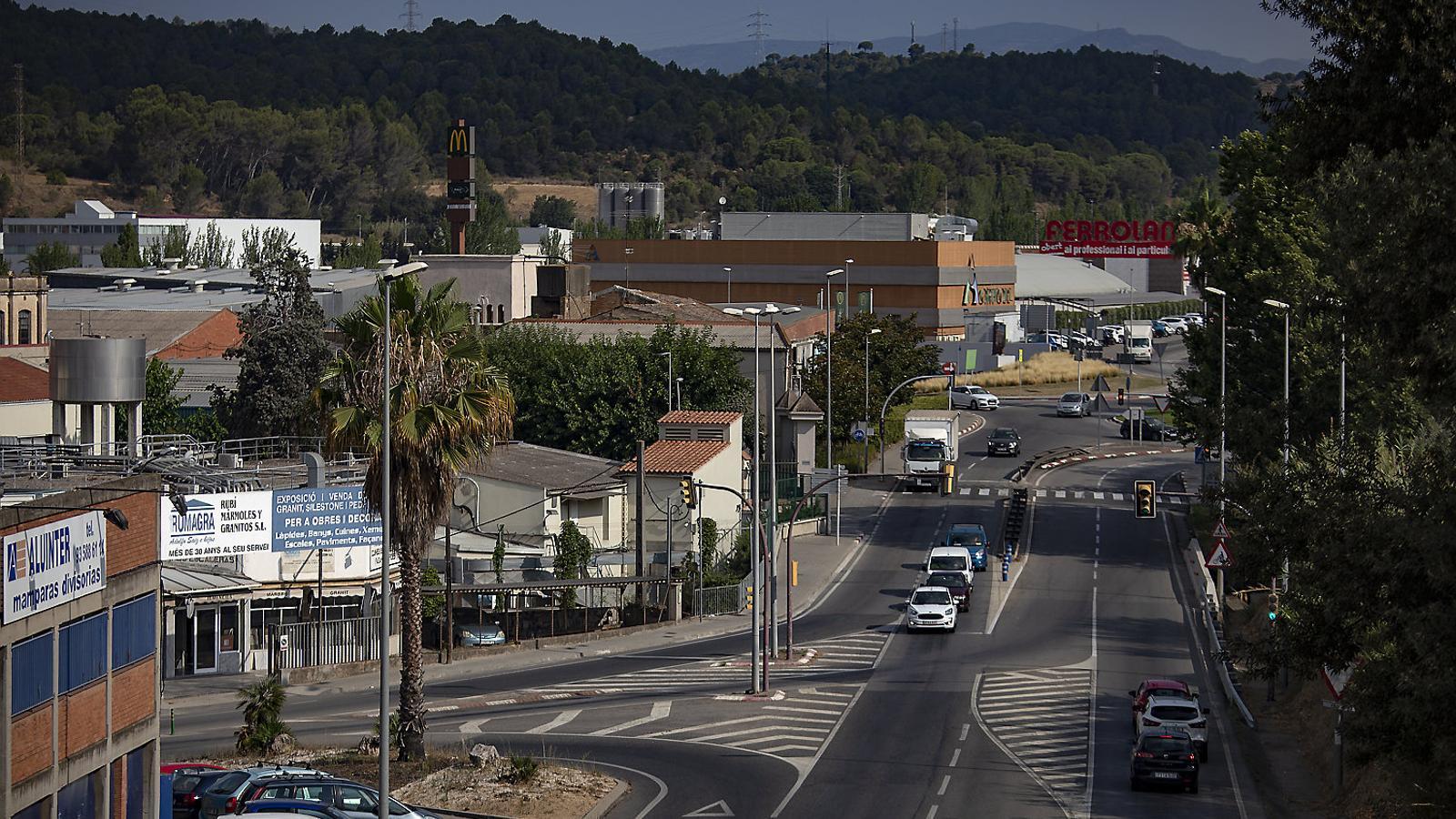

Manufacturing is a source of quality employment, that is to say, of good salaries. It is therefore tempting to contemplate an attractive future for the Catalan economy as a smoke-free version of Català-Roca's photographs of a Poble Nou full of factories. I believe, however, that this will not be the case and that the combined forces of technological changes and internal and external competition will consolidate the historical trend towards a loss of manufacturing's weight in quality employment.
Technology, hard (robots) and soft (AI), is allowing the automation of production. In principle, whether a company automates and uses fewer workers will depend on whether it pays off. However, what we see in the world is that it is paying off, even for China, where salaries are much lower than in Europe. It is a differential that continues to be a factor in China's competitiveness, but with medium-term horizons and with the anticipation and desire for growing salaries, the most advanced Chinese leaders and companies are undertaking a technological leap: implementing tomorrow's technologies from now on. Perhaps today it is not the most economical, but by doing so they will put themselves in a very good position to create and lead the technologies of the day after tomorrow. If this calculation is correct for China, it is even more so for Europe. The workforce of automated factories will be well-remunerated because the responsibility for ensuring their operation and attending to contingencies will be very great. But the number of workers will be relatively small.
European manufacturing will also be conditioned by the logic of free trade and international division of labor. It is a very powerful logic that continues to be present, even if, as now, geopolitics leads us towards supply assurance strategies. There is a long way between this and raw, crude protectionism. Certainly, Europe and its companies will have to diversify origins and value reliability. Also, they must have reserves and contingency plans to replace or manufacture critical products. But it would be absurd to, for example, question the import of manufactured goods from Morocco. Europe did well not to escalate the conflict with Trump into a tariff war, and in reaching trade opening agreements like the one with Mercosur. Catalonia's most important trade agreement is called the EU. When Spain joined, with Catalan enthusiasm, we wisely accepted the whole package: this allows our companies to produce and sell without trade barriers throughout Europe, and also for us to buy manufactured goods produced far from home because they are cheaper.
The foreseeable fact that in the future quality employment in manufacturing companies may not have sufficient weight to dominate wage statistics, does not mean that these companies should not be of decisive importance for the general level of productivity and prosperity of a country. The economic value generated by a company is due to the labor and capital applied to production, but also to what is specific to the company and generates what is technically called rents. This what includes an intangible that we can call "intellectual property". Patents, brands or, simply, a poorly transferable fund of knowledge and skills. The more important this intangible is, the more productive the company is and the more positive externalities reach the region where it is headquartered.
The case of Apple is notorious. Before Trump made it an issue, US citizens understood that what mattered was the design of the device, and that the production location in Asia was in the equation only to contain the price. In California, what mattered was that the headquarters were there and that from there — far from manufacturing, but not from prefabrication, an integral part of the design process — intellectual property was generated. If I turn my gaze to Catalonia, I would say it's good that Puig has a factory in Vacarisses, but I think it is more transcendental that it has an impressive portfolio of brands with a management that seems to happily continue revolving around L'Hospitalet de Llobregat.
By the way, the European strategic autonomy agenda implies that, while producing at home may be a secondary consideration, having more of our own technology has become a primary one.
