The banker who was friends with Archduke Charles, Mussolini and Marshal Tito
Camillo Castiglioni worked as a banker and businessman and was considered the richest man in Central Europe
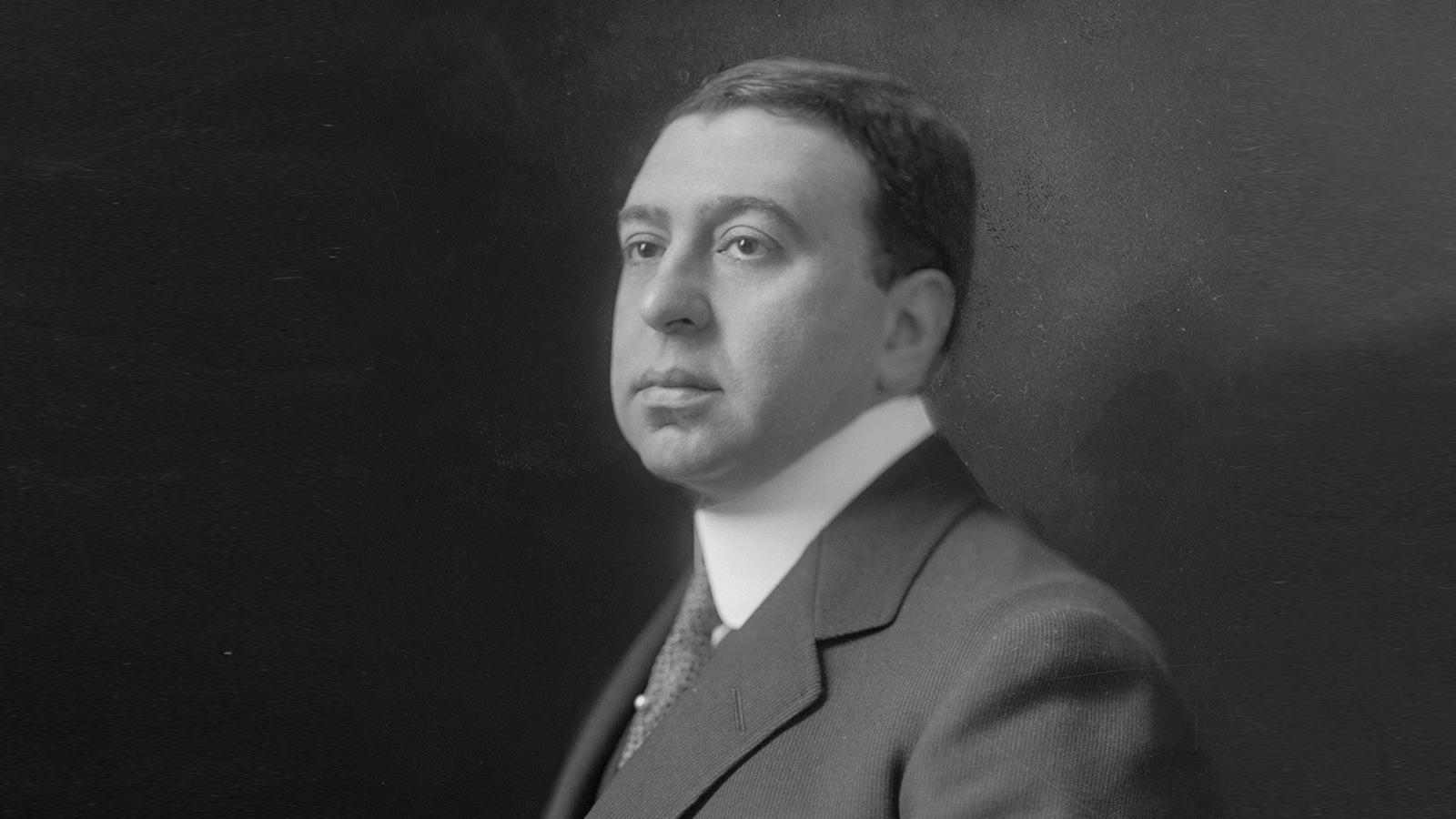
On Sunday, May 21, 1922, Catalan motorsport enthusiasts had an unmissable date on their calendar because on that day the second edition of the Armangué Trophy for cars was held. The competition was named in honor of Josep Maria Armangué Feliu, a pioneer of speed who died prematurely in a plane crash (we dedicated a profile of this series to him on September 25, 2022) and served to bring together both local and foreign drivers. The main attraction of the race were the promising Austro-Daimlers, especially the one driven by Alfred Neubauer, who had played a very dignified role in the Targa Florio held a few weeks earlier. At the end of the first lap of the Tarragona circuit, when Neubauer had set the best time, a tragic accident with several fatalities forced the race to be stopped and the Czech was left without a victory. He would never be a great star on the track, but he was a fundamental race director for Daimler for many years. The person who had given him the opportunity to enter the world of speed and who financed the Austro-Daimler racing team was Camillo Castiglioni, a banker considered the richest man in Central Europe at the time of World War I.
- 1879-1957
Born in the city of Trieste, today Italy, but then part of the Austro-Hungarian Empire, he was the son of the city's chief rabbi. After a youth with a certain tendency towards dissipation, his father sent him to Istanbul, where he had a relative, to learn about business. Back in Europe, settled in Vienna, he took advantage of the family's connections with the rubber world to start working for a multinational in the sector that had ties precisely with a tire manufacturer in the Ottoman capital. It was his first contact with the automotive industry that would later make him a millionaire. In this Viennese period, he frequented the royal court, to the point of striking up a friendship with Archduke Charles.
Very soon he became fond of the nascent aeronautical industry, as evidenced by his involvement in the creation of the Wiener Aero-Club, founded three years before the Wright brothers' first flight. Seeing the great business opportunities offered by both the passion for hot air balloons and the burgeoning aviation, he launched his own aeronautical company. The experience accumulated in the sector was key, when the First World War broke out, to positioning himself in a privileged position regarding the manufacture of combat aircraft through his firm, Hansa und Brandenburgische Flugzeugwerke. The next step was, as we started at the beginning, the acquisition of the Austro-Daimler car manufacturer, which made him a lot of money. Later he would repeat the operation with another car brand, BMW, which he developed until it became one of the great companies in Europe, a plan in which he had the key collaboration of his chief engineer, Ferdinand Porsche, who would later build his own project with great success. During the war, he had multiplied his fortune by speculating in financial markets, but in 1924 his currency bets turned out to be wrong, and two years later his financial empire collapsed like a house of cards, also taking down the Austrian Depositenbank, which he presided over. Having an Italian passport was very useful for him to be able to flee from the Austrian financial authorities.
In the city of Milan he tried to start anew, and there he founded a bank that allowed him to rebuild his fortune. He also established very close ties with Mussolini, whom, according to some sources, he tried to convince – without success, as is known – to remain neutral during World War II. Incidentally, just as the great European conflagration ended, and because of his friendship with Marshal Tito, he obtained an international loan that saved the finances of Yugoslavia in extremis, but later Tito did not pay him the agreed commission, and the relationship ended in court with a large building in Belgrade being seized to settle the debt.
Both in his Austrian and Italian periods, he stood out for allocating large sums of money to art and culture, proof of which is the financial support he provided to the Theater in der Josefstadt, in Vienna, and also to the Mozarteum, in Salzburg. His art collection was the most important in Europe in his time, but it was completely fragmented following his downfall in the mid-twenties.
