Four clashes with the police during a World Cup in full dictatorship
The last precedent of a match between Spain and Austria in a World Cup dates back to Argentina in 1978
-
CAT -
CAST
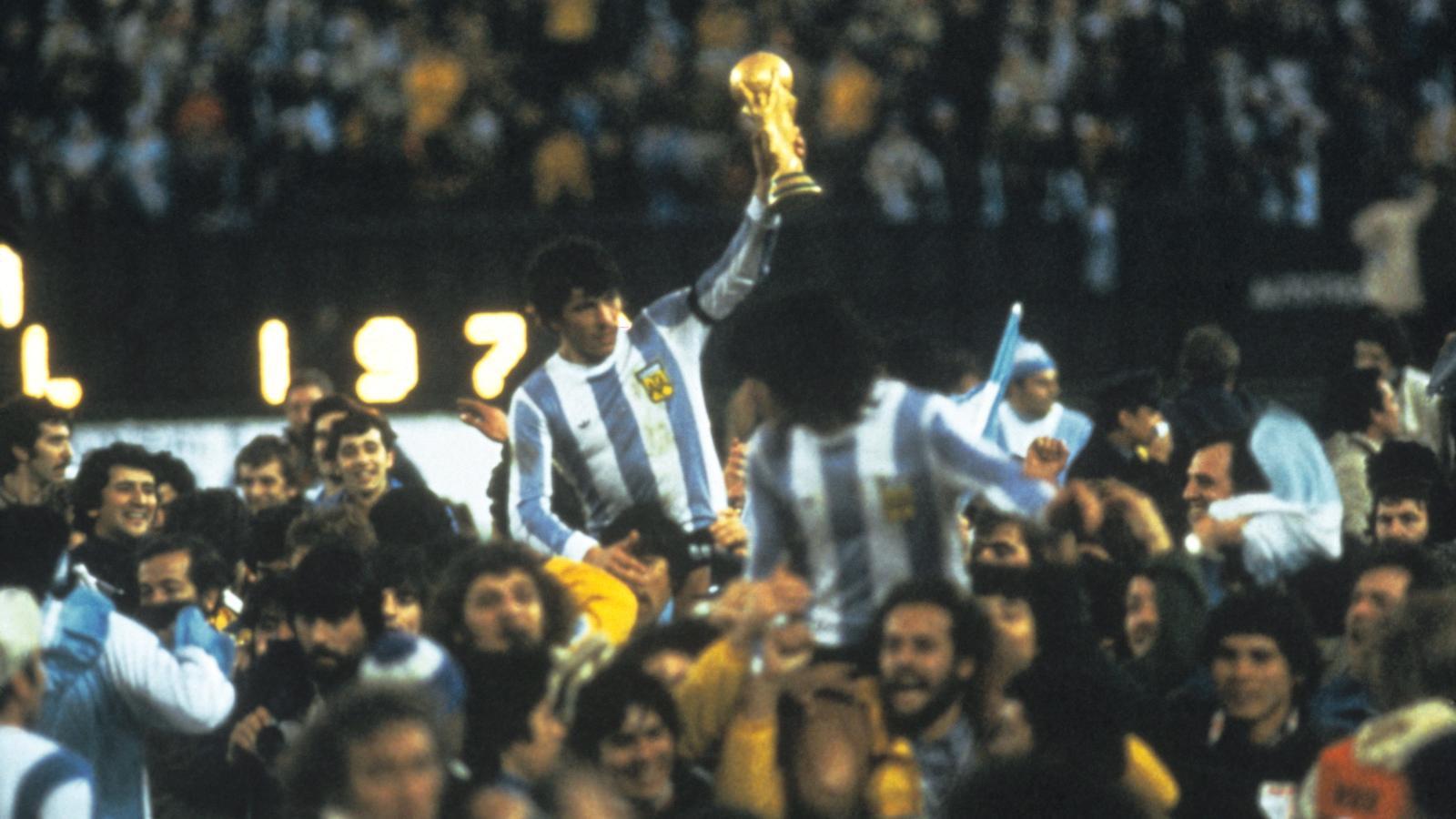
TorellóThe 1978 World Cup was held in Argentina during a military dictatorship. Some survivors recounted hearing goals being cheered through the televisions of their torturers or even shouts coming from the Monumental stadium, a few streets away from the epicenter of repression of Jorge Rafael Videla's regime.
The Spanish national team debuted against Austria, in a match that will be repeated this Thursday in the round of 16 of this edition. It was Spain's first match in a World Cup in 12 years, as the country had been eliminated from the 1970 and 1974 editions. In fact, it was only their seventh match since 1950. "Playing in a World Cup is the ultimate for any kid who starts playing football in the streets of their village. It was an enormous, super-great illusion," says Dani Ruiz-Bazán (Sopuerta, Biscay; 1951). The Athletic Club forward equalized the initial goal from the Austrians, but Hansi Krankl scored the definitive 2-1. Krankl had just won the Golden Boot and would sign for Barça that same summer.
The dictatorship worked to ensure the world could see the country's virtues without seeing its miseries. The Spanish national team, for example, was concentrated at La Martona, a kind of housing development built in the middle of a wasteland, sixty kilometers from Buenos Aires. "The years are killing my memories, but I remember the concentration very well. It was a disaster. I haven't been to prison, but it must be something similar," assures Ruiz-Bazán. They slept in a kind of bungalows: the World Cup was played during the Argentine winter and the walls were so thin that they slept with the national team's tracksuit over their pajamas to ward off the cold.
A World Cup marked by military repression
From the rooms they only saw a cow or a horse go by. "It was all very sad. We were totally out of the World Cup atmosphere," he explains. He recalls the boredom of those weeks, beyond some isolated episode. Like the day he lost his wedding ring while playing table tennis. "Another day Quini convinced two of the police officers who were watching us to take us shooting." The agents took them one or two kilometers from the training camp and there they let them shoot at some pots and some cans. Quini was shooting with a shotgun and Ruiz-Bazán with a pistol.
"Suddenly a pickup appeared with two police officers in front and four in the back. They shouted at us to throw our weapons on the ground and searched us. Meanwhile, the two police officers who had brought us were shouting that we were players. It's the worst scare of my life. Apparently, no one had warned them when they changed shifts and suddenly they started hearing shots and they took off to see what was happening," he smiles from a distance and the tranquility that almost fifty years impose. "Quini was a phenomenon: the happiest man and the best person in the world. You always peed yourself laughing with him," he says.
Ruiz-Bazán also remembers that the camp was surrounded by guard posts full of police. "Around the fields there was an impressive police cordon. I had never seen anything like it. If there were a hundred police officers at a San Mamés match, there were five hundred or a thousand there. It was impressive," he adds.
Plainclothes police on the bus
Juan Manuel Asensi (Alicante, 1949), a Barça footballer between 1980 and 1981, League champion with Johan Cruyff and captain of the Basel Cup Winners' Cup, assures that on every trip to Buenos Aires they brought undercover police officers on the bus. "I don't know if it was to protect us or to watch us," he admits. "The motorcyclists who cleared our way rode straight on their motorcycles and when we passed a car, they kicked its side so they would move aside. It was impressive".
Before arriving in Argentina, they had spent a few days in Uruguay, another country that lived under a dictatorship: they were not allowed to leave the hotel much, and when they went out for a walk, armed soldiers accompanied them. "So we wouldn't deviate even a little," says Asensi.
In that squad there were four more Barça players: De la Cruz, Migueli, Olmo and Rexach. And two Espanyol footballers: Urruti, later a blaugrana legend, and Marañón. Then Spain drew with Brazil and won in Sweden with a goal from Asensi, but was eliminated in the first group stage.
"These days when I see a goal in the World Cup, I think that I also scored one. It's something I will remember my whole life," emphasizes Asensi. That World Cup survives as one of the paradigmatic examples of the use of football to launder and legitimize authoritarian regimes: "We knew it was a dictatorship, but we didn't find out anything about what was happening".

