Ariadna Rovira: "We are not murderers"
huntress

-
CAT -
CAST
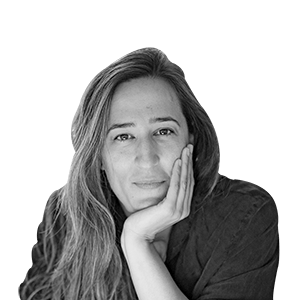
"I'm from a farming family, the smell of pigs has never bothered me," says 20-year-old Ariadna Rovira. She grew up on a farm in Sagàs, but lives in Solsona, where she first became interested in hunting. Today she's part of the Berga hunting group and criticizes people who think that killing animals makes them murderers.
Where does your interest in hunting come from?
— My uncle used to hunt and sometimes he'd take my brother. Not me, though, because that was for boys. I only started to get interested when I went to Solsona.
As?
— I met my partner and on our first date we went to see deer and rabbits.
Deunidó, as a first date…
— He was already hunting, and soon I joined him. We stood still for a long time. And I was thinking, "How boring." Until suddenly we heard the dogs barking. He told me to stand behind him, and that's when I felt a thrill and realized I liked it. I decided to get my gun license.
What did you like?
— The thrill of hearing the dogs bark, people on the radio saying: "I've killed one" or "Damn, it got away..."
Today you have a weapon.
— A Browning MK3 30.06. My father gave it to me after I passed all my exams.
What did your parents tell you?
— They were happy, and my mother insisted to me: "Above all, make good use of everything you kill."
How is it used?
— We usually cut off the head and keep it as a trophy, and we or dogs eat the meat.
Trophy?
— You keep the head to display it somewhere, or hang it on the wall. If you do it with the skin and everything, it's very expensive, around 800 euros. We took ours to a taxidermist and it cost us about 75 euros. And we only kept the skull, the bone. Most of them are in the room.
Do you wake up and see them?
— Yes, they are placed in the window, there must be about twelve or fourteen of them.
What was the first day you killed an animal?
— This summer, a roe deer. My partner has incredible eyesight and always spots animals first. But this time I saw it and said, "I'm going to kill this one." We approached slowly, crouched down, and it took off running. I thought it had gotten away, but suddenly it stopped, I shot, and it was dead. I jumped for joy.
What does he hunt?
— Roe deer, pigs, chamois, red deer, fallow deer…
What is a day of hunting like?
— We get up early and go to the barracks around seven thirty. We're divided into groups; I'm in the Berga group. Then, when we arrive, the group leader assigns us points, and some go at a walking pace while others go with the dogs.
And what's the difference?
— The plan is to stay put in a specific spot with the weapon, waiting for the pigs to come. The dog handlers walk around with the animals and try to flush the pigs out, to make them run. And we talk over the radio; each group has its own channel, and we say, "I saw a pig here, one there."
Why does he hunt?
— There's an abnormal overpopulation of pigs and roe deer, and there's a lack of predators, because there are no wolves, for example. And the roe deer and pigs eat the crops and also spread diseases. It's important to regulate all of this and for people to stop seeing hunters as murderers, as dog abusers, because that's not true.
Do you feel like you're being seen as a murderer?
— Yes, absolutely. A few weeks ago he did a report on the ARA. Did you see the comments? They were saying all sorts of things… the slightest thing you say in response can get you reported and have your gun license revoked. And it's the other guy who's calling you a murderer. Those people should really rethink their approach.
How do you feel when people make comments like that to you?
— They have no idea, because they don't get informed or they only get biased information. And when you get the receipts, they just tell you it's a lie.
But before you described the excitement and pleasure of managing to kill him.
— Yes, but it's not about saying, "Great, I killed it." It's because you're proud of the time you've spent watching the animal, studying it, seeing where it comes from and where it moves. And finally, you've managed to kill it. But many times we go out at night to see them, just to see them. We're not murderers; if we were, we'd always go out to kill everything we found.
What do you like about watching them?
— Last year there were some roe deer in front of my house calling to each other. You see the doe calling to the buck, or the buck calling to the doe. The pig with all her piglets following behind... It's really cool.
Someone might find it strange that you would then kill them…
— However beautiful they may be, they're destroying our countryside. So I feel bad about it, but we have to make a living somehow.
Aren't you afraid of making a mistake and killing someone?
— We're being very careful. I'm more afraid that the dogs will come with the pig and kill a dog. And I have two black dogs that could be mistaken for one of them: that scares me more.
What is the difference between a dog and a roe deer?
— What do you mean? Dogs don't damage the fields, and they're ours, they're pets. I wouldn't kill anyone's dog; I'm sure they love it. And people should be able to tell the difference between a pet and a wild animal. A dog or a cat is one thing, and a roe deer is another.
And does he train the dogs to hunt?
— Yes, it has a lot to do with blood, with breed. When you start out it's always difficult, but usually the older dogs teach the younger ones. They teach each other.
What's the best thing about hunting?
— For me, it was hearing the dogs. Yesterday I sat still all day, walking, without seeing a single pig. But I could hear them, the dogs, going from one place to another. They came home exhausted. Without dogs, there would be no hunting. That's why we take such good care of them, and that's why I love them so much. And some have died hunting, and we mourn them.
Have they died?
— Yes, but it's their life. For them, dying while hunting is the ultimate. And we're never stingy with the dogs; we take the best possible care of them. But you also come to understand that the dog enjoyed the hunt, and that's what matters most.
You're not your typical hunter type, are you?
— There are more and more of us girls. Now, in my group, there are four of us. Before, there weren't any, and little by little we're growing.
