Josep Oriol Pujol Humet: "The interference of the archbishopric has produced in me a deep discouragement"
Outgoing general director of the Pere Tarrés Foundation
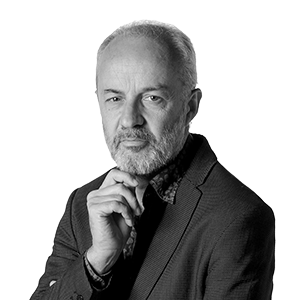
-
CAT -
CAST
BarcelonaJosep Oriol Pujol Humet has held responsibilities at the Pere Tarrés Foundation for forty years, which is dedicated to leisure education and currently has more than 100 socio-educational centers and more than 200 federated youth clubs. Trained as a psychologist at the UB and as a business manager at Esade, he was manager and director of the Summer Camp Service (16 years) and general director (24 years), a position from which he is now retiring. Pujol Humet has been key in the strengthening and professionalization of the organization. But he leaves with a bittersweet taste due to the moment of social crisis that the country is experiencing and the internal unrest caused by the reports of interference by Archbishop Joan Josep Omella in the foundation.
Let's start with the most uncomfortable internal part. As the newspaper El País has published, three former presidents have sent a letter of complaint to the Vatican regarding the actions of the Archbishopric of Barcelona with the Pere Tarrés. How has it affected you personally?
— In the ordinary day-to-day management, little or nothing. In the future strategy, yes. Relevant decisions have been halted. There has been a change of profiles on the board of trustees. All in all, on a personal level, it has caused me deep discouragement.
Has this accelerated the announcement of their farewell?
— On a strictly personal level, yes. I have not received any pressure [from the archbishopric] to step down. Now, of course, seeing that the path we were on has been cut short and that the appointed team does not facilitate moving forward, well, it does have an impact.
Did you know about the letter from the former presidents to the Vatican?
— Like other members of the board of trustees, I knew that there was an extensive document sent to the Vatican about five months ago.
Is there a turning back for the Pere Tarrés to recover the autonomy of action and decision?
— I imagine so. Everything is reversible. But something is not anymore, like the project to build a new headquarters from scratch in the Zona Franca, on land ceded by the Barcelona City Council, to solve the current lack of space and unify the different services. I hope that in the future a board of trustees with people linked to Catalan civil society can carry out a new headquarters.
The relief of Omella seems immediate. Could the change make it easier to reset the score in the relationship between the archbishopric and Pere Tarrés?
— Statutes have been imposed that limit the room for maneuver of the management and the board of trustees. Changing it back is not automatic. And it will depend as much on the new archbishop as on the board of trustees itself. It will take time.
In any case, you will no longer be there... When you started, the country was progressing economically, we had premiered democracy a few years ago and the future was looked at with hope. Today things have become complicated.
— Yes, certain hopes have been disappointed. The word that best defines that moment is optimism. There were expectations of improvement in many ways and, above all, a will for collaboration between the administration and civil society. Many people who assumed positions in the administration came from civil society and believed in it.
How has the work of the Pere Tarrés Foundation changed?
— Today social deficiencies are greater than they were back then. Immigration and housing, which are tremendously linked, cause extreme precariousness. Catalonia, with a developed society within Europe, has 36% of its population below the poverty threshold. Politicians often say they will solve it. But we see that it does not happen. It cannot be solved solely by the administration. We, the social entities, have been accepting the provision of certain services, but through public tenders that are based on price, like auctions.
You have to compete with large commercial entities.
— Yes, for example with ACS, a subsidiary of the construction company, which is dedicated to providing social services, although it does not do so in leisure, a field that is too small and precarious. But it does in the management of municipal nursery schools.
What would be the solution?
— The contracting of services for long periods, as is the case with healthcare or education. A procurement law for Catalonia is being processed in Parliament, but we are a bit like Saint Thomas: when we see it, we will believe it.
In your organizations there is a certain job insecurity.
— Without the "certain" The world of social care is precarious, from the seasonality of contracts to low wages. If the trend continues this way, the ingredients are there for it to become a dissatisfied collective where increasingly less prepared people end up.
How do you break out of this vicious circle?
— It is not simple. The reality in summer camps is not the same as in socio-educational centers. If the administration complied with what the Parliament regulates regarding the commitments and recognition of each of these services, there would be more decent salaries. The administration should provide sufficient resources or acknowledge the areas it does not reach and incentivize donations with a proper patronage law.
Even so, private funds are raised.
— Yes. In part we finance ourselves with some services and at the same time we collect private donations. This has allowed us to keep growing. But social needs have also grown. In fact, we have waiting lists that double the number of children served.
Is there a point of helplessness, of feeling overwhelmed?
— There has always been helplessness, because the needs are very high. Now, the middle class has been greatly reduced. Many people have difficulties with food and housing. This absolutely marks everything. Furthermore, more recent immigration does not have family structures formed here. And, at the same time, family models have changed: family support is lower.
The social elevator has broken down. The welfare state is limping. When it started, a fostered child had a good chance of improving their status, right? Is that no longer happening?
— The child from a disadvantaged background who joined a summer camp or a leisure center was integrated into the reality of the middle-class majority group. Today we integrate as much as we can, but we also organize camps where all the children have special social difficulties.
Does leisure education also generate a social gap?
— The majority middle class does not have the weight it used to have. There is an upper-middle class that consumes leisure. And there is all this childhood in a situation of marginalization that, due to cultural or origin issues, does not approach the world of leisure, and it is necessary to go and look for them.
Would you be in favor of a universal child benefit?
— I would be in favor of freeing up land to build housing, without too many regulations. Afterward, any income of this type is interesting, but not sufficient. Many times, families do not know how to manage the aid. If the money is to be used by the father for his personal enjoyment, and I speak in the masculine intentionally, the boy or the girl does not benefit from it. To socially promote children, families must be helped financially, but services must be provided: school tutoring, healthcare and free medicines, etc.
And to monitor it, to accompany it...
— In every sense, yes. There are a number of elements that cannot be replaced solely by a universal child income.
How do you see the educational crisis?
— We are not experts in formal education and we must respect what institutions say, even what certain unions say. It is true that today teachers in the classroom have truly significant percentages of children with difficulties. Therefore, fewer students are needed in the classroom and more support. Also an improvement in the training of education professionals. Furthermore, children with special needs must be given differentiated treatment. And, finally, society cannot shift onto the teacher everything that does not work and blame them. They need to regain their prestige.
Does the direct impact of the school outings strike penalize you?
— Understanding the complaint, we cannot share that an educational element in the child's favor is used as a tool of pressure before the administration.
In these forty years, what are you most proud of and what frustrates you most not having achieved.
— What I am most proud of is the number of boys and girls who participate in educational leisure activities, to see how the service, the facilities, the holiday camps, the hostels, the training of educators, and the satisfaction of parents have improved. The downside is the precariousness of the people who work for us.
