The Government buys from the RACC the offices on the Diagonal for the future Clinic Campus
The acquisition for 75.5 million euros will be signed this Friday

-
CAT -
CAST
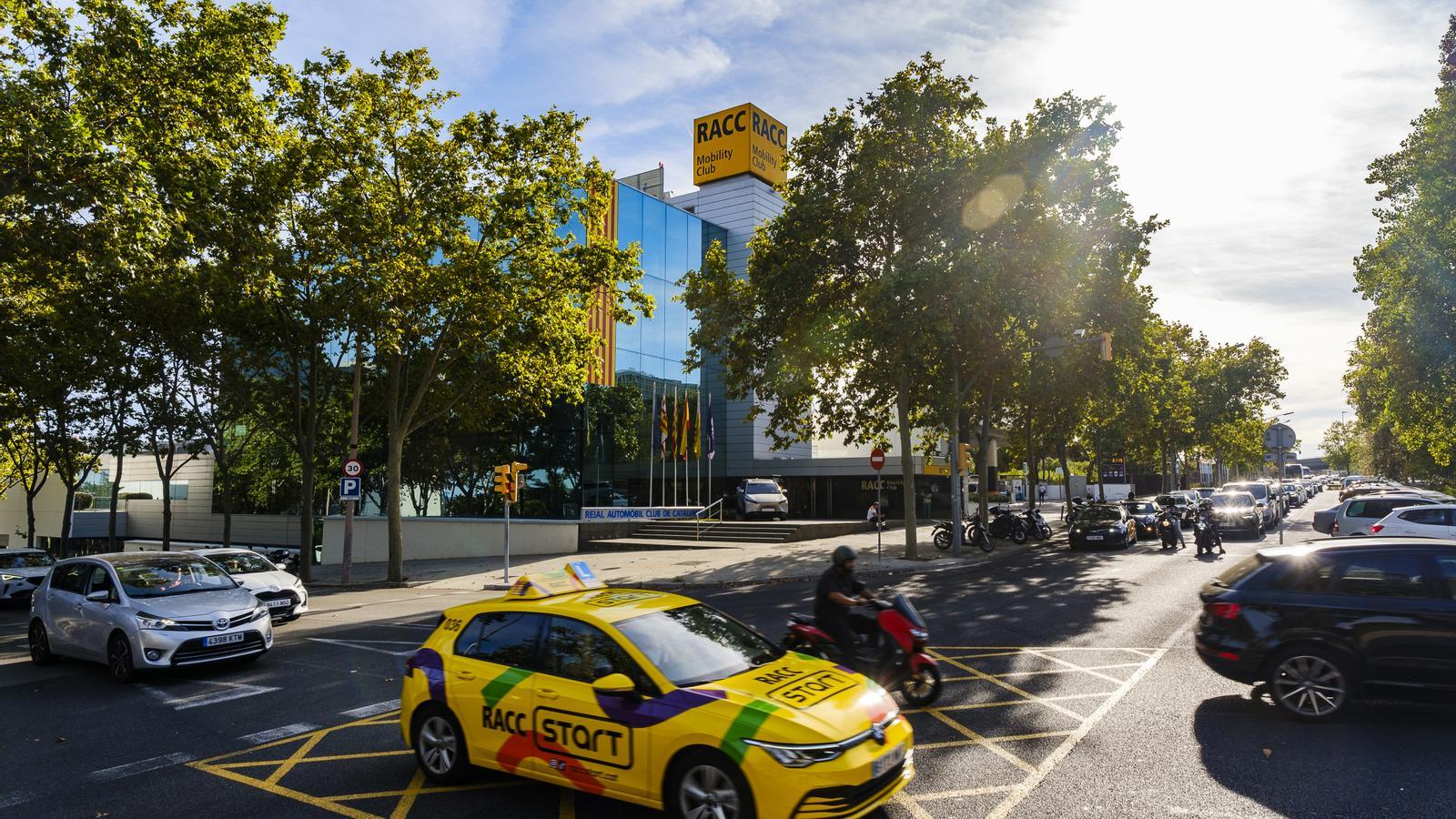
BarcelonaOne of the most characteristic images of the access to Barcelona from the Diagonal is living on borrowed time. The RACC offices, with their iconic yellow cube at the top, will have to change location. The reason? The land on which the building stands is included in the draft of the Urban Master Plan (PDU) for the future Clínic Campus. For this reason, the Generalitat and the company have been negotiating an agreement for months for the RACC to abandon its privileged spot at the top of the Diagonal.
Now the signing of this pact is imminent. Both parties, in fact, plan to definitively sign the agreement this very Friday. This Wednesday, the RACC held an extraordinary assembly of delegates in which, as ARA has been able to learn, it was communicated to the club's members that the negotiations with the Government have been successful. The Generalitat will acquire the land and buildings owned by the company in this area of the Diagonal.

Although both the Generalitat and the RACC have refused to provide details of the operation's cost until it is made public this Friday, sources familiar with the agreement have explained to the ARA that the purchase of the land will close for a figure that will move between 70 and 80 million euros. It finally closed for 75.5. It is the second agreement of this type to be closed around the future Campus Clínic, after the Generalitat already bought from the University of Barcelona (UB) its land in the area for 135.25 million euros.
Two highly coveted pieces
In the case of the RACC, it involves two highly coveted urban plots within the grounds of the future Clínic Campus on the Diagonal that lie within the city of Barcelona. On one hand, there is the RACC headquarters—the building on the corner of Avinguda Diagonal and Carrer Albert Bastardas—which was inaugurated thirty years ago, in 1996. On the other, the building that was inaugurated in 2003 on the same Carrer Albert Bastardas, just below the headquarters, which had become too small given the growth of the entity, which this year has reached 120 years of history.
The PDU advance, which is currently in the public exhibition period with information sessions planned in the three affected municipalities—Barcelona, L'Hospitalet de Llobregat, and Esplugues de Llobregat—envisages that in the area where the RACC offices are now located—to the north of the Campus—there will be health and teaching facilities, in addition to one of the green corridors that characterize the project. The 1,125 apartments planned for the area—half of which are subsidized—are distributed in the eastern zone, between Barcelona and especially L'Hospitalet.
The Catalan executive considers the asset operation positive because it "signifies a new step forward" for the development of the future Clínic Campus, a "strategic project that will transform the southern entrance of the city of Barcelona into an international benchmark in healthcare, research, and training." Sources from the Department of Economy also praise the "commitment" of the RACC to a key project for the country.
For its part, the RACC claims to be "satisfied" with the agreement despite admitting that leaving its headquarters on Avinguda Diagonal was not an option sought by the entity. However, the same sources remark that "due to its commitment to the country and the city" they had to contribute to the future Clínic Campus project, which they underline is "very important."
Sources familiar with the agreement explain to ARA, however, that the move will not be imminent. The forecast is that the RACC will be able to continue using the current offices—at least those in the main building—until the year 2030. It will be from then on that the landscape of this part of the Diagonal will change.
No new destination for now
Regarding this calendar, RACC sources limit themselves to saying that they are just beginning to analyze and evaluate the next location of their offices, without mentioning possible destinations. A few months ago, among the company's employees, the idea circulated that the offices could move to the DFactory complex of the Consorci de la Zona Franca, but internally the company denied this possibility.

