Seven of the ten neighborhoods with the most foreigners in the State are in Catalonia
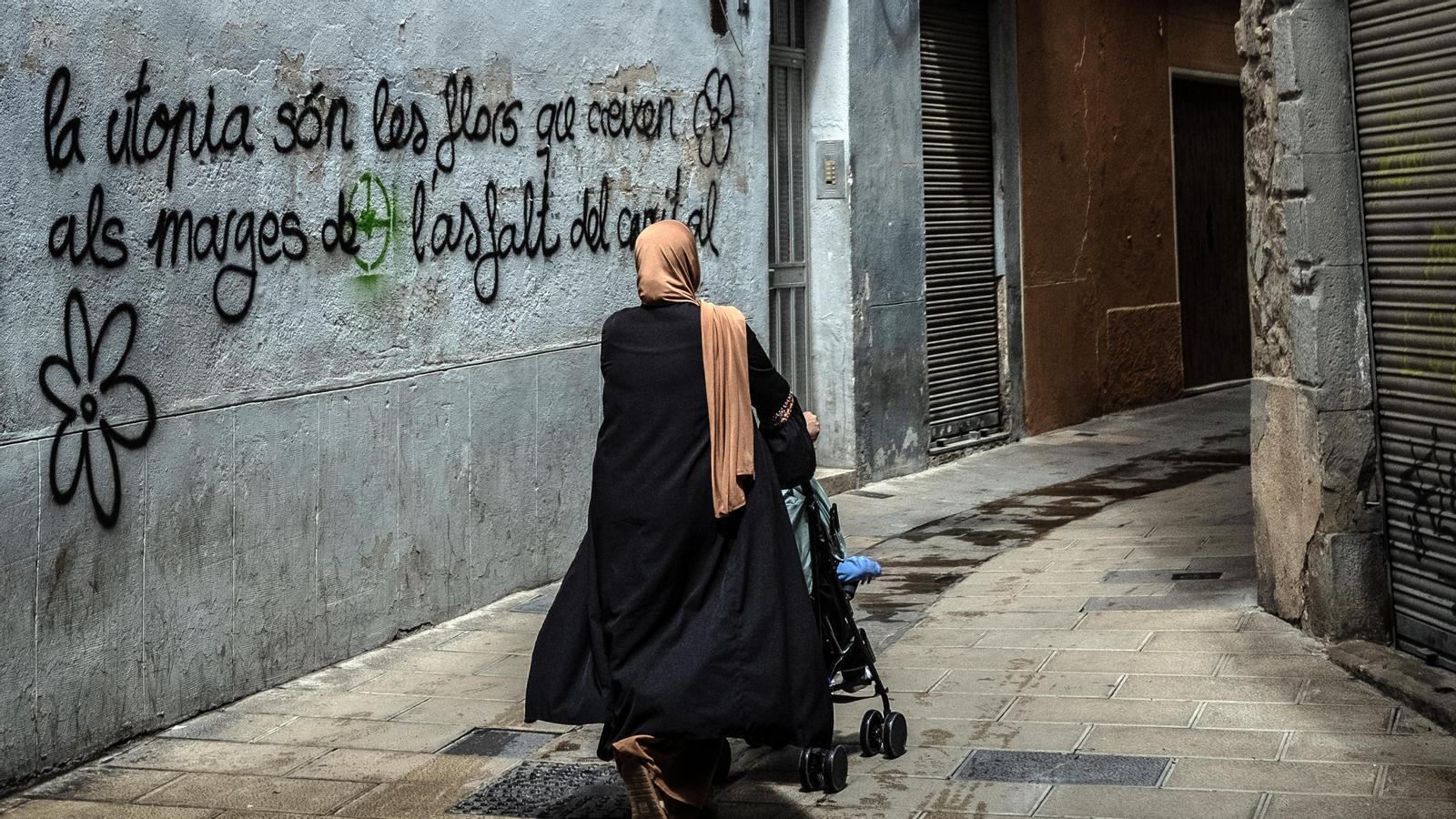
More than half of the residents in the Gothic and Raval neighborhoods of Barcelona were born outside of Spain
-
CAT -
CAST
BarcelonaSeven of the ten neighborhoods with the highest percentage of foreign population in the State are located in Barcelona and l'Hospitalet de Llobregat, according to the latest edition of the urban indicators from the National Statistics Institute (INE), published this Wednesday. In fact, the five neighborhoods with the highest percentage of foreign residents are all found in the Ciutat Vella district of the Catalan capital.
Specifically, the Barri Gòtic, Raval Nord, and Raval Sud are the only three analyzed areas where residents with foreign nationality exceed half of the population. The highest percentage is recorded in the Gòtic, with 66.9%, while the two zones of the Raval recorded 52% in both cases. They are followed by the neighborhoods of Sant Pere, Santa Caterina i la Ribera, with 47.1%, and Barceloneta, with 42.8%, which complete the Spanish top 5.
Other areas highlighted for their large presence of foreigners are Besòs i el Maresme, also in Barcelona, with 41.4%, and two neighborhoods in l'Hospitalet de Llobregat, la Torrassa and la Florida, with 38.6% and 38.5% respectively, which were placed in positions 10 and 11 of the ranking. In this classification, taking up to position 15, there are only four neighborhoods that are not Catalan, three in Madrid –Pradolongo, San Cristóbal, and San Diego– and district 8 of the city of Murcia. The rest of the areas that complete the ranking were Poble-sec, in Barcelona, and les Planes and Pubilla Cases, both in l'Hospitalet.

At the other extreme, the city of Cordoba had the ten neighborhoods with the least immigration in 2024, with percentages between 1.1% and 2.3% of the population coming from third countries.
Registered crimes
The INE's urban indicators study analyzes various socioeconomic aspects of the reality of Spanish municipalities with more than 20,000 inhabitants, among which is citizen security. On this occasion, the publication includes crime data, that is to say the number of crimes registered per municipality for every thousand inhabitants and, in the case of Catalonia, two localities occupy the first position both in the ranking of most infractions and in that of the least.

Thus, El Prat de Llobregat was the municipality in the State with the most offenses in 2024, with 225.1 per thousand inhabitants, followed by Adeje (Tenerife) and Salou, in the Tarragonès region, with 126 and 120.9 crimes per thousand people, respectively. Barcelona was in fifth position with a rate of 103.5. Among the fifteen towns with the highest rates were also Sitges (Garraf), Sant Adrià de Besòs (Barcelonès), Roses (Alt Empordà), El Vendrell, and Figueres.
It is notable that several of these towns have in common significant activity and the presence of tourists, whether due to the presence of an airport—like El Prat—or because they are popular destinations. In this sense, within the top 15 there are other municipalities with great tourist overcrowding, such as Sant Josep de sa Talaia, Calvià, and Ibiza, in the Balearic Islands; Cullera and Torrevieja, in the Valencian Community, and the Andalusian municipality of Marbella.
At the other extreme, Olesa de Montserrat (Baix Llobregat), with 17.6 criminal offenses per thousand inhabitants, was the locality with the fewest recorded crimes in Spain in 2024. Castellar del Vallès (Vallès Occidental) was third, with 18.8, while Manlleu, with 20.2, occupied fifth place. Two more municipalities from the Baix Llobregat region, Esparreguera and Sant Andreu de la Barca, also entered the top 15 with the fewest offenses.
