One in ten kilometers of the commuter rail network has a speed limit
Adif acknowledges in a document consulted by ACN that there are 155 points where train drivers must reduce speed
-
CAT -
CAST
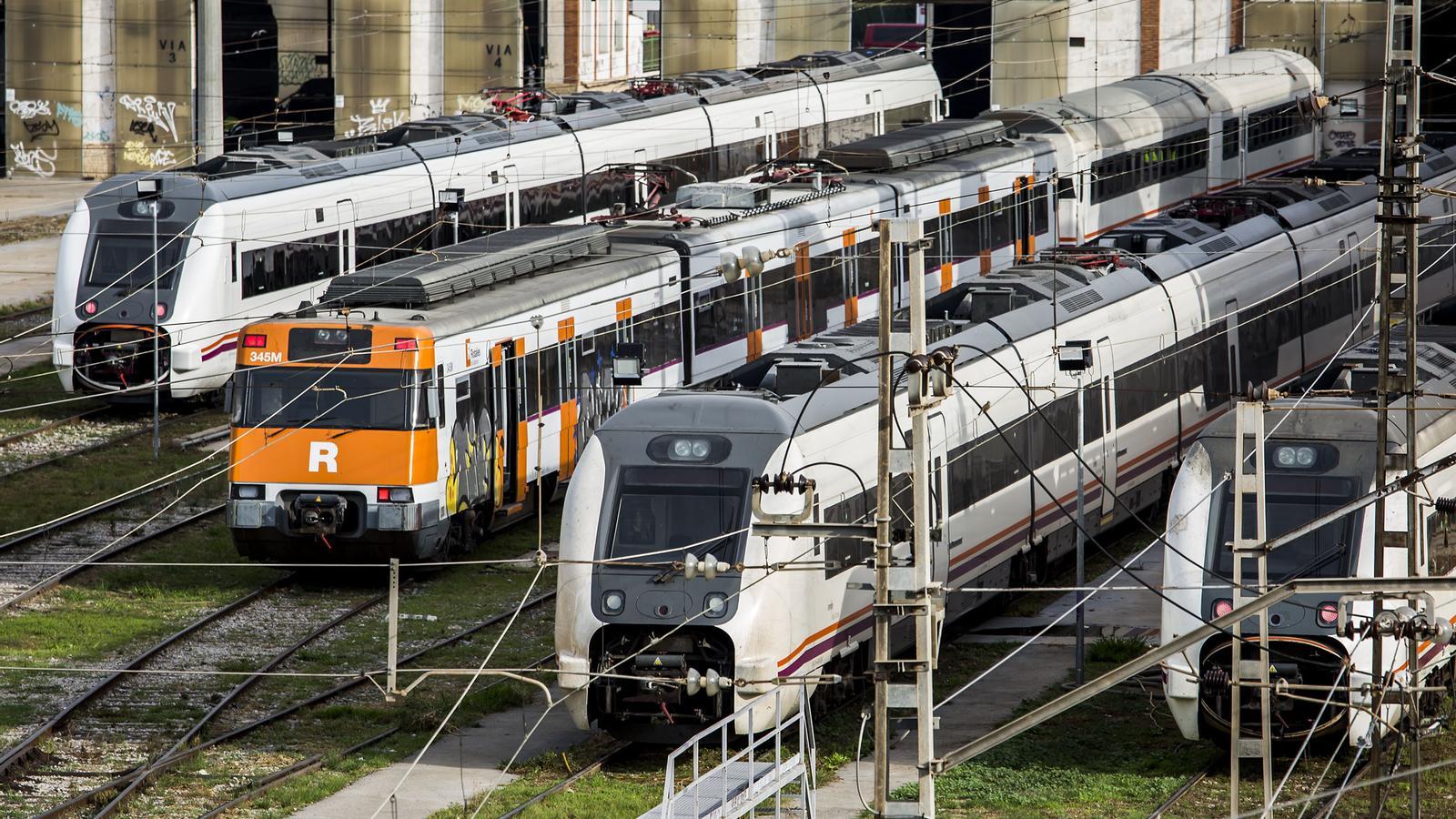
BarcelonaOf the more than 1,100 kilometers that make up the Catalan commuter rail network, there are 110 where train drivers must reduce their speed. This means that one in ten kilometers is traveled more slowly than it should be because Adif (the Spanish rail infrastructure manager) has established temporary speed limits at 155 points or sections where incidents or deficiencies have been detected. According to ACN (the Catalan News Agency), speed limits are in place on all regional and commuter lines in the country, with the exception of the RL3 line in Lleida. The R15 line is the most affected, with 39 points.
This is according to the Weekly Speed Limit Document This week's report details the disruptions that force train drivers to reduce speed, the required speed limits, and the reasons for each incident. According to ACN, which obtained the report, these are often isolated, specific locations, but there are also sections of track several kilometers long. The list of disruptions includes points on the network where speed limits have been in place for ten years due to a lack of repairs. This week, up to 155 incidents requiring speed restrictions appear on Catalan lines, although in some cases the same point or section is listed more than once, primarily because there is multiple issues requiring resolution.
In total, the volume of track kilometers with speed restrictions is similar to the previous week, despite the heavy rains of recent days that have caused rail chaos. The line experiencing the most speed reductions is the R15, with 39 restrictions. Of these, sixteen are between Ribarroja de Ebro and Reus, a section that was recently closed to rail traffic and where Adif has identified five critical points, which it is working to resolve. This is also a single-track section where, due to these restrictions, trains must travel between 30 km/h and 70 km/h. The remaining locations listed in the document are between Reus and Barcelona. These lines are also used by other Renfe lines, connecting the southern regions of Catalonia with the Catalan capital. Generally speaking, the southern corridor is the one most affected by these speed restrictions.
The R4 line, which connects Sant Vicenç de Calders and Manresa, is the other major affected line, with 28 restrictions. There are already disruptions at the beginning of the route, at Sant Vicenç de Calders station. In a 20-kilometer stretch, up to Granada, there are twelve restrictions, where trains must mostly travel at 60 km/h. The disruptions continue all the way to Martorell. In the Girona region, the tracks used by the R11 line – which connects Portbou and Barcelona Sants – have 19 speed limitations. Of these, 14 are between Portbou and Maçanet-Massanes stations, where trains must travel at between 30 km/h and 80 km/h.
Reasons for reducing speed
The speed restrictions that are appearing don't only affect passenger trains. The infrastructure is also impacted in areas used only by freight trains, such as the Can Tunis station or the Morrot station at the port of Barcelona. According to the document, there are currently around fifty reasons for establishing a speed reduction on a section of track.
The main reason, the condition of the track, accounts for one in four speed reductions (25%). The second reason relates to the condition of the turnout or switch mechanism and the crossings that allow the intersection of two tracks, which currently result in 22 speed reductions (14% of cases). The condition of the cuttings, which are excavations in the ground to ease the gradient and facilitate train passage, is the third cause of speed reductions, with a dozen cases (4.5%), according to the Adif document.
The list is long and includes factors such as the poor condition of a tunnel, safety measures in place due to ongoing track work, or a warning sign related to the braking distance before reaching a certain point. By region, Barcelona has the most locations with temporary speed limits, 73. It is followed by Tarragona with 51, Girona with 25, and finally Lleida with 6.
