Marriage is no longer what it was: there are fewer married Catalans and more divorced ones
The number of spouses falls by 10% in 13 years, while that of separated people has increased by almost 40%
-
CAT -
CAST
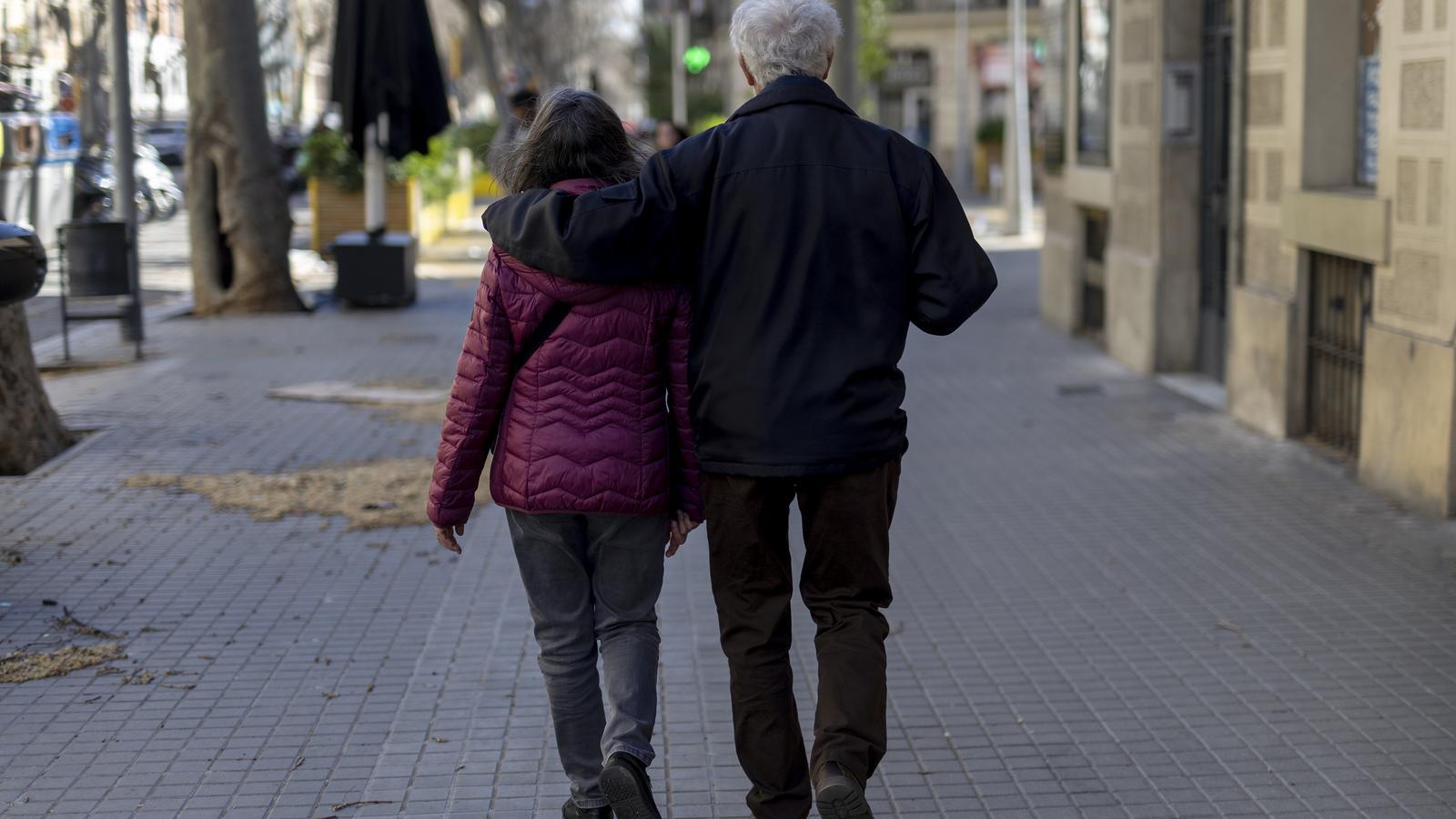
Barcelona"We are fine as we are". It is the answer given by Teresa, 59, when asked why she hasn't married Jordi. They met when they were young, went to live together, and had a child, but they never married. That was almost 40 years ago. Their story, which is not very different from that of many other couples, illustrates a social change: marriage, both religious and civil, is ceasing to be an essential step in the lives of many people. According to the latest registry from the Statistical Institute of Catalonia (Idescat), published this week, in 2024 the number of married Catalans was close to 3 million, 10.5% less than 13 years earlier (2011 is the only year of the last decade with data on marital status). In contrast, the total population had grown by 6.8% during the same period.
Overall, married people have come to represent 43.9% of the population over 16 years of age. They still exceed the 34.8% of the "single" group, which in the eyes of civil law includes both people without a partner and people in a relationship, but who have not entered into marriage, including domestic partners. Despite the advantage of marriage, the distance between the two groups has been cut in half in the last decade: if there were previously 1.2 million more married people than single people, now the difference is only 600,000 people.
"People are getting married less and later," summarizes Clara Cortina, a sociologist at the Research Group in Demography and Sociology and an associate professor at Pompeu Fabra University (UPF). Previously, marriage was "the beginning of a family-building project," she says, but now this starting point no longer requires a "formalization." That is to say, it is not that Catalans are less partnered or that there are more breakups, but rather that the institution of marriage has lost weight as a way of living as a couple.
But why does this happen? The sociologist believes that nowadays weddings have lost social importance due to a transformation of society towards "more modern values," such as personal autonomy or the waning weight of Catholicism. The trend that Cortina points out can be seen in the records regarding the types of marriages. Since 2000, Catholic ones have fallen by 89% and have gone from 21,000 to 2,400, according to data from Idescat. In contrast, civil ones have already tripled, from 10,400 to 35,400.
Delayed wedding
The fact, however, is that the total number of marriages celebrated in Catalonia has not varied much in recent years. There are fewer married people, but the same number of weddings are being celebrated. In this sense, Cortina emphasizes the "generational change" of Catalans aged 50 or under, who are postponing the age of marriage. They are the ones leading this change in mentality, but this does not mean that they will not end up getting married at one time or another, but rather that they will probably get married later than older generations.
Idescat reflects this. In 2011, 416,000 young people between 20 and 34 years old were married, while in 2024 they did not reach 200,000. A similar difference is recorded among Catalans aged 35 to 44. This is due, in part, to the lengthening of educational stages –because young people dedicate more years to their studies– and to the delay in entering the labor market, explains Cortina. But also to economic barriers, such as the difficulties in becoming independent and beginning autonomous living outside of parents' homes, the expert highlights.
Furthermore, getting married has fewer and fewer legal incentives. "De facto couples have practically the same rights as married ones," asserts Cortina. She states that this "almost absolute equalization" can be seen in recent examples such as the royal decree-law on widowhood pensions, which must allow couples with children in common to collect this benefit without the need to be married. Proof of two years of cohabitation is sufficient.
More separated and divorced Catalans
Although separated and divorced people are a much smaller group –about 577,000, compared to 3 million married people–, the number of people with this marital status has soared by almost 40% since 2011. Cortina sees this increase as "normal" and attributes it to the increase in women's economic capacity and autonomy, which allows them to "make decisions they could not make before". Despite this, separations and divorces have been on the decline over the last 20 years, according to the same statistics. This evolution could indicate that a significant portion of separated or divorced people do not remarry and maintain this marital status.
Family lawyer Elisabet Hernández, managing partner of the Hernández Costa law firm in Barcelona, believes that the decrease in new separations and divorces may be related to the current situation of precariousness, the difficult access to renting or buying a home in large cities, and the high cost of living in general compared to salary levels. This, says Hernández, would cause many couples to stay together "given the impossibility of living autonomously".
The lawyer defends negotiated and mutual consent divorces, but acknowledges that it is not always easy. In fact, she has noted an increase in more conflictive breakups. Regarding this, Teresa jokes. "My mother says it's nonsense for people to get married if they separate shortly after," she says, and celebrates that, without walking down the aisle with Jordi, they have been together for almost four decades.
