Catalonia would need about 700 more buses to carry everyone seated
The accident of a bus in the Montseny, with 83 injured, reopens the debate about safety on interurban buses

-
CAT -
CAST
Barcelona"It's impossible": this is the reflection, brief and clear, made this week by a source in the bus sector regarding the possible ban on passengers standing during intercity bus journeys. The debate was reopened last week, following the accident of a Sagalés company bus in Fogars de Montclús, in the Montseny, which caused 83 injuries, ten of which in serious condition. The bus went off the road on a curve and fell down a 20-meter embankment.
Many of the passengers on the crashed bus were, indeed, standing, although the exact figure has not yet been specified. The investigation has not made public how many people were on board in total, nor if the maximum capacity was exceeded. The day after the accident, however, the Minister of Interior, Núria Parlon, had already opened the door to revising the regulations. "We should really see if this shouldn't be changed," she said.
The statements have surprised the sector, which sees it as "unfeasible" to cover all demand with seats. And the Department of Territory has taken few days to give the definitive answer: Catalonia would need at least 700 more buses to be able to carry all passengers seated. This was stated this week by the Secretary for Mobility and Infrastructure, Manel Nadal, at an event of the Association of Municipalities for Mobility and Urban Transport, Amtu.
In Catalonia, currently operate about 1,600 intercity buses, according to data published by the Generalitat. The incorporation of 700 more vehicles would raise the vehicle fleet to about 2,300 coaches, which would mean an increase of 43.8% of the current fleet. Nadal made it clear that the Interior Minister's idea has no path forward. "700 buses and more than 1,000 drivers. How is that done?", he questioned, and asked to "reflect with a cool head and not precipitously".
Lack of vehicles and drivers
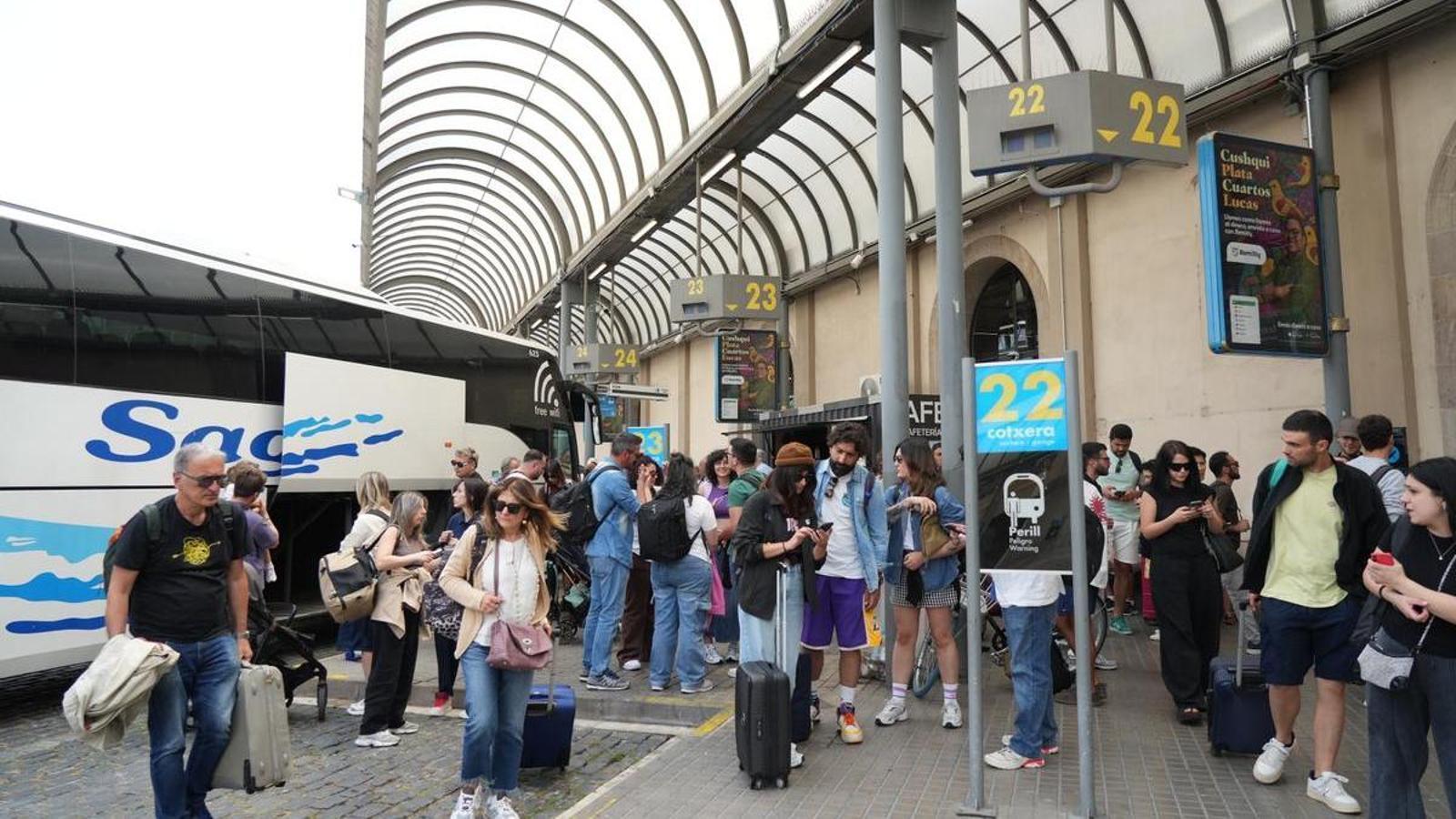
The fact is that current regulations allow standing in certain vehicle models –as was the case with the Fogars bus– and the increase in demand over the last two years has made this common on many interurban routes. Furthermore, the crisis in the railway system has caused a shift of users from train to bus and operators claim they are "overwhelmed by demand." They do not have enough vehicles, nor can they find drivers to cover all the line reinforcements they need to make. For this reason, they point out that if the regulations change and force everyone to be seated, the sector would have to be completely rethought from top to bottom to be able to respond to the long queues of users.
"We would go from having people standing on the buses to having them at the stops," points out the group of experts from the Association for the Promotion of Public Transport (PTP). Its president, Carles Garcia, argues that "class 2 vehicles are approved to carry people standing and, therefore, it makes no sense to open this debate, given that the buses are more than full." Other PTP sources underline that more budget items are needed in the sector and more frequencies must be achieved to avoid the accumulation of passengers at specific times, as happened in Fogars.
The bus employers' association, Fecav, agrees. It maintains that companies follow current regulations and point out that if these change, they will have to adapt. However, they note that "a hypothetical ban on standing would necessarily entail a review of the offer," since it would be necessary to "substantially increase the number of trips" to be able to absorb current demand and guarantee the right to mobility. They also remind the administration that operators are making a great effort "to cover the deficiencies of the rail service," in accordance with the requests made by the Department of Territory.
Changes yes, but surgical
The general debate has not prevented changes, at least on the line where the accident occurred. After the incident in Fogars, decisions were quick: Territori decided to do away with large buses, with approximately 65 seats and 20 standing places, and instead put in two smaller ones, with fewer than 50 seats, to cover this mountain route. These vehicles will run in pairs, covering the same frequencies as the large buses did until now.
"Can we talk about not standing on some mountain lines? Obviously; but then that line must be reinforced, because you cannot leave people stranded, on the ground," assesses Garcia from the PTP. From Territori, Secretary Nadal also pointed towards "surgical" changes: "It is impossible to change everything; however, this does not mean that we are not reflecting. Perhaps more rules are needed and sitting down in some areas or reducing speed at some points, but these are reflections that must be made calmly and in coordination with the entire sector.
