The case against Begoña Gómez raises the Spanish government's clash with justice
Ministers hint at political persecution while the CGPJ calls for respect for judicial decisions
-
CAT -
CAST
Madrid / BarcelonaThe Spanish government is usually prudent when it has to comment on the judiciary, but there are two exceptions: the case of the Attorney General, Álvaro García Ortiz, in which they defended his innocence until the end, and the case of the Spanish president's wife, Begoña Gómez, who this Monday Judge Juan Carlos Peinado brought a step away from trial. This Tuesday, up to three ministers have closed ranks with Pedro Sánchez's wife and have even insinuated that there is political persecution. Moreover, they have reaffirmed that everything will be corrected by higher authorities. "We are in a state of law and not in the regime of Ferran VII," said the Minister of Justice, Félix Bolaños, alluding to the reference that Peinado made in his ruling comparing the Spanish government to an absolutist regime.

"I believe in Begoña Gómez's innocence. Judge Peinado's ruling is unprecedented and goes beyond the legal," added spokesperson Elma Saiz. But the harshest was Transport Minister Óscar Puente: "We are facing judicial cases that aim to violate the political action of democratically elected representatives." Having read the ruling, the minister stated he does not know the "misconduct" attributed to the president's wife and said that "neither public officials nor their families should be disturbed and persecuted as a consequence of being public officials or relatives of public officials." In other words, he suggested that there is a prospective investigation by the justice system into Pedro Sánchez's family to remove him from power.
Judicial associations do not think the same. The two majority ones – the Professional Association of the Magistracy (APM) and the Francisco de Vitoria Judicial Association – have called for "respect" and "institutional responsibility," focusing explicitly on Minister Bolaños, as he asserted on Monday that Peinado's ruling had "embarrassed many judges." The APM, the main conservative association, believes the minister's "disqualifications" are "inadmissible" and emphasizes that judges "do not need the executive power to attribute collective moods to them," but rather a "clear defense of judicial independence." In this regard, the General Council of the Judiciary, unanimously, agreed on Tuesday to call for respect for judicial decisions.
Bolaños has reaffirmed himself, in any case, in his statements and justified that the "vast majority" of judges he has spoken with express criticism of Begoña Gómez's proceedings. He also reminded the CGPJ that it has been a year since they began studying his complaint for "irregularities" against Peinado and that to date there is still no response. It should be remembered that the judge also attempted to indict the minister, although it was overturned by the Supreme Court.
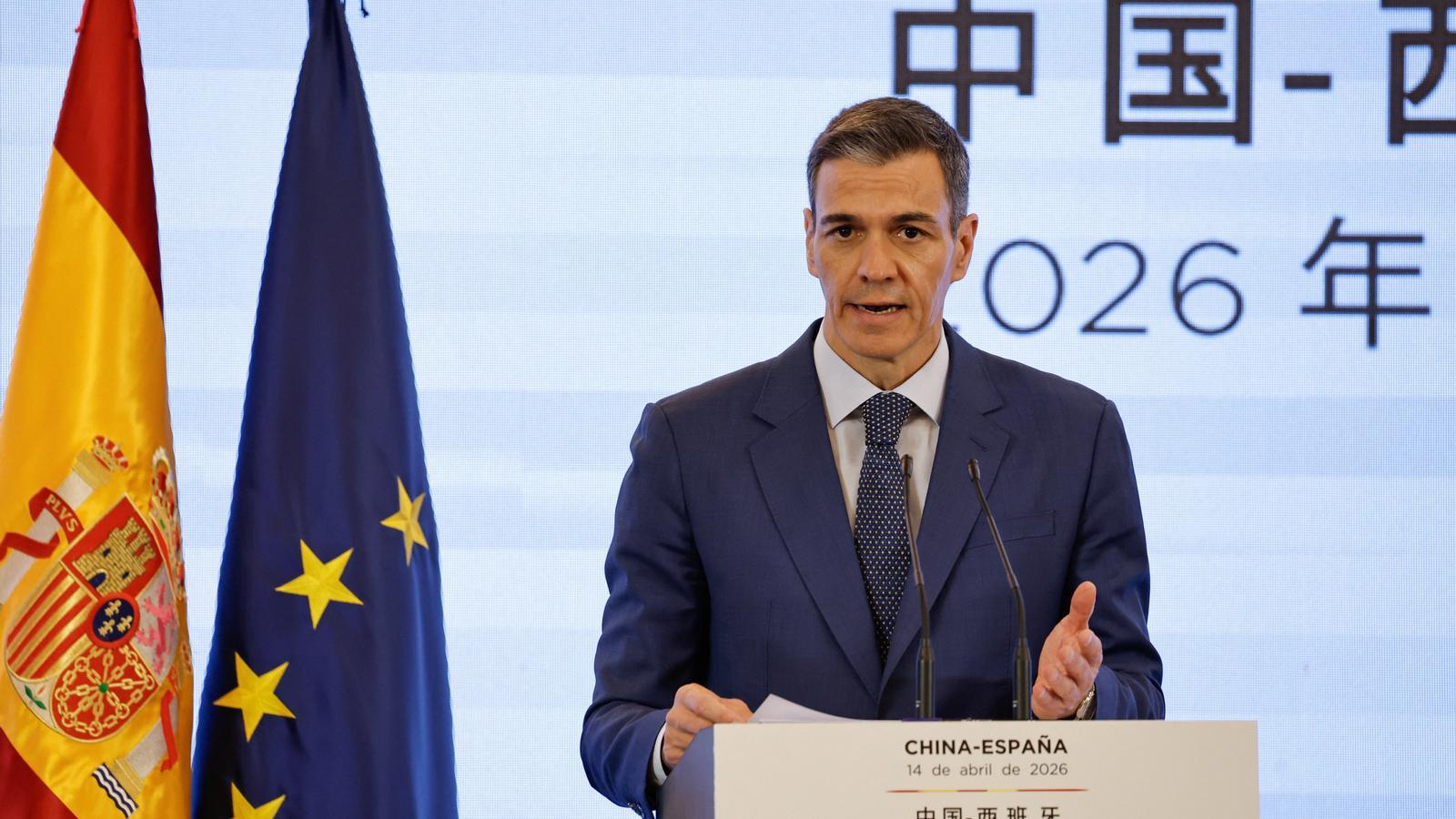
Sánchez, from China
The news caught the Spanish president, Pedro Sánchez, and his wife while they were traveling in China. The head of the executive has maintained a line of containment and has not wanted to comment on the criticisms that, from his own government, have been directed against the magistrate. "I am convinced that time will put everyone in their place," he has considered, refusing to add anything else. The PSOE has expressed itself —"Time will put Judge Peinado in his place," said spokesperson Patxi López—, while Sumar has described the investigation as "shameful," in the words of spokesperson Verónica Martínez Barbero.
The PP has done nothing but rub its hands together. In an address to the PP parliamentary groups in Congress and the Senate, Alberto Núñez Feijóo said that it is "not normal" for the Spanish president's wife to be prosecuted "for serious corruption offenses" and that Sánchez "does not resign." "It is not admissible," stated the opposition leader. "There is no doubt that Sánchez is the main person responsible for the deterioration that Spanish society is experiencing," he concluded, having committed to "free Europe and Spain from the Orbán of the south," in reference to the socialist leader —reports Andrea Zamorano.
