Who has the right to ask the questions
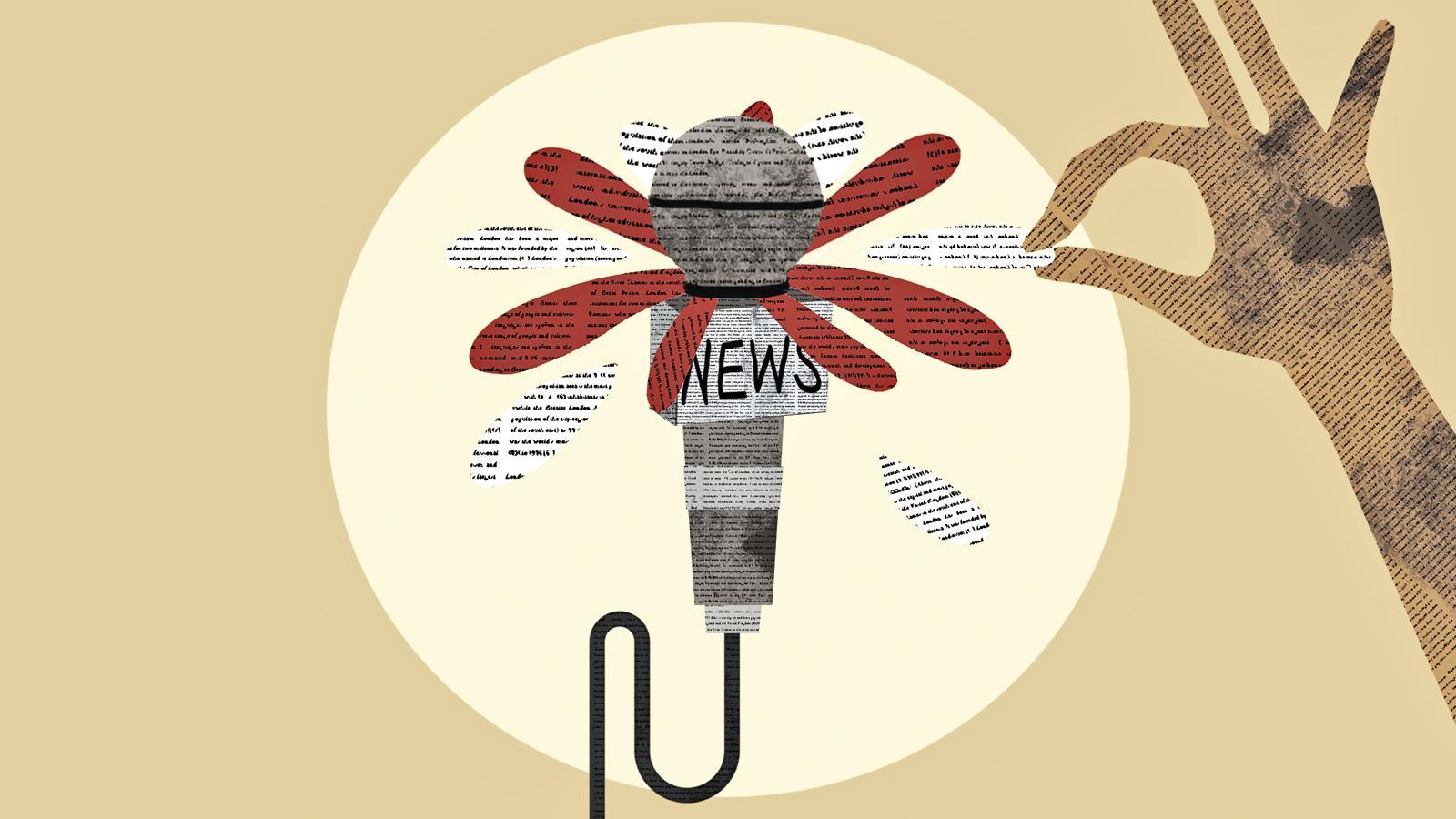

It is between irony and sarcasm that during the state dinner hosted by Donald Trump for Xi Jinping at the White House, it was Chinese television that showed the world the images of the pompous meeting. In fact, more pompous than productive. The television of the communist single-party state with a planned economy provided the images, while American networks suspended joint coverage in response to Donald Trump's veto.
ABC, CBS, NBC, and even Fox had decided not to participate in the pool presidential coverage after the president prohibited access to CNN, MSNBC, and Politico. That night, the usual cameras of the major American networks did not record the ceremony, as they would have done under normal circumstances. Meanwhile, CCTV and Xinhua broadcast images of Xi and Trump toasting at the White House.
The paradox is hard to beat: the television of an authoritarian regime showing images of an event at the White House that the television networks of the American democracy had decided not to cover as a protest against the restrictions imposed by their president on freedom of the press.But the episode explains something even more important. Donald Trump does not fight the press. He fights the referees: the judges, the prosecutors, the universities, the scientists, the administration technicians, the independent agencies, and the electoral bodies. All those institutions that retain enough autonomy to tell power: this is not true, this is not legal, this did not happen like this, this does not depend exclusively on your will.
If we reduce Trump's relationship with the media to a personal war between a hostile president and critical journalists, we miss a part of the phenomenon. Trump does not necessarily want to make the press disappear. He needs it. He watches it, consumes it, provokes it, insults it, and uses it. He constantly appears before journalists, calls them on their personal phones, and lives watching television.
What he tries to erode is something else: the ability of the press to act as an independent agent. Its credibility and the ability to formulate questions for which he has no answer or that would show that the king is naked.
George Packer explained it in The Atlantic before the 2024 elections. Trump and the media maintain an almost symbiotic relationship. He needs the attention and the media need to explain the president. But the exchange is unequal. For years, journalism has gained audience, clicks, subscriptions, and books thanks to Trump. He, on the other hand, has obtained something politically much more valuable: destroying the credibility of journalists or turning it into a partisan issue.
His great success is having managed to make millions of Americans distrust. And here the problem begins. A democracy does not need citizens to think the same. It exists precisely so they can think differently. But to discuss what needs to be done, it first needs a certain agreement on what has happened.
Facts must retain some independence from opinions.
Without this minimum shared ground, politics ceases to be a discussion between different interpretations of the same reality and becomes a confrontation between alleged incompatible realities.
During Trump's first term, this battle was waged primarily on the terrain of language with fake news, enemies of the people, and witch hunts. Journalists were dragged into the mud by being insulted and discredited. The same went for judges and the electoral board: conspirators, militants, propagandists, cheaters, indoctrinators.
In this second term, the media is being directly banned, accused of publishing “fiction and lies.” The last three censored ones took the matter to court. A federal judge ordered their access to be restored. And despite this order, journalists from CNN and MS NOW reported that they still could not access certain events during Xi's visit.
It is exactly here that the idea of referees takes on its full meaning. Trump decides that certain journalists are not legitimate journalists because he considers them liars. A judge decides that the president cannot arbitrarily withdraw their accreditation. And the White House restricts their access again. It is not simply Trump versus CNN. It is a discussion about who has the authority to set the rules.
David Remnick warned in The New Yorker that speaking of the press as an “enemy of the people” takes on another dimension when the person saying it also has administrative, judicial, and regulatory power. Because it is not necessary to shut down a newspaper; you can limit access to the room, discredit a source, file a multi-million dollar lawsuit, or pressure the owner. Above all, you can create the feeling that standing up to power has consequences. Intimidation arrives first through social media and ends with the closure of a media outlet due to regulatory effects or an economically unbearable lawsuit.
Trump is the king of noise on social media. He issues an extraordinary amount of statements, insults, provocations, videos, controversies, and headlines. It is about saturating the digital ecosystem. From one fire to another. From one farce to another. Nothing to do with transparency. Since the most important news is not always the one that attracts the most audience, many media outlets play along, trapped between their democratic function and the struggle for the attention economy, because indignation, insults, and scandal circulate extraordinarily well and audience translates into the volume that brands and governments convert into revenue for the media.
The question is who decides what is important. Who has the right to ask the questions. Susan Stokes provides a particularly useful key in The backsliders (The backsliders, Galaxia Gutenberg). Leaders who erode modern democracies do not usually arrive with tanks. They arrive with votes. And if they want to weaken the institutions that control them, they first need to convince their followers that these institutions are not neutral.
When this transformation is complete, weakening the checks no longer necessarily seems like an aggression against democracy.
