Who are we, us?
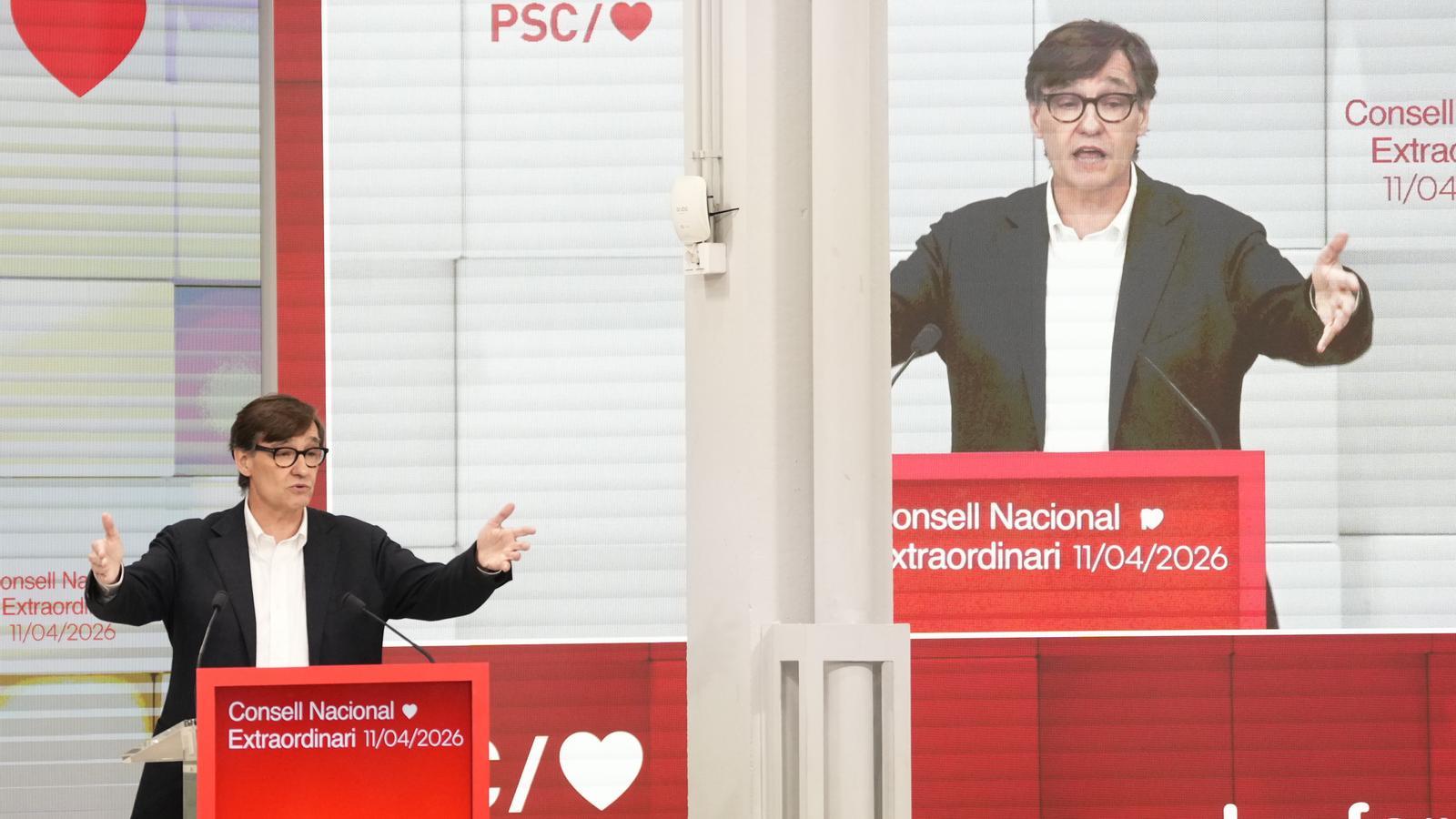

Pío Cabanillas' outburst is often cited, who in the years of the Transition, leaving a stormy UCD congress, said “We have won, but we don't know who”. Something similar happens to current Catalan politics when talking about unity. We want unity, but we don't know whose. We know we have to unite, but we don't know what or whom we are referring to when we talk about us.Unity is one of those big words that, like progress or freedom, become empty concepts when they are mishandled by the political class. In general, when a leader advocates for union, they conceive of it as a concentration of forces around themselves. And that, of course, has little to do with authentic unity, which implies mutual approach, concession.I am one of those who think that unity is a false dogma that is often contrasted with division, when its opposite, in fact, is plurality. And in democracy, plurality is necessary. It is the inevitable starting point for reaching consensus, broad majorities: another type of unity, which does not imply uniformism and does not generate vetoes.In Catalonia, this kind of unity based on pluralism is necessary. Because the country has very serious problems and demands far-reaching reforms, which are impossible with a too atomized Parliament, and with a growing presence of the far-right. And this implies forming transversal majorities, which overflow the boundaries between left and right, and between sovereigntism and Spanish nationalism. I will be more precise: there are a series of issues (language, health, education, infrastructure) that should be based on a strategic agreement between the PSC, Junts, ERC, and Comuns. They are the formations that can guarantee an operational parliamentary majority.
To reach agreements, red lines must be relaxed. If ERC and Junts intend for this majority to adopt the referendum on self-determination as a prerequisite, they will not succeed. They do not have enough strength. If the PSC, on the contrary, imposes respect for the Statute and the Constitution as a red line, they'd better find their own way with the PP and Vox. The sovereignist parties can temporarily renounce self-determination, but if the only thing offered to them is the maintenance of a precarious and underfunded autonomy, they will refuse, and with full right. I would like to think that a third way is possible, but I am not very optimistic. Therefore, I believe we will have to get used to a fragile Catalan government with no possibility of pursuing ambitious policies.Unity –in this case, independentist– is also what Junts demands from its former partners in ERC. It is a legitimate aspiration inspired by the powerful nationalist parties of Quebec and Scotland. But it seems that neither Junts nor ERC are in a sufficiently strong position to consider adventures. They must put their own houses in order before considering the creation of a new party, which would require new leadership, and erase a decade of grievances and mutual reproaches.Putting their house in order is a pressing need for Junts, which does not quite know how to combine Puigdemont's legacy with the pactist tradition of the former Convergencia. And which does not want to move closer to the ideological left due to competition from Aliança Catalana. As for ERC, sooner rather than later, it will have to face the problem posed by the unilateral strategy of Gabriel Rufián, who is determined to lead a front with the parties “to the left of the PSOE”, which explicitly (and rabidly) excludes any relationship with Junts and, therefore, any possibility of an independentist majority.All these “unitary” proposals have the same origin, which is the fear of a PP and Vox majority in the Spanish Parliament. How should we respond to this threat? How should we combat it? And, who are we, we?Perhaps we should start there.
