To progress one must know how to share

Economic analysis has promoted a strict conceptual distinction between, on the one hand, the total production of goods and services that an economy can potentially derive from its stock of capital and knowledge (the “fundamentals”) and, on the other, the institutions and norms that determine how production decisions are made and how the resulting gains are distributed among the members of the economy. It is a useful distinction, but one that can be dangerous if it opens the door to considering the former in isolation from the latter, as the realization of the potential described by the former may well depend on the latter. I will illustrate this with some examples.
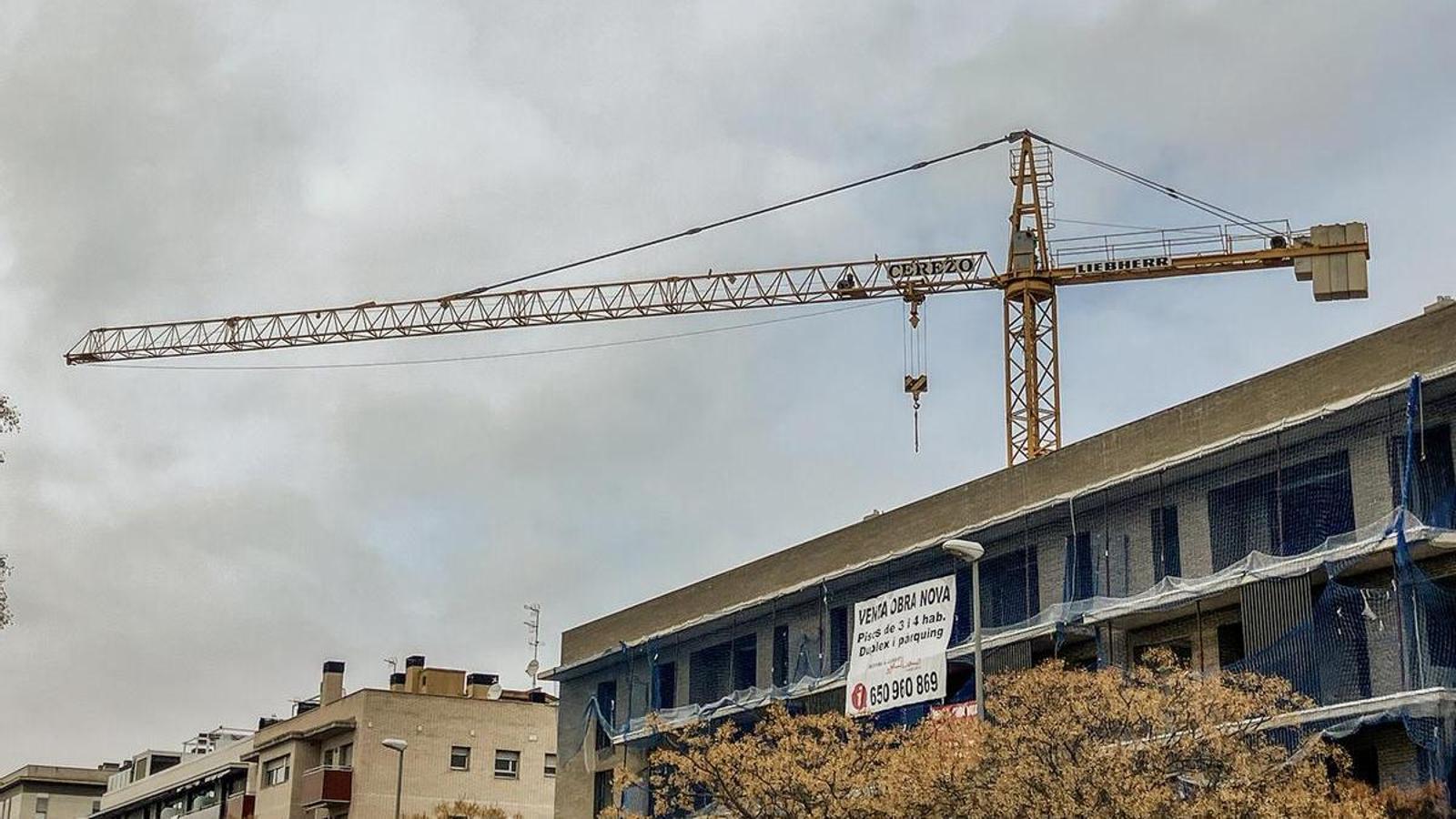
1. Our housing crisis. If we only look at the fundamentals, the housing problem should be easily solvable: the physical space to build on exists, the third dimension facilitates the task, construction technology – and prefabricated housing – is progressing very rapidly, the private and public resources that would be needed for robust construction programs also exist. Given all this, we can predict that the problem will be solved, but the when matters. Why is it so difficult to move quickly? Because there is an institutional and regulatory framework that slows down the process. To allow construction, land must first be designated as developable and then developed. However, increasing the amount of developable and developed land – an imperative priority today – is conditioned by strict regulations, and especially by the fact that the initiative must be municipal, and there may be many reluctance if the citizens of the municipality do not value the need for housing, or if they value it in the abstract but prefer it to be built elsewhere when it comes to concretizing it. That is, if they don't see any benefits. I celebrate the efforts the Generalitat is making with the plans for 50,000 and 200,000 homes. I hope they succeed. I am optimistic. But the lesson is that when designing institutions and allocating responsibilities, short processing times must be foreseen, especially in critical times like the ones we are experiencing.
2. Famines in India. Historical research on this topic (Poverty and Famines, 1981) contributed to the economist Amartya Sen receiving the Nobel Prize. The traditional idea was that famines – very destructive humanitarian catastrophes for the economy – were a consequence of a lack of food that, in a context of low economic development, originated from various disruptions: climatic, epidemics, etc. The prescription was to resign oneself and work for development. Sen, on the other hand, demonstrated that the most common situation in India was that the crises that caused famines did not stem from a lack of food but from episodes of impoverishment caused by the normal functioning – but blind to profit distribution – of markets. And that what was failing were institutions incapable of even recognizing the problem. Sen pointed out that in periods of free press famines could not be ignored and, lo and behold, indeed there were fewer of them.
3. Pumping station in Berguedà. On March 28, the affected population of Berguedà expressed themselves in a popular consultation against the installation of a hydroelectric power plant with a technology (pump-storage) very suitable for energy sustainability. A good project can thus be affected. I do not know enough about the subject to deduce whether the rejection was due to the fact that reasonable compensation was not foreseen or to the fact that, overall, voters aspired to an unreasonable outcome. If it were the former, the institution that formulates the project fails me. If it were the latter, the one that aims to give decisive weight to a local consultation on a matter of general interest fails me.
4. Data, supercomputing and AI. Taken together, they can be a source of important advances in the economy's productivity. But the upheaval will be considerable (news this week: a programming school in 22@ is losing enrollment because less need for entry-level programmers is anticipated). I believe it is likely that the economy will generate new jobs in magnitudes congruent with the losses, but I am not so sure that if we leave it solely to market forces, the economic compensation for labor will result in an equitable distribution of gains; especially if, as we are seeing, the weight of large corporations with market power increases. In this case, a well-justified social dissatisfaction can derail the productivity agenda. The blind power of market forces will have to find a compensatory power ("countervailing power") is an expression of J.K. Galbraith) in strong democratic governments and, following Sen's lesson, in societies endowed with a free press.
