The 'grandeur' and the frustration of France
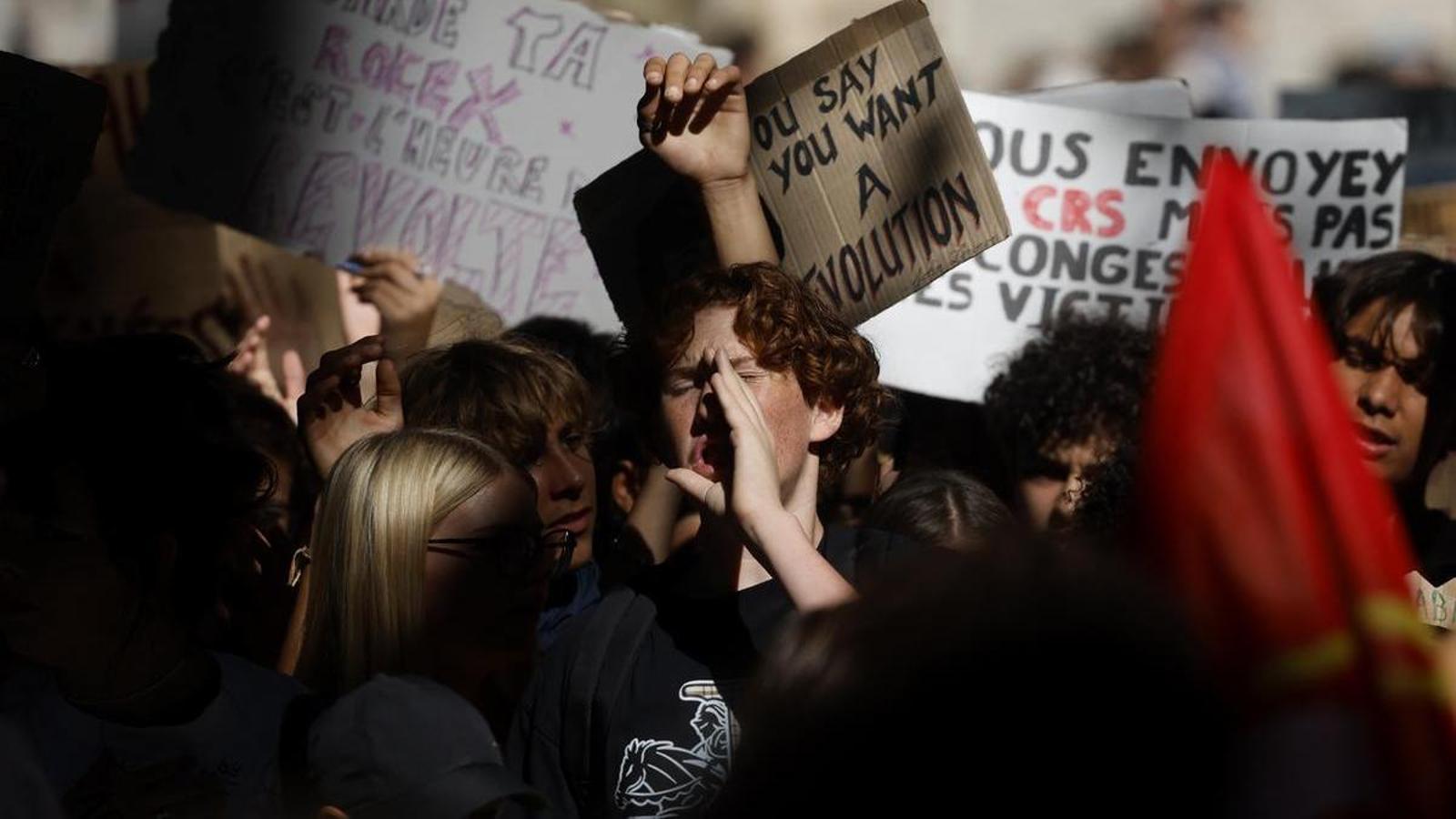

The French are prone to street protest. This seems indisputable. But there must be something more, something that explains a practically endemic frustration. And this something could be related to the fact that France feels special, like a unique beacon of light in the world. The supposed French identity, constructed, like all others, in the 19th century, is based on the invention of grandeur.
Any social turbulence has immediate causes. In the case of France, Emmanuel Macron's failure in his ten years as president (debt out of control, growing inequality, deep enmity between the big cities and their banlieues, a rapid degradation of the provinces and the rural world) explains the frequent eruptions of popular anger.
But before Macron, the unrest already existed. True, France was a power a century ago and has not stopped declining since then. However, the same can be said of other European countries, most especially the United Kingdom.
What is behind the French unrest? Last year, the philosopher and political scientist Olivier Le Cour Grandmaison ventured, in the essay La fabrique du roman national-républicain (translatable as The Making of the National-Republican Novel), an interesting thesis: the Third Republic (1870-1940) tried to resolve its permanent crises by inventing an extraordinary greatness for France: the country of lights, reason and freedom, of human rights, of the revolution, enjoyed a unique and eternal destiny in the world.
The Third Republic started badly and ended worse. It began with a tremendous military defeat against Prussia (Chancellor Otto von Bismarck allowed himself the luxury of signing the unification of Germany in Versailles) and with the revolutionary experience of the Paris Commune, brutally repressed. And it reached its end with the pro-Nazi regime of Marshal Philippe Pétain.
Meanwhile, everything happened. We are talking about a Republic whose political class was mostly monarchist (though divided between legitimists and Orleanists), which felt humiliated by Germany and terrified by the risk of a new workers' insurrection. Which did not prevent the hedonism of the Belle Époque, the artistic blossoming and, starting in 1936, the formation of the Popular Front and the obtaining of notable rights by the working class.
But the essential feature of the Third Republic was the public, free, universal, and secular school. This school created the France of today, for the good things (which despite everything remain many) and for the bad things.
It established what we call the French language (derived from the langue d'oïlspoken in Paris and in the north) as the only national language, which ended all others. It raised the cultural level of the country and polished the concept of citizenship. And it added to conventional teaching a kind of national metaphysics, not to mention novel like Le Cour Grandmaison: a civilizing destiny of planetary scope that ended up being embodied in the term grandeur (and incidentally served as an excuse to undertake the late expansion of an African empire).
There are only three nations that in some way feel chosen. Israel and the United States attribute to themselves through different paths a divine designation; France believes to have been designated by History.
Emmanuel Macron himself refers from time to time to French specificity. As when he said, referring to his presidency and the characteristic social unrest: "Like it or not, the history of France is unique in Europe. Broadly speaking, France is a country of regicidal monarchists. It is a paradox. The French want to choose a king, but they want to be able to dethrone him as soon as they feel like it".
Anyway, it is not hard to imagine the short circuit that occurs in the minds of schoolchildren, especially those in the banlieuesand those of foreign origin, when they are told about grandeurand are taught about the unique and wonderful destiny of France. Nor is it hard to understand the pain that the last decades of frustration, cuts, and stagnation have caused in the country that was, and to a certain extent still is, a leader in social conquests.
