Rufián's ERC

-
CAT -
CAST
What do you vote for, parties or people? In general, I recommend focusing more on the parties, that is to say, on the ideology or the program that inspires them, rather than on the proper names at the helm. People pass, organizations remain. And if they don't remain, it is often precisely because of hyper-leadership. That is what happened to Pujol’s Convergència. Sooner or later, we will have to see what happens to Puigdemont’s Junts. At the same time, it is also true that without a strong leader it is difficult to keep any organization cohesive: whether it is a party, an institution, a company, or an association. The balance between the group and the personality that heads it is never simple.
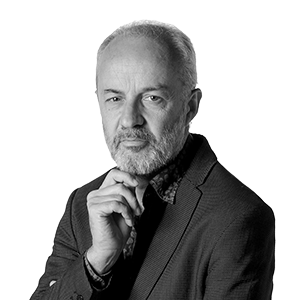
Let’s look at the case of ERC. Traditional voters are uncomfortable with Rufián. On the other hand, it is possible that with this headliner the party will gain new votes, especially from young people – or not so young – detached from traditional Catalanism. It is another classic dilemma: focus on one's own audience and satisfy them with what they expect, or open up and attract different people? Maintain the essence or hybridize? Hold one's position or take a risk? This time, ERC, rather than making a mature decision, has been dragged along by the situation: Rufián is currently too powerful a brand of his own to do without. The ERC led by Junqueras has decided that it is strong enough to maintain this free verse, even if their coherence creaks. It is a bicephaly with little risk because Rufián has no room for maneuver within the party, where his current (Tardà and co.) is a minority. Junqueras, therefore, has decided that it suited him well to have someone in Madrid with the capacity for media impact, someone who plays the card of left-wing frontism. The visible face of ERC in Madrid can be more heterodox than in Barcelona.
How many times has Catalanism played with Catalonia inward and Catalonia outward? Let’s remember the tandem of Prat de la Riba and Cambó. Or that of Pujol and Roca: the latter, it is true, ended badly. Roca, of course, was very strong within CDC. Later there was the tandem of Pujol and a Duran shielded by his own party, UDC. Pujol let him do as he pleased. With the PSC it has been different: the party was tied from the beginning organically to the PSOE, so that in Madrid the reference was no longer their own politician. Very soon they lost their parliamentary group in Congress.
The history of ERC, like that of most political parties, is filled with fratricidal battles. In five years, however, it will already be a centennial party. Considering the turbulent contemporary history of Catalonia, the milestone is not negligible. It was born in 1931 in a process of accelerated unity of the left, the most labor-oriented and the most nationalist. The hasty invention worked out well for them, with the quixotic Macià, a former Spanish soldier, as leader: the Avi, a living myth. Then came Companys, the martyr president, executed by firing squad in 1940. ERC survived the long dictatorship and one of its former leaders, Tarradellas, president in exile, placed himself at the head of the restored Generalitat, although he did not do so in the name of ERC but as an emblem of institutional continuity. An ERC that at the beginning of the Transition practically resurrected from nothing in the midst of left-wing forces much more established in the anti-Franco movement: socialists and communists.
One of the key moments in the party's recent history was the leap towards independence with the entry of Àngel Colom –leader of the Crida– and Josep-Lluís Carod-Rovira –militant of Left-wing Nationalists–. The step was gestated exactly in the autumn of forty years ago, in 1986. The first public signal was launched by Carod-Rovira with an article in Avui published on November 1st: A vital necessity: refounding ERC. The comeback of an ERC that was marginal at the time with 5 deputies at the Parc de la Ciutadella began. A decade later, Colom and Pilar Rahola left it to found the ephemeral Party for Independence (PI). The ERC led by Carod-Rovira continued to rise, with 23 seats in Parliament in 2003, when it made the tripartite government possible. The subsequent history, including the departure of Carod-Rovira, is already well known. The maximum number of seats was reached in 2021 with 33 and Pere Aragonès elected president. The Junqueras-Rufián tandem does not cease to reflect the double historical soul of the party's origins. Let's see where they take it.
