Half a century of “free market”, half a century of social and political disintegration

-
CAT -
CAST
Some books stand the test of time remarkably well. False dawnJohn Gray's book offers a good example. It was published in 1998, before the euro, before Vladimir Putin, before social media, but its diagnosis of the effects of the "free market" (a concept invented in the mid-19th century) and its logical evolution, "global capitalism," remains accurate: social disintegration, the impotence of politics, and a brutal rise in inequality.
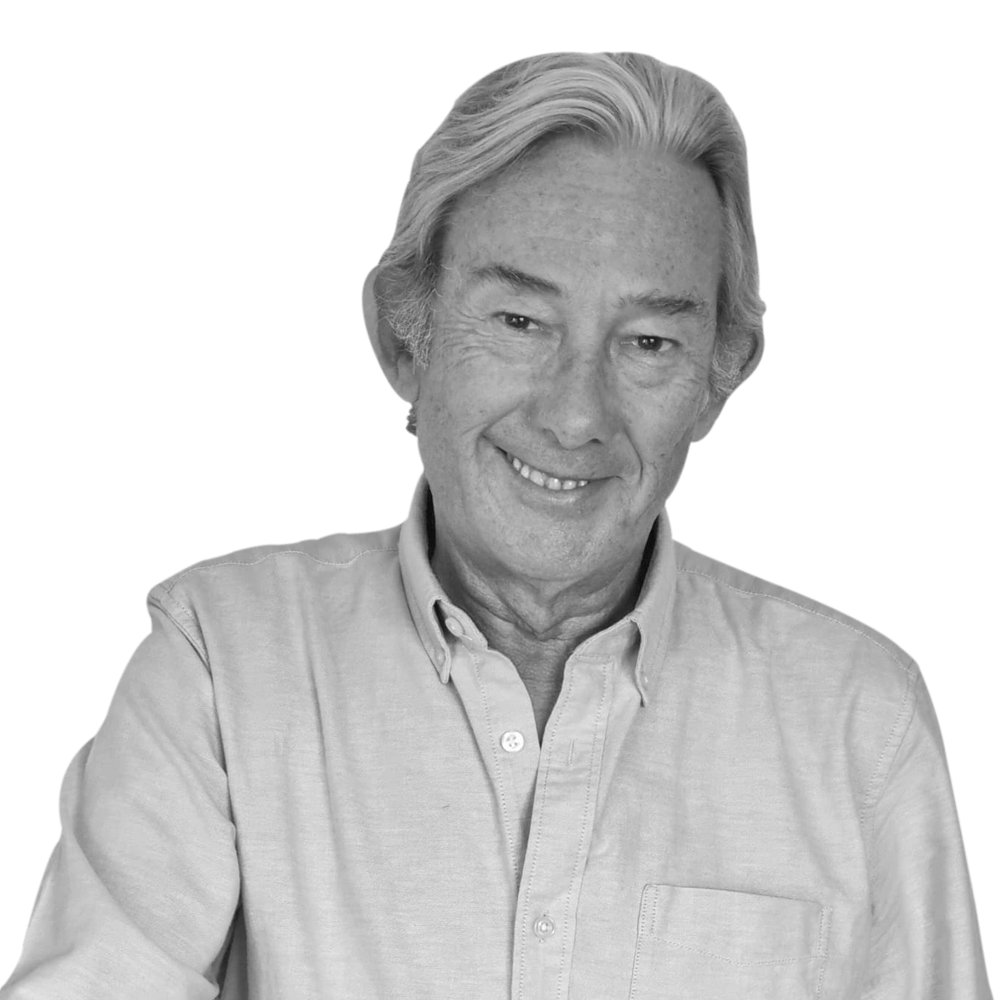
John Gray, philosopher, professor at the London School of Economics and Oxford University, and highly critical of prevailing ideas about the meaning of a concept like "progress," did not emerge from that magma we call "the left," but from the far right. That right which has always distrusted utopias and the supposed universal reach of Enlightenment ideas. His works, beginning with False dawnThey are linked by a thread of pessimism. And by a constant lucidity.
In the Victorian era, the great entrepreneurs of the British Empire had managed to accumulate enormous capital. And they wanted to take the definitive step: to liberate economic life from social and political control. As is well known, they succeeded. From that era dates the definition of the cynic attributed to Oscar Wilde: the man who knows the price of everything and the value of nothing.
That first stage of the new imperialist capitalism collapsed with the First World War, the emergence of totalitarian ideologies, and the crisis of 1929, and was temporarily replaced by a Keynesian or social-democratic era that lasted until the neoliberal irruption in the latter part of the 20th century.
From that irruption onward, "the markets" acquired a telluric condition. Like weather phenomena, their reactions were difficult to predict and absolutely inevitable. Even the early prophets of the neoliberal revolution, such as Margaret Thatcher, tried to protect themselves from the economy as an autonomous monster with a gesture as human as it was incoherent and ineffective: the invocation of nationalism. Gray predicted that nationalism would be ineffective against markets and, ultimately, incompatible with them. He predicted that the so-called "Washington Consensus" (1989), a doctrine championed by the United States government and its two sprawling economic institutions, the International Monetary Fund and the World Bank, based on the idea of "less government, lower taxes, and more market," would have disastrous consequences for state-based democracies. And he also predicted (in 1998, when the Chinese economy was only half the size of Germany's) that the biggest beneficiary of the new rules would be the one who didn't have to abide by them. That is, China.
The cards have been on the table for some time. Which doesn't stop Western societies from continuing to appeal to Thatcher's automatism and seeking protection in nationalism. In both the United States and the countries of the European Union, a right wing that calls itself "patriotic" (whatever that means) is on the rise and speaks of the need to confront globalization, while pointing to mass migrations as the cause of all problems—a mere side effect of the current economic order.
It's fascinating to hear the leading figures of the "patriotic right" (from Donald Trump to Elon Musk or Vladimir Putin) invoking the need for political authority and social cohesion, while they amass inconceivable fortunes thanks, precisely, to the disintegration of politics and society. Even more fascinating is seeing that so many people listen to them.
In False dawnJohn Gray displays a clear trait of moral integrity: he declares himself incapable of prescribing solutions. They weren't seen in 1998, and they aren't seen now.
