Education and the far-right
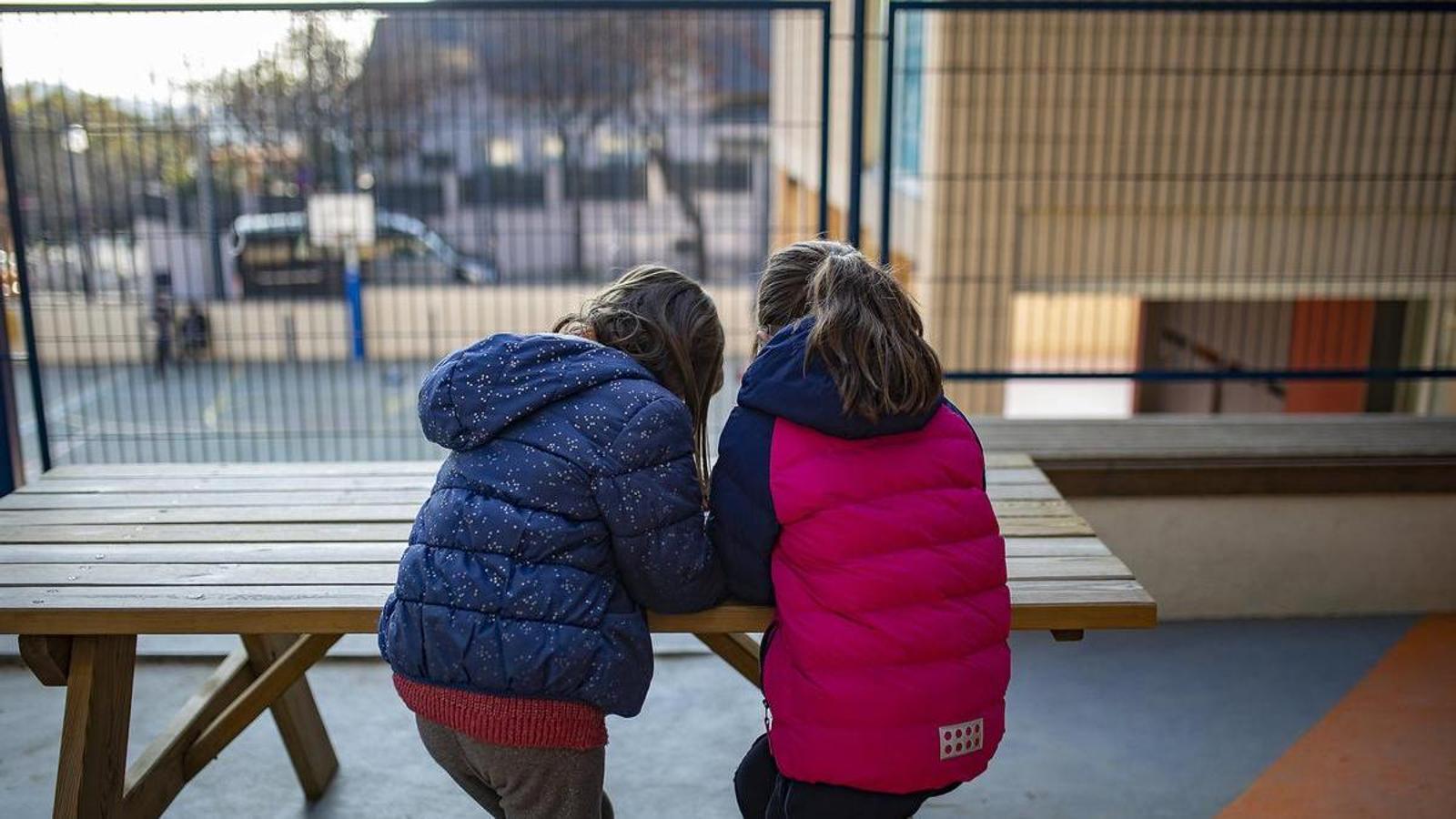

The survey published on Sunday in this same newspaper about the rise of the far right in Catalonia is very worrying, and reminds us that classrooms are not islands immune to the growth of populism or the polarization that is shaking Catalan society and all of Europe. In this context, the debate about police presence in schools is not insignificant. The core issue is: what are we doing to ensure conflicts can be processed within the school and what model of school are we building? We need a deeper look at how we are educating for coexistence and plurality in Catalan schools, beyond just preventing conflicts. Just a week ago, I visited an educational center that is trying to deal with the increase in conflicts in the midday playground. In this center, most conflicts occur between boys and revolve around football and balls. Girls spend the break sitting in small groups, chatting, dancing, or playing hand games. And when there are conflicts, they are verbal, of the type 'we are no longer friends'. They can also be hurtful, when they turn into insults thrown like darts: 'ugly', 'fat', 'you are like this or that'. In recent years, there has been an increase in conflict in schools: according to the official registry (REVA), more than 3,000 cases have been registered in the 2025-2026 academic year. These are situations of school bullying, sexual or sexist violence, as well as cases of hate and discrimination. Many happen outside of school but are detected in classrooms. Forms of conflict are not the same for boys and girls. School coexistence data in Catalonia confirm this. Boys concentrate more visible, physical, and sanctioned conflict, while girls appear more in relational and less visible forms of conflict. This is not a minor difference: it describes different ways of inhabiting school and expressing discomfort. Girls, in general, are more adapted to school culture, and for boys, it is more difficult to build their virile identity there. The data also show an important gap: girls, in general, have a better command of orality and expression, while many boys have fewer tools to put words to what is happening to them.If we broaden our view, the pattern is reinforced. Boys show higher early school dropout rates (15–20% compared to 10–13% for girls) and more failures in compulsory education. This gap continues outside of school: about 80% of young people in juvenile justice are boys and over 90% of the prison population in Catalonia is male. These are not isolated phenomena, but rather trajectories that connect school difficulties, a deficit of tools to manage conflict, and greater exposure to violence, often in contexts of inequality and vulnerability.
There is also another gender gap: young men are more predisposed to vote for the far-right, and more easily adopt anti-feminist or anti-immigration discourses. The issue, however, is not to reduce this to a gender reading. The question is another: to what extent does the school place the demanding work of language at its center. Not only emotional expression, but the construction of a shared language capable of elaborating conflict, sustaining disagreement, and transforming impulse into thought. Philippe Meirieu reminds us that today at school a pedagogy of sursis –the “leaving in suspense”– is urgent, which involves educating the capacity to interrupt immediate response so that the student can move from reflex to reflection, from reaction to conscious elaboration of what they do and feel, to speech. It is not about opening turns of speech, but about recovering reason and argumentation: learning to base opinions, listen and respect dissent without resorting to force. Educating in speech is not renouncing limits, but neither is imposing them: it is building them by speaking and thinking. For some time now, the school has incorporated emotional education, an undeniable advance. But it has often remained at an individual and psychologized level. The challenge is to move from "how do I feel" to "what do I do with this in relation to others". To educate is to achieve that emotion is allowed to be thought by reason and guided by will, that great forgotten: to sustain effort, to defer response, and to resist impulse.The rise of the far right is not just a phenomenon of ballot papers in the polls, but a cultural symptom that feeds on simple answers and the designation of an "other" as a threat. Faced with this growing populism, the school must assert its role as a space for building citizenship. Martha Nussbaum reminds us of the need to educate in otherness: democracy requires people capable of imagining themselves in the place of the other and of recognizing the dignity of those who are different or with whom we disagree. This implies transforming the educational center into a place where the debate of ideas is central and where we learn to sustain dissent without resorting to force or exclusion. The denial of otherness – those who are different— is one of the fights of the far right. The school is a space of belonging where we learn together to live together in diversity. That is why education is the decisive weapon of democracy to contain a threat that erodes its foundations.
