Mar Bermúdez i Jiménez: "What was written about me devastated me, and no one has apologized to me."
Journalist, political scientist and author of the book 'The sins of a feminist: the awakening of a journalistic me too'

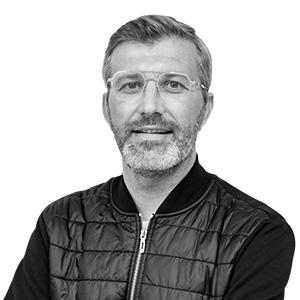
-
CAT -
CAST
The journalist Mar Bermúdez (Barcelona, 1998) goes report your boss in The MainThe former director of Catalunya Ràdio, Saúl Gordillo, was arrested in December 2022 for sexual assault. A case that would end in sentencing Two years later. And in 2025, Gordillo agreed to a sentence of one and a half years in prison for the sexual assault of a second female employee of the media outlet he directed in 2022. The MainNow Bermúdez recounts the experience he had in The sins of a feminist: the awakening of a journalistic #MeToo movement (Ara Llibres), a book that narrates, from a feminist perspective and with a structure based on the seven deadly sins, what it means to denounce a powerful person with influential friends. Which is the worst deadly sin?
— The best one, because it's the only one that ultimately becomes a catalyst, is anger, because it ignites the flame within you, making you fight. Perhaps the worst, because it's the first one you encounter, is sexual violence, or rather, lust.
The book's subtitle is: The awakening of a journalistic #MeToo movementDo you think there has been this in Catalonia? me too?
— It existed, but we haven't maintained it because it's a sector with many names that haven't come up, names we all know. Because there are many vested interests, it's a sector in crisis, and therefore, there's even more dependence on certain powerful figures.
He me too He places it in Catalonia in an article from the ARA about the Lleida Theatre Classroom.
— In Catalonia, it marked a generation. At least mine. A before and after.
Are journalists hypocrites? Do we denounce things that happen in other sectors, but there are many cases within our own sector that go unreported?
— It's comparable to other sectors where there are also many spheres of power. Here, everyone knows each other. And I don't want to blame the journalists. I think it's something more structural and systemic. Journalism has been constantly changing for many years, but the basic structures remain, and that's what's so difficult to combat. And, in the end, if a girl with nothing to lose doesn't come along... I practically don't even work in journalism anymore; I do some freelance work. I feel that the violence I suffered, in part, took everything from me, even, at the time, my will to live. And I've been gradually recovering it. Perhaps one day I'll imagine my professional future and regret what I did; I'll think I was really too daring, although, yes, I'll have a clear conscience about what I did.
Have many people reached out to share your story? Many journalists?
— Many women in general. And many journalists. Explaining things to me and telling me names that surprised me, and others that didn't because many people know them. Perhaps the important thing isn't maintaining the me tooIt's not enough to have testimonies and names of aggressors constantly surfacing; it's not enough to do it right. One thing is the impact—that they all fall, that all the names come out, which is a wish—and another is that something changes within us, within the professionals themselves. Perhaps there are already newsrooms where the dynamics have changed as a result, because people have been more self-reflective.
Have any young people come to explain cases to you?
— Few, but yes.
The book says that there are "many gentlemen praying to their paradise patriarchy that their names will not be the next to come out."
— When push comes to shove, they're not so brave. They're aware of what they've done and are afraid of being next and losing power. What they lack is remorse. They don't know what that is.
Does it hurt you that your attacker continues to work in The Punt AvuiThe editorial staff objected.
— I'm over it, but it makes me angry. It's rage. I think it's very unfair that he gets a double-page spread in The Punt Avui And I'm working as a sales assistant in a clothing store and I'm practically not involved in the industry. Because it should be the other way around. But at least I think the newspaper staff did something remarkable, and while their editor was writing editorials defending my attacker, they stood up and contradicted him.
The book doesn't name the convicted man, but it does name some journalists who questioned him, including you.
— The name of my attacker, as he is the main source of the harm, is something I don't want to include in my book. This book is a way of bringing everything to a close. And at the time I was experiencing all the violence, I was unable to respond to anyone. Now, however, I wanted to put it out there, because it has been healing. None of these people have apologized to me, and what they wrote devastated me. They are people who took liberties that I believe are neither ethical nor socially acceptable.
About fifty opinion pieces about you were published in the press: 28 favorable to the aggressor, 12 unfavorable and 10 neutral.
— That's outrageous, to do that to a person.
Against a person who was 24 years old?
— And against a victim. They need to know that what they did, those articles they wrote, are also violence. There are many things that I don't even find human... a minimum of empathy. There was this whole network, which I'm very clear was quite organized, to exert more violence against me. It was another tool of defense. It was a battlefield, and they brought out all the artillery: they did everything necessary to defend the aggressor; if they had to discredit you, they did; if they had to say your name, they said it; if they had to show the videos, they published them...
What should happen to an aggressor the day after sentencing?
— He needs to be able to work and support himself, of course. I don't hold a grudge against him paying his debt or going to jail. No, I have a sentence, and that's it. Now, should he have a platform in the media to say what he thinks?
Are you still expecting forgiveness from that "organized" network you mentioned?
— No. I expect silence, because that's what I've received so far.
But would you be open to a call or a coffee?
— Perhaps. But it would be difficult, it wouldn't be easy. Perhaps all this will be of some use to those people and they will reflect on it.
When the news about the complaint was published in December 2022, many people told her she was brave, when in reality she "was crying in a corner of her childhood bedroom."
— Strong? Brave? I'm here crying in a corner, a complete wreck. I've never felt so small. I knew who I was up against, but I wasn't aware of all the violence that would follow. But it was what I needed to do. And now, the book is like a personal metamorphosis. I feel strong. I explain things without much drama, saying that we can all get through anything. I hit rock bottom, I've had to rebuild myself as a person, but I'm very proud of what I've done. I'm more afraid of criticism from the people I love than of forty men coming up to me again and saying whatever they want. I want to transmit that strength to women who are currently in the same place I was crying in that room.
