The street in flames or the 'House in flames'?
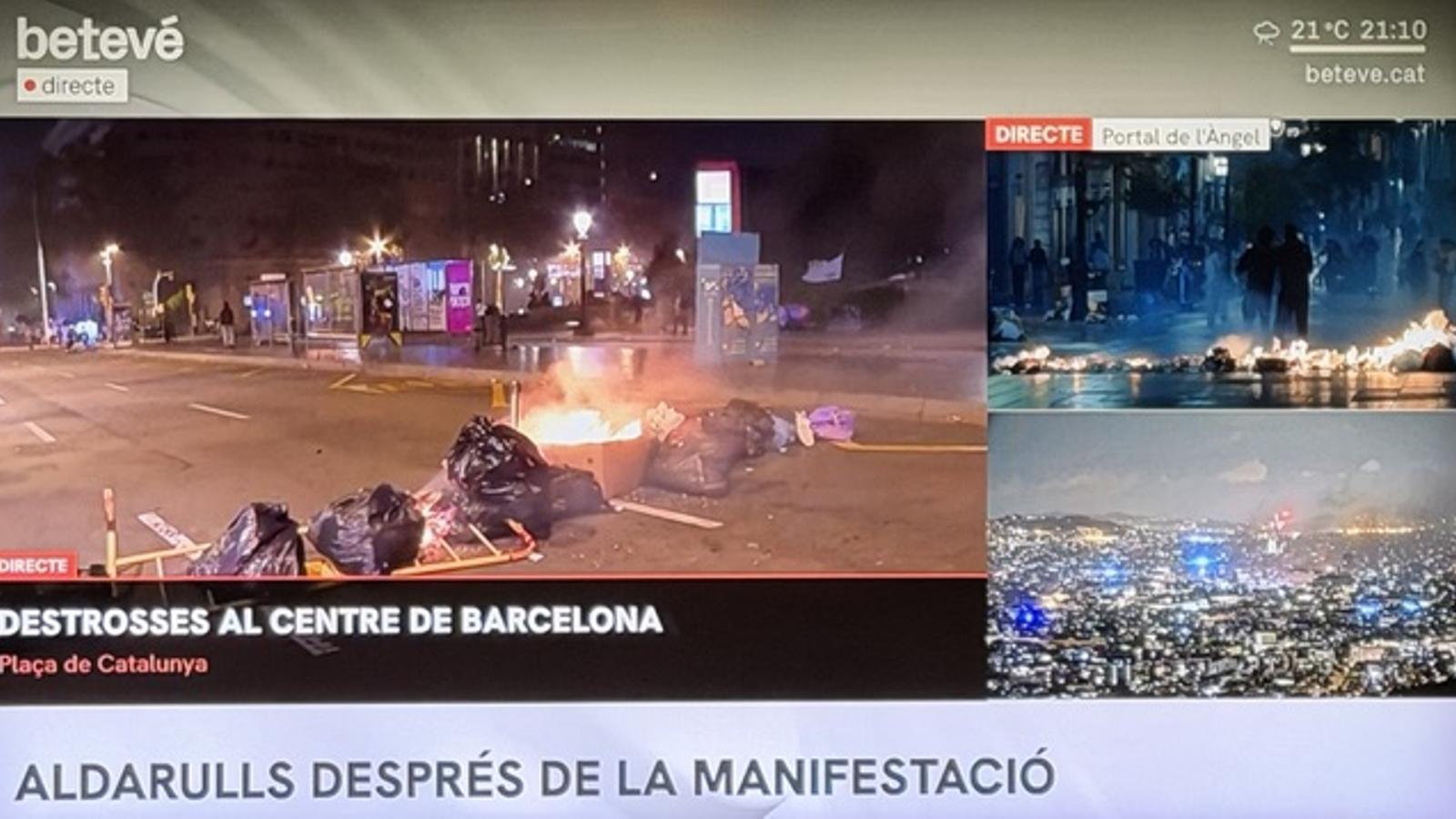

On Wednesday, televisions adapted their programming to the minimum services of the general strike. In the evening, 3CatInfo already began reporting on the first disturbances in Barcelona. Toni Cruanyes continued on the Telenotícies with the evolution of the events. The presenter, by the way, had to apologize for a screenshot of a tweet by Salvador Illa that was aired during the 3CatInfo news bulletin. They added the response of an anonymous user disparaging the president. The poetics of karma. Illa lashed out at TV3 on social media weeks ago, and now, the network slipped up incomprehensibly by broadcasting a tweet that belittled the president. At the climax of the riots in Barcelona, Cruanyes said goodbye with a phrase that was not at all innocent: “We are forced to leave this Telenotícies here”. Forced by whom or why? By the strike? By the management? By the lack of foresight? Journalism is an essential right compatible with the right to strike. As if it were a joke, they left us (also on 3CatInfo) with the film Casa en flames while the center of Barcelona was burning.
At Betevé, where there were also minimum services, the coverage was excellent, especially because of the informative approach that adapted to the circumstances on the fly. Sandra Mestres hosted the special program, first with the evolution of the demonstration. But as soon as the reporter teams on the street detected the riots, they offered some extraordinary images. The network, once again, demonstrated its strong point by moving around the city. Magnificent was the informative calm of Mestres and how they always prioritized the image. They split the screen into three parts, offering simultaneous scenes live from Barcelona. Betevé's cameras were on the front line, next to the police and in the middle of the barricades. We heard the comments and punctual data from the presenter and the guests. When necessary, also the clarifications from the reporters to provide context. They offered us a privileged point of view and continuous information that made you understand the evolution of the events based on observation. There was no need for verbosity or fragmenting the story into connections. Only the real image and sound. We heard the fire crackling, the noise of the dragged containers, the shouts of the hooded people, the police slogans, the lamentations of the neighbors, the clashes. The images were revealing and at the same time hypnotic, very addictive. We observed the process of the police deployment, the city in flames, the action of the firefighters. We were even witnesses to the process of construction and burning of a barricade in front of the Corte Inglés with a slowness on the part of those responsible that left you astonished. Until a quarter to eleven at night, when a certain return to calm was sensed, we enjoyed honest, agile, exhaustive journalism, with the capacity for adaptation, with flexibility in the face of events and with a clear television conception: to show, to prioritize the visual narrative that speaks for itself. Journalism that is not obliged to anything, only to inform when necessary.
