Why are Colombia and Cuba in Trump's crosshairs?
The US president is engaged in a growing power struggle with his Colombian counterpart, whom he also accuses of being a drug trafficking leader.


-
CAT -
CAST
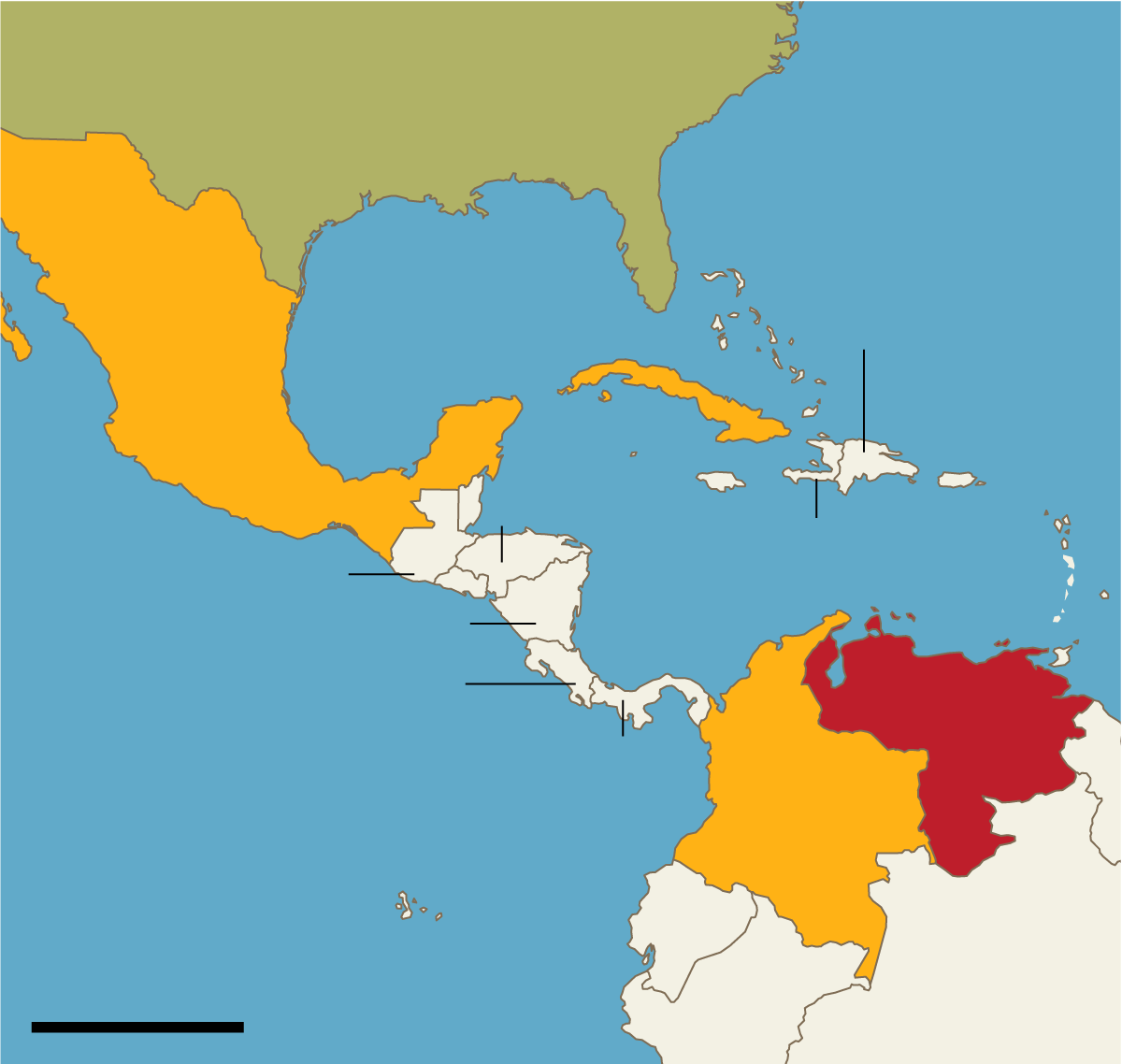
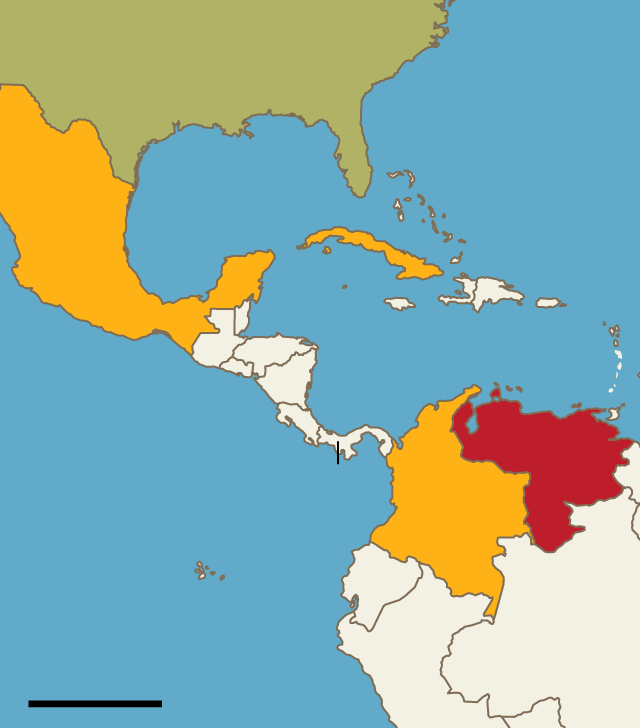
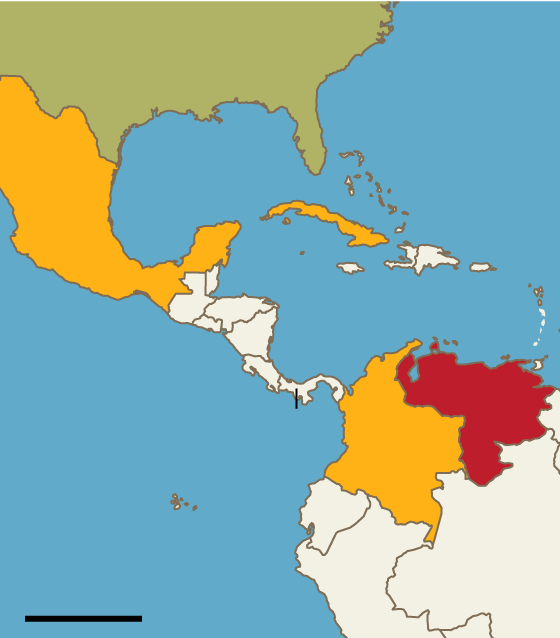
BarcelonaThe successful military operation against Venezuela to kidnap Nicolás Maduro has further enraged Donald Trump, who has spent the last two days threatening one country after another. To the recurring intimidation tactics of recent months against Greenland—which have been repeated in the last few hours—have been added threats against countries in Washington's so-called "backyard," especially Cuba and Colombia, which appear to be in the crosshairs of the US president.
Aboard Air Force One returning to Washington early Monday morning—Trump commanded the operation against Maduro from his residence in Florida and not from the situation room Speaking from the White House, the US president has once again threatened his Colombian counterpart, Gustavo Petro, with whom he has been engaged in a war of words for months. "Colombia is also very sick, led by a sick man who likes to manufacture cocaine and sell it in the United States," he said, without anyone having asked about that country beforehand. When a journalist asked him directly if the US would carry out a military operation against the country, Trump did not rule it out: "Sounds good to me."
ESTATS UNITS
MÈXIC
REP.
DOMINICANA
CUBA
HONDURES
HAITÍ
GUATEMALA
NICARAGUA
COSTA RICA
VENEÇUELA
PANAMÀ
COLÒMBIA
EQUADOR
BRASIL
1.000 km
PERÚ
ESTATS UNITS
MÈXIC
CUBA
VENEÇUELA
COLÒMBIA
1.000 km
ESTATS UNITS
MÈXIC
CUBA
VENEÇUELA
COLÒMBIA
1.000 km
The Republican leader has also sent another message to Cuba, although in this case he seems to prefer letting the Castro regime collapse on its own. "I don't think we need to take any action. It looks like (the regime) is about to fall," Trump argued. He also suggested that Washington could intervene militarily in other countries in the region, such as Mexico. "Something will have to be done," he said regarding the enormous amount of drugs entering the US through Mexico, where he emphasized that the cartels are "very strong."
All of this, however, cannot be compared to the case of Venezuela, where Trump himself has made no secret of the fact that the objective is to take control of the oil industry. What are the motives behind the messages against Colombia and Cuba?
Salvador Martí, a Latin America expert at the University of Girona, believes that, in the case of Colombia, we are facing more of a "squabble between leaders." However, he emphasizes that it is impossible to know "how far Trump will tolerate Petro contradicting him." Anna Ayuso, a senior researcher for Latin America at CIDOB, believes that "it is not a direct threat to the country, but rather interference linked to the upcoming elections; a kind of warning: if you vote incorrectly, there could be consequences." Colombia will hold legislative and presidential elections this year, and Trump will try to pressure voters, just as he did in the midterm elections in Argentina, where He conditioned the financial aid on a favorable result for Javier Milei's party"They're not going to bomb Colombia, but they can destabilize the country," Martí agrees.
Trump is gaining right-wing allies in the region—Milei in Argentina, Daniel Noboa in Ecuador, Nayib Bukele in El Salvador, José Antonio Kast in Chile—and intends to keep adding more. Although Petro won't be running again, Washington wants to make it clear that things will be easier for Colombians with a friendly government.
Clash between Trump and Petro
The clash between Trump and Petro began last January, a few days after Trump took power and launched his campaign of mass expulsion of immigrants. Petro initially rejected the entry of the planes into his country. on which Colombian citizens deported by the United States were traveling, although it was eventually withdrawn due to Trump's threat of tariffs. Since then, tensions between Washington and Bogotá have been growing, especially since the fall.
In September, the US State Department Petro's visa was revokedAfter he participated in a pro-Palestinian rally in New York and urged US soldiers to "disobey" Trump's orders, Trump imposed financial sanctions on him and froze his assets and properties in the US. In October, Trump announced he was halting financial aid to Colombia due to its alleged inaction in the fight against drug trafficking; he accused Petro of being "a drug kingpin" and warned him that if he did not close "these killing fields immediately," the United States would do it. A few days later, Washington increased the pressure with an attack on a suspected drug-trafficking blanket in the Pacific, near the Colombian coastAfter Petro publicly denounced the US's "extrajudicial killings" in the Caribbean.
In early December, Trump already indicated that his Colombian counterpart could be "next" in the White House's military and political pressure campaign in Latin America, and on Saturday, at the press conference after kidnapping Maduro, he sent him a direct message warning him that "he'd better."
Early Monday morning, Petro confronted him and even expressed his willingness to take up arms. "Although I haven't been a soldier, I know about war and clandestine operations. I swore not to touch another weapon since the 1989 peace agreement, but for the sake of my country, I will take up again the weapons I don't want," the Colombian president, a former member of the M-19 guerrilla group, wrote to X.
Waiting for the Cuban regime to fall
The other country targeted by Trump's recent threats is Cuba. "We will end up talking about Cuba, because it is a failed state," he said at Saturday's press conference. Early this morning, speaking from Air Force One, he ruled out a military intervention in the country, asserting that the regime "is about to fall." "I don't know if they will resist, but Cuba now has no income," he said, arguing that the Caribbean island "got all its income from Venezuela, from Venezuelan oil." If Washington manages to take control of Venezuela, this could be lethal for Cuba, which depends more on Caracas than on Moscow or Beijing, its other major historical partners. US Secretary of State Marco Rubio, the son of Cuban immigrants, has among his objectives the overthrow of the Castro regime, and one of the ways to do so was by removing Maduro from power. Cuba is experiencing an unprecedented economic crisis, and the government of Miguel Díaz-Canel declared itself in a "war economy" in 2024. Power outages are common, and obtaining basic goods is becoming increasingly difficult.
"I don't think there's any intention of an armed intervention. The position is this: we're suffocating them; they'll fall on their own, or they'll end up surrendering and asking for help," Ayuso believes. "I think what Trump is primarily trying to do is send a message to the countries that have been making deals with the enemies, Russia and China, that they are under threat," the analyst says. Salvador Martí also believes that Washington's strategy will be "to exhaust them, and when they can't take it anymore, to come in as the saviors." "What's clear is that in Cuba, if the operation takes place, it will be much more far-reaching, with the objective of seizing everything; turning it into a Puerto Rico 2.0," he concludes.

