Karel Lannoo: Von der Leyen should be more careful about what she says in public
Chief Executive Officer of the Centre for European Policy Studies
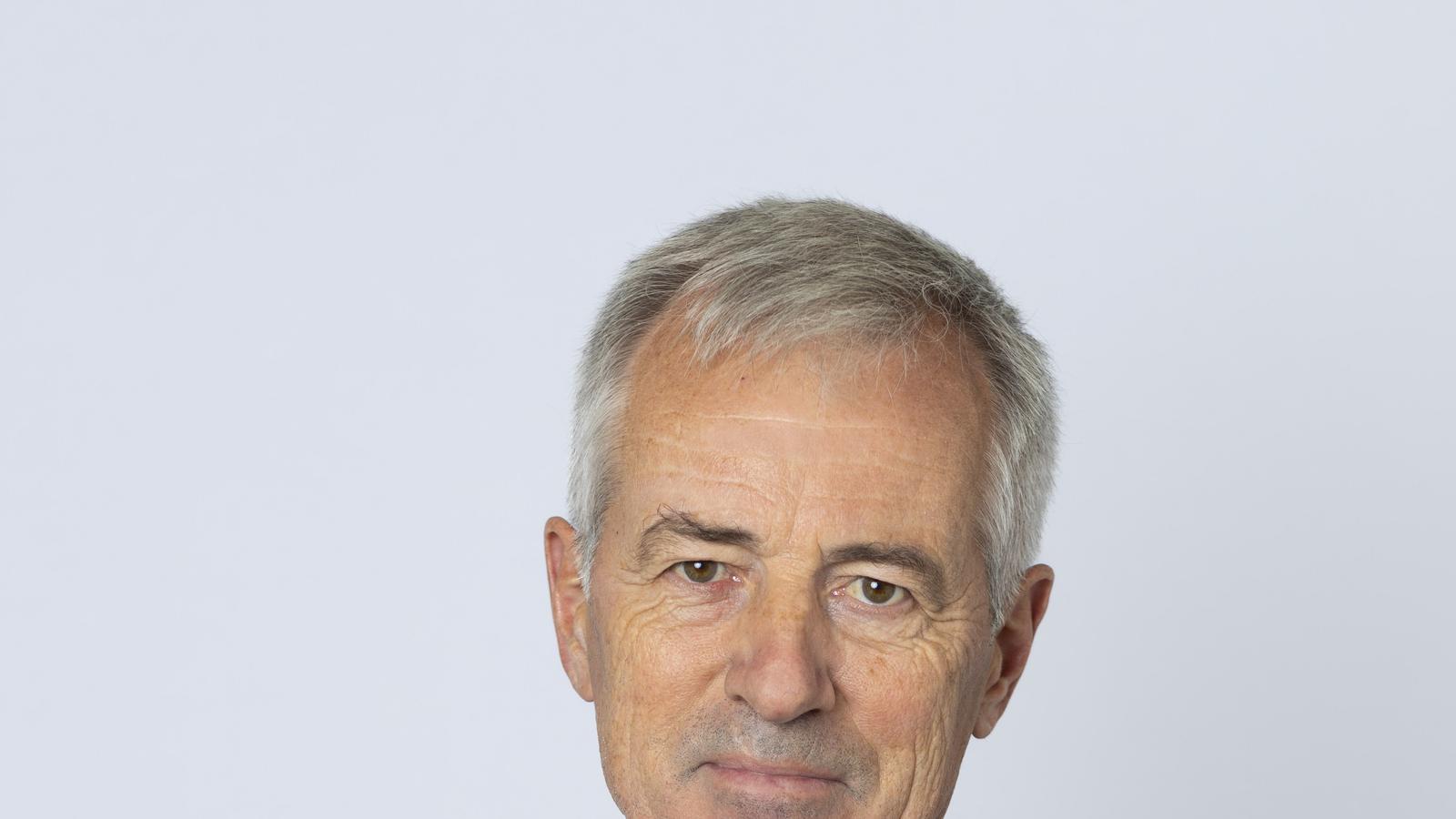
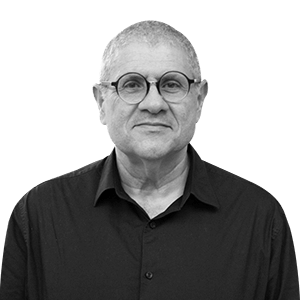
London/BrusselsKarel Lannoo is the Chief Executive Officer of the think tank Centre for European Policy Studies (CEPS), based in Brussels. The organization is a relevant voice in community politics and debate. A graduate in philosophy and modern history, he has been observing the internal and external fluctuations that the European Union has faced for over twenty-five years. He is, therefore, in a privileged position to analyze the challenges for the 27 at a time when the global order has been shattered and threats to the EU are of all kinds.
Is the European Union stronger or more vulnerable after four years of war in Ukraine?
— I think we are more united. It is true that one can look to Hungary or Slovakia to say no, but we have achieved things that would have been impossible without the war. Let's think about the security plan, about the fact that the EU, which has no military competences, has launched a European initiative for the industrialization of the defense sector.
Has the war in Ukraine confirmed that Europe still depends too much on the United States for its security?
— Do we depend on the USA for security? We don't know for sure. It has been said so, but I can't judge it because the information is not public. I believe we have the capability, but we need to see if we can work together in the military sphere. Only then will we realize if we can do it on our own. As long as European states accept that they can no longer rely on the USA and must be able to respond on their own, we will move forward. Some still believe that everything will go back to how it was, like Germany, but that will no longer be the case.
Is Donald Trump a reliable partner for the EU?
— No. Now we clearly see that various countries, including the US, Russia, and China, may want the end of the EU.
Is it possible to achieve strategic autonomy within the framework of NATO?
— I think so, as long as there is an agreement within NATO that determines which strategic threats are specific to Europe and which are not. The EU should use its European part of NATO to defend itself.
How serious are the current internal divisions within the EU, both between states and between institutions?
— It is normal for there to be divisions; it is part of democracy. In Europe, with 27 states, processes are slower than in the United States, but I prefer the European system to the North American one. Open debates and majority decision-making are normal and necessary.
But contradictory statements between the President of the Commission, Ursula von der Leyen, and the President of the Council, António Costa, do they not offer a vision of chaos and weakness of the EU?
— Mrs. Von der Leyen went beyond her powers. The President is responsible for the Commission, while the President of the Council is in charge of managing the relationship between the member states. Since the EU does not have a formal responsibility in foreign policy or defense, this should be coordinated by the President of the Council, together with the High Representative for Foreign Affairs. Von der Leyen should be more careful about what she says in public. Europe must ensure that it is consistent with the principles on which it is founded, and that it respects the multilateral order and international law.
Could a new Orbán victory in Hungary weaken the EU's cohesion and decision-making capacity?
— It could also strengthen it. We could act more firmly in situations that contravene EU treaties. Orbán has used Russia's support for his campaign. And if he is finally re-elected, judicial proceedings could be initiated, because what he has done goes against the treaties. Orbán has already lost more than a billion euros in cohesion funds for not respecting the conditionality regulation. This is almost a crime: if you are the prime minister of a relatively poor country, which is not in a good economic situation, and you can receive 1 billion euros and you say no out of pure stupidity, then, in my opinion, you should end up in prison.
Has the energy crisis reduced Europe's dependence or merely shifted it to other partners?
— It is still too early to know. Europe has a limited dependence on the Gulf; other countries depend much more. Prices have risen, true, but we can function almost without oil or gas from the Gulf.
Is the EU seen as much more forced than initially conceived to become a more geopolitical and hard-power-oriented actor?
— No. Treaties already allow the EU to be a more geopolitical actor, especially in defense, building a European pillar within NATO.
Do current international crises expose structural limits of the EU's institutional model?
— Yes, sure. It is a very elaborate model, it should be more integrated, with more rapid decision-making capacity and with a qualified majority to avoid blockages, as is happening now with Hungary regarding Ukraine.
What kind of majority? For example, two-thirds of the member states?
— Exactly, there are different forms of majority provided for in the EU treaties. The most common is the double majority, which consists of two-thirds of the countries and two-thirds of the population. This ensures that there is sufficiently strong support, also in terms of population, when a certain decision is made.
Is Europe prepared for a prolonged period of global instability with simultaneous conflicts affecting its security and economy?
— It is relatively prepared, better than three or four years ago. Programs like the European defense industrial strategy show that Europe is reacting. But coordinating 27 states is complex and takes time.
Ten years after Brexit, would the EU accept the United Kingdom rejoining?
— I think so, but it would be difficult. The United Kingdom would have to accept all the rules and be without the many exceptions it enjoyed. It would also not have, on budgetary matters, for example, that allowed it to contribute less. Furthermore, some member states would have difficulties accepting the return of the United Kingdom, starting with France. Because France considers that it has more weight in the current European Union than it would have if the United Kingdom were to become part of the EU again.
Is it a good time to think about an enlargement of the Union?
— Yes, but getting the necessary consensus will be very difficult. Let's look at Iceland, which is perhaps changing its mind, which could accelerate the whole process. But I also think we must urgently incorporate the Western Balkan countries, which are very small: 16 million inhabitants and economically of very little weight. It would be no problem to incorporate them quickly and it would benefit our own security.
