Ukrainians fear a watered-down peace: "What was the point of all this suffering?"
On the eve of the fourth anniversary of the Russian invasion, polls indicate that a majority of Ukrainians would oppose a territorial agreement.

-
CAT -
CAST
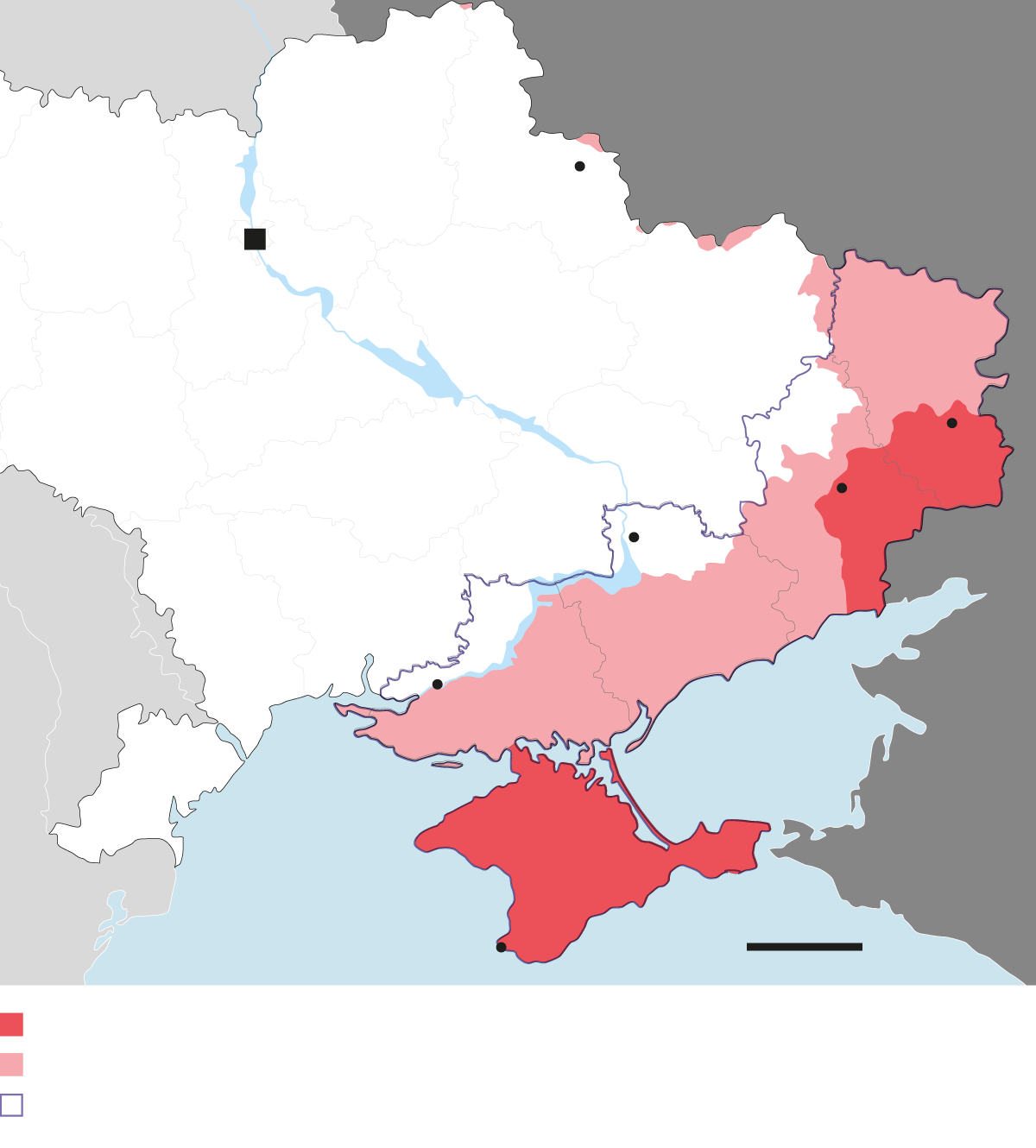
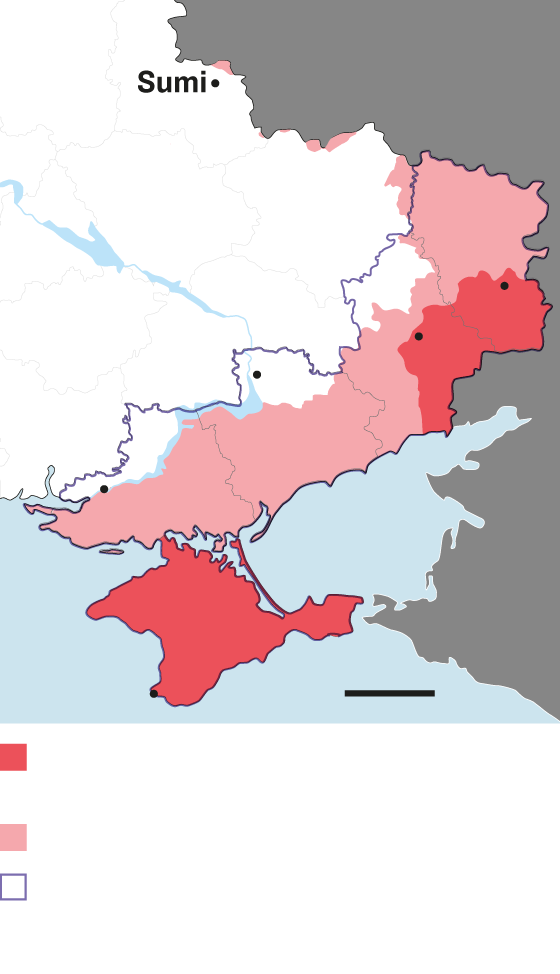
Sumi (Ukraine)This week, the Ukrainian city of Sumi It has suffered one of the worst attacks of the year. Just 25 kilometers from Russia and 17 from the front lines, the Russians launched kamikaze drones in broad daylight, which struck the city center and left dozens wounded. The attacks were concentrated on administrative and residential buildings for almost four hours. The scenes were of ordinary people running for shelter, panic attacks, and shattered windows. The cafes, spaces that have become a kind of sanctuary for Ukrainians in these last four years of war, where drinking a good cup of coffee is almost a religious practice, were also targeted.
BIELORÚSSIA
RÚSSIA
Sumi
Kíiv
Luhansk
UCRAÏNA
Donetsk
DONBÀS
Zaporíjia
MOLDÀVIA
Kherson
mar d’Azov
Crimea
mar Negre
100 km
Sebastòpol
Territori ocupat per Rússia abans del 2022
Territori ocupat per Rússia actualment
Territori reclamat com a part de la Federació Russa
RÚSSIA
Sumi
Kíiv
Luhansk
Donetsk
UCRAÏNA
DONBÀS
Zaporíjia
Kherson
mar d’Azov
mar Negre
Crimea
100 km
Sebastòpol
Territori ocupat per Rússia abans del 2022
Territori ocupat per Rússia actualment
Territori reclamat com a part de la Federació Russa
RÚSSIA
Sumi
Luhansk
Donetsk
UCRAÏNA
DONBÀS
Zaporíjia
Kherson
mar d’Azov
mar Negre
Crimea
Sebastòpol
100 km
Territori ocupat per Rússia abans del 2022
Territori ocupat per Rússia actualment
Territori reclamat com a part de la Federació Russa
"Now that there are constant power outages, people come here because they have electricity to plug in their computers, access the internet, and have a coffee, which is relatively cheap," says Oleksandr from his establishment, located on the city's central Petropavlivka Street.
His shop is a few meters from where one of the worst massacres of this war took place. On April 13, 2025, Russia fired two ballistic missiles that killed 36 people.It was Palm Sunday, and the city center was full of parishioners walking or taking the bus to church. For example, all the passengers on bus line 62 were killed instantly. "There's a popular saying here, 'A bomb never falls twice in the same place,'" Olek says. Opening this business is a kind of patriotic duty for him; he pays taxes that go to the army and is proud to employ people.

"We live day by day, we don't think about the future. We've realized that life is short, we can die at any moment. If you live this way, you also forget the past, and it's easier to live like this than to think about the exhaustion this war produces." Oleksandr, the son of a Soviet military officer, has unwavering faith in the resistance: "We are a free country. We've had six presidents in 35 years, and the Russians have had three. We don't want to live under their regime." Oleksandr admits that business isn't great, as the statistics from the Espresso Index show. This economic indicator, based on the price of coffee, determines a country's standard of living. In December 2025, this data suggested that the price of coffee in Ukraine had increased by 17%.
The basement refuge
On two corners of Kondratieva Street, where the drones fell this Tuesday, there's a small café run by Halyna. She and her daughter, Anna, took refuge during the bombing in the small storage room they have in the basement. "We've gone down there hundreds of times," she says amiably. She believes that territorial concessions for peace are a difficult question. "I'd have to think about it carefully; I can't answer you right now," Halyna says. "We're exhausted. But what will we tell the mothers of the soldiers who died defending these lands? What I can assure you is that we all think Russia is a terrorist state, and we need very firm security guarantees so they don't come back."
Next door to Halyna's place, in another café on Kondratieva, there's a young soldier, from the combat medical units, in uniform but wearing a Hufflepuff scarf, from the Harry Potter universe. She adjusts her large glasses and says, "I'm very sad because I want our grandparents to have a peaceful old age and the children a happy childhood. And I'm very tired. But I have other concerns right now besides thinking about the negotiations, like, for example, that fewer of our people die."
A hundred meters away, in another café that served as a refuge for journalists and pedestrians during this week's Russian drone strikes, is Anastasia, a barista. "It's very frightening to think that we've become accustomed to living like this. In fact, when the alarm sounds, we don't even hide anymore; sometimes the alert lasts for two days straight." Anastasia, a pastry chef by training, believes that society is divided, that 50% of the people would accept peace at any price, but there's also the painful question: "So, what has all this suffering been for?" "People in the east of the country feel all this horror in their bones, unlike in western Ukraine. We understand the price that is being paid."
Anastasia believes that in a vote on territorial concessions, those territories closest to the front line would be the most opposed. She continues talking about the difference between the two sides of the Dnieper River. "The fact that we speak Russian here doesn't mean we want to join Russia; we inherited it from our parents and grandparents. Sometimes we have conflicts about it when we go to other parts of the country. We are proud to speak Surkhik—a mixture of Russian and Ukrainian—although it may be difficult, we are assimilating Ukrainian, and sooner or later, it will be discussed throughout the country." Regarding her vision of the future, Anastasia says, "It will be complicated for the soldiers; they will have to get used to a new world."

Across the street, next to a building boarded up by firefighters after the recent explosions, is the café where Bogdan works. He places on the counter the twisted piece of metal from the drone that crashed into his establishment. "I saw it fly and knew where it would land. I closed up quickly and covered my head." His green eyes betray chronic stress, despite the care with which he prepares a cut of meat. He recently received his draft notice and has ignored it. He is young and takes care of his mother and siblings after his father was drafted. busificado –from the English colloquial term busified, which refers to the process by which the army forcibly recruits a person—when the military stops you on the street, checks that you are fit to serve, forces you onto a bus, and sends you to the army.
Bogdan's father, a driver by profession, died last year on the Kharkiv front at the age of 53. Now he himself could be busificado At any moment, but he continues working to support his family. However, he still grapples with the question: "Will we let the deaths of our loved ones be in vain?" He believes that if the decision regarding the end of the war were left to the people, it's unclear what they would decide.
Polls indicate that Ukraine would oppose a peace that only benefits the territory; a bad peace. But the dream of an end to the war will only materialize when a resolution is reached: whether through negotiations, elections, or a referendum. A decision that Ukrainians will surely consider with determination over a good cup of coffee. Meanwhile, the nightmare of air raid alerts, of living without electricity or heating, of the rising cost of living, of schoolchildren being homeschooled with a screen, of the fear of a Russian drone or missile, of inheriting a family member or friend who might die from a gunshot wound to the head continues. And it has been going on for four years.
