Trump's military operation against Venezuela in maps and graphics
Washington had deployed a large fleet and air force to Puerto Rico to prepare for the attack against Maduro


-
CAT -
CAST
BarcelonaThe United States operation against Venezuela for capturing Nicolás Maduro This marks the culmination of months of escalating tensions due to Washington's military pressure on Caracas. The Pentagon deployed more than 150 aircraft in the operation, ordered by President Donald Trump at 10:46 p.m. in Washington, as detailed by Chairman of the Joint Chiefs of Staff, General Dan Caine. At 2:00 a.m. Caracas time, several explosions were reported in the Venezuelan capital, where U.S. military aircraft could also be heard flying over the city for hours. The Venezuelan government has confirmed attacks in various parts of Caracas and also in three nearby states: Miranda, La Guaira, and Aragua. Bombings have been reported at the Fuerte Tiuna military base, the capital's main base, and also at two other military installations in the city: the Cuartel de la Montaña (Mountain Barracks) and the La Carlota air base.
Previous attacks on alleged drug-running boats
- At least 115 people dead
- 2 people rescued

Tensions between Washington and Caracas skyrocketed when the United States launched a campaign of airstrikes against suspected drug-running boats originating from Venezuela. The first bombing was on September 2, in which 11 people died. Since then, the Pentagon has carried out at least 35 attacks in Caribbean and Pacific waters, in which at least 115 people have died, according to the count of the New York TimesAll of this under the pretext of fighting drug trafficking, but without providing any evidence and without the consent of Congress.
Military deployment
The United States has reinforced its military forces deployed in the Caribbean region in recent months. In August, Trump secretly signed a directive at the Pentagon to begin using military force against Latin American drug cartels, which his administration had designated as terrorist organizations. Since October, US forces have included a Navy expeditionary strike group comprised of amphibious warships carrying thousands of troops.marinealong with warplanes, attack helicopters, and other aircraft. In mid-November, they sent the aircraft carrierGerald FordThe largest and most modern ship in the U.S. fleet is in the Southern Command's area of responsibility. Last month, Southern Command reported that there were approximately 15,000 troops deployed in the region.

HeNew York Times It was reported on December 23 that in the previous week several C-17 heavy-lift cargo planes, used primarily to transport troops and military equipment, had made at least 16 flights to Puerto Rico from U.S. military bases. Wall Street Journal It was reported that same day that "a large number" of special operations aircraft, troops, and military equipment had also been deployed to the Caribbean in the preceding days.
Oil reserves
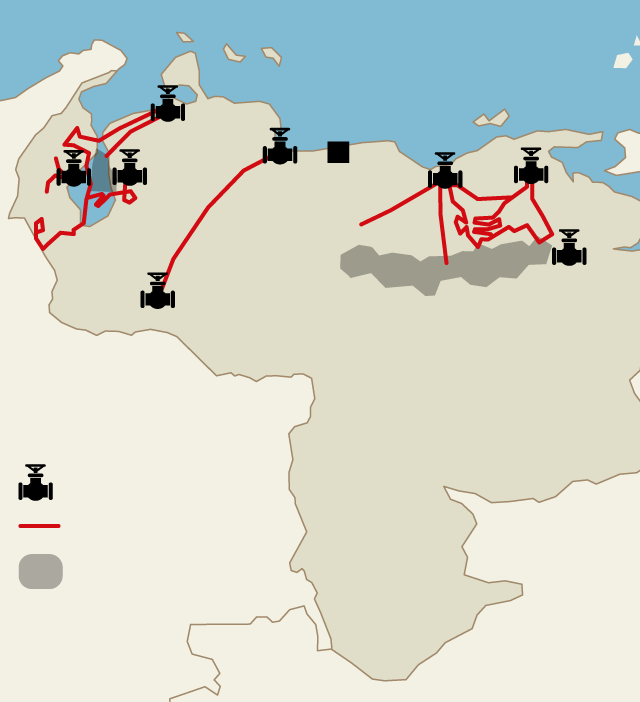
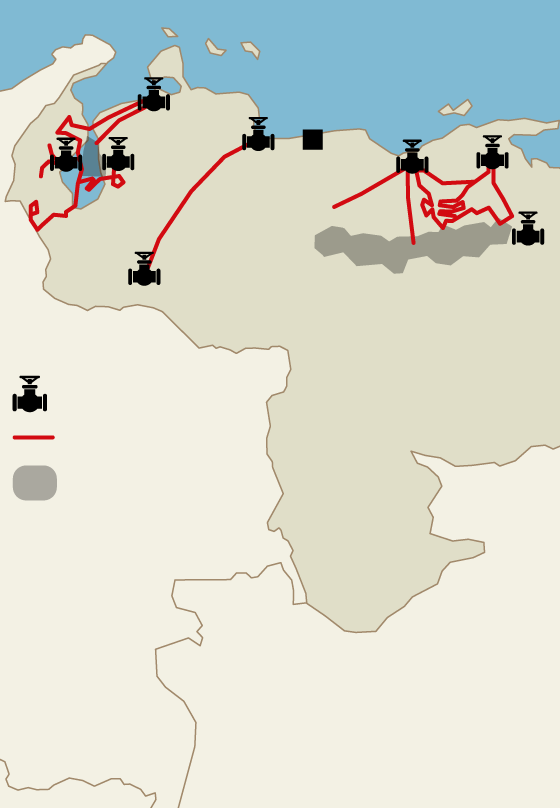
Behind the operation is Trump's intention to control the Venezuelan oil industry. In his press conference, he asserted that major US oil companies "will set up operations in Venezuela" to repair the crude oil infrastructure, "which is in very poor condition." Venezuela holds the world's largest oil reserves: some 303 billion barrels of crude, nearly a fifth of global reserves. That's more oil than Saudi Arabia, Russia, the United States, and any other country combined. However, the country only produces around one million barrels per day, about 0.8% of global production. In other words, the business potential is enormous compared to current actual production, which is less than half of what it was before Maduro took power in 2013. International sanctions and the deep economic crisis, coupled with a lack of investment and maintenance, have contributed to the deterioration of the hydrocarbon industry.
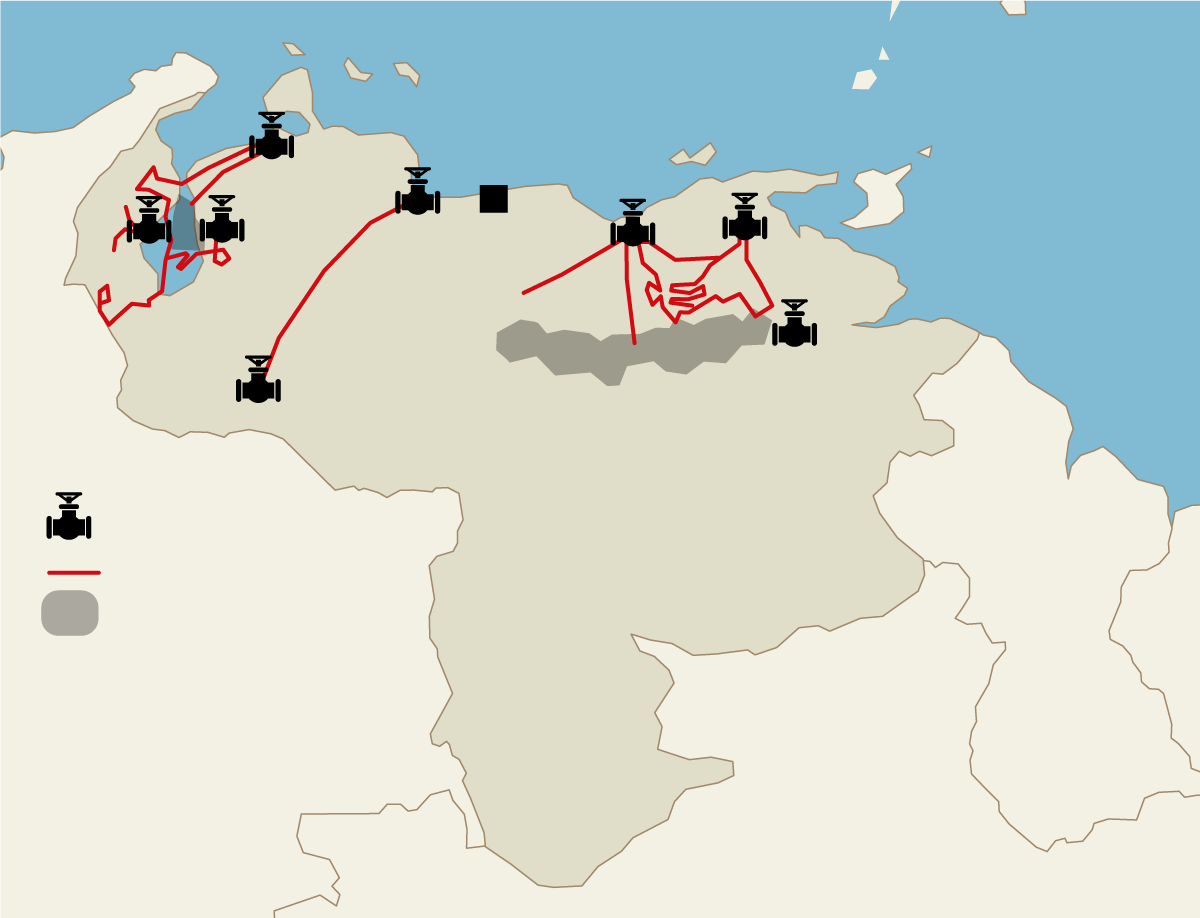
Caracas
Cinturó de l’Orinoco
Refineries
VENEÇUELA
Oleoductes
Camps petrolífers
Caracas
Cinturó de l’Orinoco
VENEÇUELA
Refineries
Oleoductes
Camps petrolífers
Caracas
Cinturó de l’Orinoco
VENEÇUELA
Refineries
Oleoductes
Camps petrolífers
