Social unrest crystallizes in a wave of protests throughout Europe
The riots spread to Belgium, Albania and Italy, where Meloni plans to deploy the army, and there are mobilizations in Germany, Greece, Portugal and Spain
-
CAT -
CAST
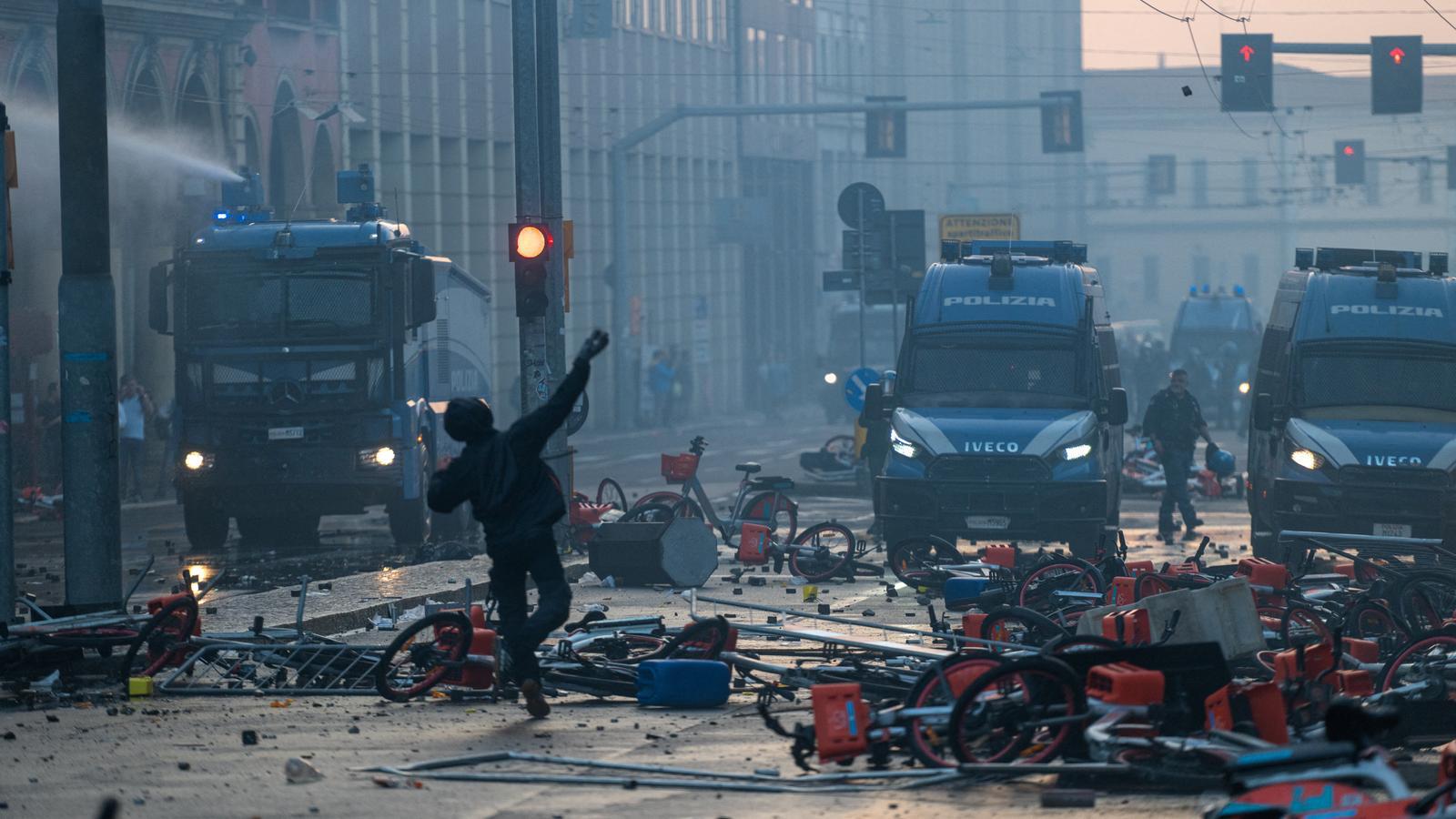
BarcelonaIt is not just France. In Italy, Belgium, Germany, Albania, Greece, Portugal, and Spain, there are also protests underway. Most of the mobilizations have a common background: protesting against the rising cost of living. In the case of Italy, the protests have escalated this weekend in parallel to those in France. In the north of the country, the mobilizations have ended in riots, especially in Milan, where the police have arrested 271 people and the Prosecutor's Office has requested preventive detention for eleven protesters.
Giorgia Meloni's government plans to send 500 soldiers to this city, a decision that must be ratified in an extraordinary council of ministers this Tuesday afternoon. In the south of Italy, transport workers are protesting against the rising cost of fuel, while in Belgium and Albania, the riots of various mobilizations have also escalated in recent days.
"In most cases, education has been the trigger, but the fuel for the growth of these mobilizations is everything behind it: economic insecurity, growing inequality, uncertainty about future prospects, and social unrest that has been accumulating for many years," explains Héctor Sánchez Margalef, lead researcher at Cidob. Before going into more details about the underlying reasons, you can review the following map, by hovering over each state, where people are protesting and why:
And why are the protests arriving now? In most cases, two factors converge. On one hand, in various European countries there have been sectoral mobilizations for months, and now, with the increasing proliferation of calls, the problems of some sectors and others that were already protesting are being pooled. On the other hand, many citizens, like the Italians in recent days, "have understood that the reasons for protest are common with those that make the French take to the streets," points out Sánchez Margalef. In fact, in the mobilizations in Milan and other Italian cities, the slogan “Facciamo come in Francia” (in English, “Let's do it like in France”) has become popular.

Among the reasons that have driven the mobilizations there are also triggers such as the death of Maricarmen Abascal in the Spanish state, which had a wide resonance in international media and on social networks, or the return to school, a moment in which the deficiencies of classrooms have been seen in many European countries. Furthermore, there is also a key factor: this academic year there are elections in France, Spain, Italy and Poland. Four major European states are at the gates of decisive electoral appointments, which especially in the Spanish and French states are presented as a dilemma between two radically opposed models. In France, even some forces such as the alternative left of La France Insoumise, which has options of reaching the second round of the presidential elections, speak of the end of the V Republic and propose starting a constituent process.
Unrest and pessimistic horizon
The mobilizations are generally led by students and young people, but they have nuances. In Germany, for the moment there have been no widespread disturbances. At the end of September, thousands of young people took to the streets under the slogan “We will not participate in your wars” to protest against the possible reintroduction of compulsory military service, and this Friday there were blockades at several schools in Berlin where students demanded to stop the increase in defense spending and increase investment in social policies.
“There is an unease that is visible in many states of the world, and in Europe too,” points out Sánchez Margalef, who gives the example of the results of the Ipsos survey The system is broken. According to the study, in practically all the countries where the survey was conducted in the summer of last year –a total of 31 states–, the majority of the population considers that the economy “is designed to favor the rich and the powerful”. In 75% of the states studied, the majority considers that “society is broken” and that their country is “in decline”. In France and Germany, the percentage of the population that agrees with these statements has grown considerably over the last 10 years.

In some protests, the demands of the demonstrators are diffuse, and they respond rather to an outburst of rage in the face of a future perceived as lacking hope. This sentiment, rage, also explains the levels of violence and destruction seen in the riots in France, Albania, and Italy. But Sánchez Margalef warns: "To contextualize the protests based on the violence is to understand absolutely nothing."
Albania is one of the countries where the riots have been especially violent since the beginning of last week. The country is another of the clearest examples of how protests that have been going on for months are now intensifying, gaining participants, and escalating in the methods of those gathered. Since the spring, the mobilizations in the country against the tourism investment that threatens the biodiversity of the country have not ceased. Added to these protests are mobilizations in the education sector and against the increase in university fees and the lack of opportunities. The demands have not been met, and the tourism investment is moving forward. Now, the mobilizations have escalated, and the country has been experiencing major riots for a week now in demonstrations that are already widely demanding the resignation of the government.
