Labour voices calling for Keir Starmer's "orderly" replacement are growing
The appointment of the ambassador in Washington and the 'premier's' confrontation with the highest Foreign Office official accentuate the crisis in Downing Street

-
CAT -
CAST
LondonThe political crisis surrounding Keir Starmer over the appointment of Peter Mandelson as the UK's ambassador to Washington in December 2024 has worsened this week, after Olly Robbins' appearance in Parliament has revealed numerous contradictions in the process followed. The discrepancies between Downing Street's account and the testimony of who until last week was the highest-ranking Foreign Office official responsible for overseeing the designation, once again place the prime minister's judgment at the center of the controversy, and leave him in a very compromised position.
The pressure is so high and the government's desgaste is so great that the voices calling for an "orderly handover" in Downing Street are now public and starting to make noise. If two months ago the leader of the Scottish Labour Party, Anas Sarwar, demanded Starmer's resignation as a consequence of the scandal, this Wednesday Labour MP Jonathan Brash has urged an end to the series. In statements to GB News, he said: "I am fed up with this real disaster." In his opinion, and that of many other MPs, the question is no longer whether Starmer should resign, "but when." And he added: "It is reasonable to set a timetable to resolve it in an orderly manner."
This new drop that fills the patience of Labourism's glass has come as a result of the mess between Downing Street and Robbins. The government has maintained that the security clearance service issued an explicit recommendation not to approve Mandelson, with an internal report equivalent to a red traffic light. However, Robbins explained to MPs on the Foreign Affairs Committee that he never saw this document and that the information he received was a verbal summary of the outcome of the veto process. In this version, the assessment was presented as an "on the brink" decision, susceptible to being managed with risk mitigation measures.
The second element increasing pressure on the prime minister is Robbins' description of an "atmosphere of constant pressure" from Downing Street to expedite Mandelson's vetting. The appointment had already been politically announced and the timetable for his incorporation was conditioned by the desire for the new ambassador to arrive in the United States before Donald Trump's inauguration, on January 20th of last year.

The contradiction between these versions opens up two fundamental questions. The first is whether the Foreign Office worked with incomplete or diluted information regarding the final security report. The second, more sensitive one, is what exactly Keir Starmer knew when last week he forced Robbins' resignation, accusing him of having hidden the final negative outcome of the process from him.
There is still more ammunition, however. A third element that complicates the Prime Minister's situation is the revelation of a parallel episode. The request from the Downing Street circle to seek a diplomatic post for Matthew Doyle, Starmer's former communications director. According to Robbins, he was asked to explore the option with the explicit instruction not to inform the Foreign Minister, then David Lammy. This detail feeds the perception of an appointment management system that operates, at least in part, through parallel, opaque channels and serves to repay favors to the men most loyal to the party.
'Due diligence'
But Robbins's testimony has added an even more uncomfortable element for Keir Starmer, as it goes to the true heart of the matter. Because the prime minister ignored that the due diligence on the candidate's suitability prior to the security agencies' veto process had already detected significant reputational risks in Mandelson's figure. Among others, his well-known links with Jeffrey Epstein and connections with controversial political actors in China and Russia. Robbins has suggested that this background should have been sufficient for the premier to reconsider the appointment before reaching the formal security clearance stage. In fact, the government secretary had also warned the premier.
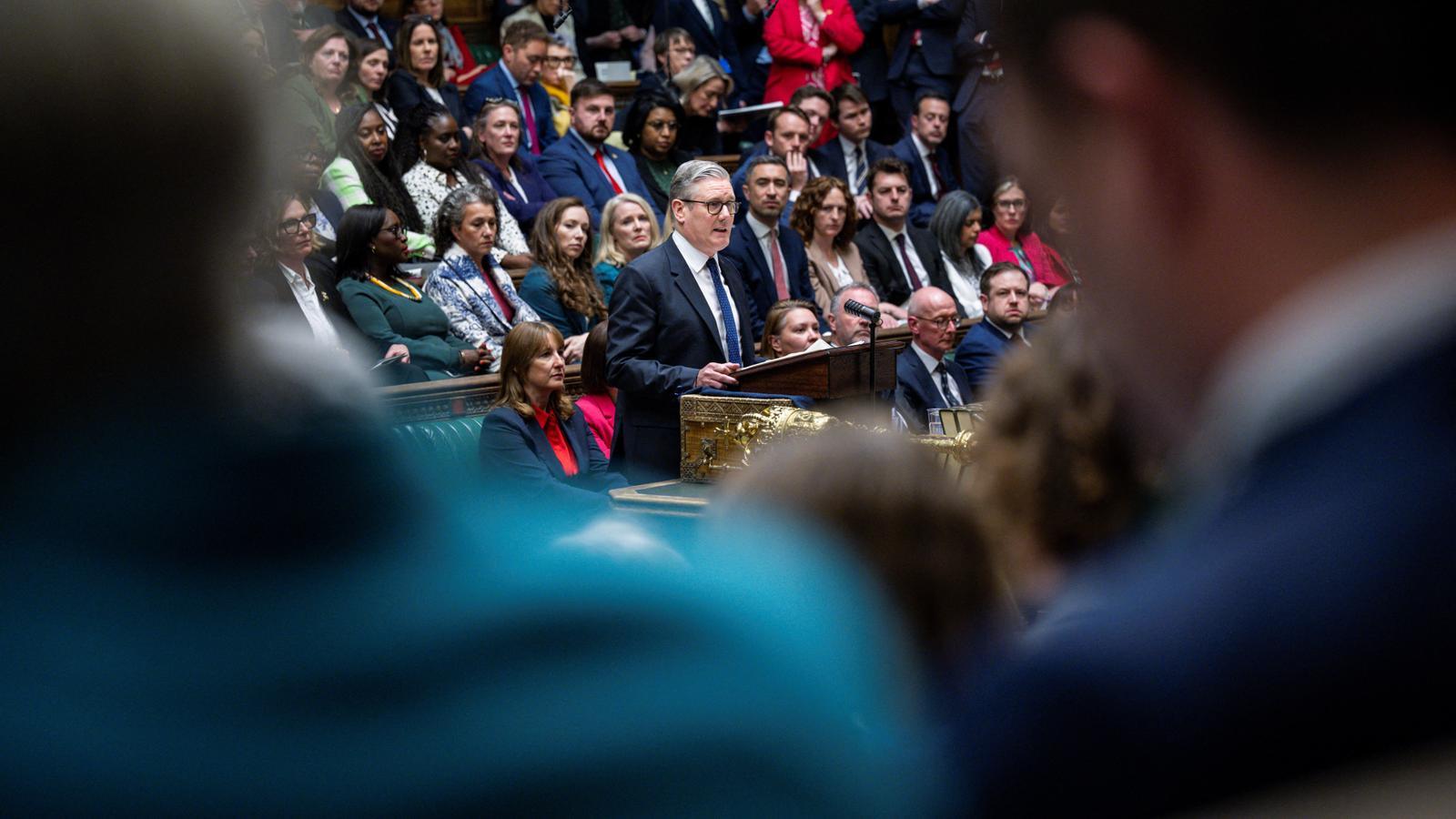
Twenty-four hours after Starmer's appearance in Parliament to, once again, give explanations on the matter, political focus returns to the premier and his judgment. The prime minister himself has repeatedly admitted an "error of judgment" in relation to the case. But the controversy already transcends the specific appointment. The opposition has once again questioned his capabilities this Wednesday, during the control session.
If the catastrophe predicted by the polls for the elections of next May 7th is confirmed, Starmer will have his days numbered. In essence, the final reason for his downfall will be the image of misgovernment and changes of direction he has projected since he arrived at Downing Street. Having appointed a sinister figure in British politics for over three decades, known as the prince of darkness –who even leaked confidential documentation from Gordon Brown's government to Jeffrey Epstein–, as ambassador to Washington, has been one more of his most visible errors, but perhaps not the most serious.
